
Main Courses
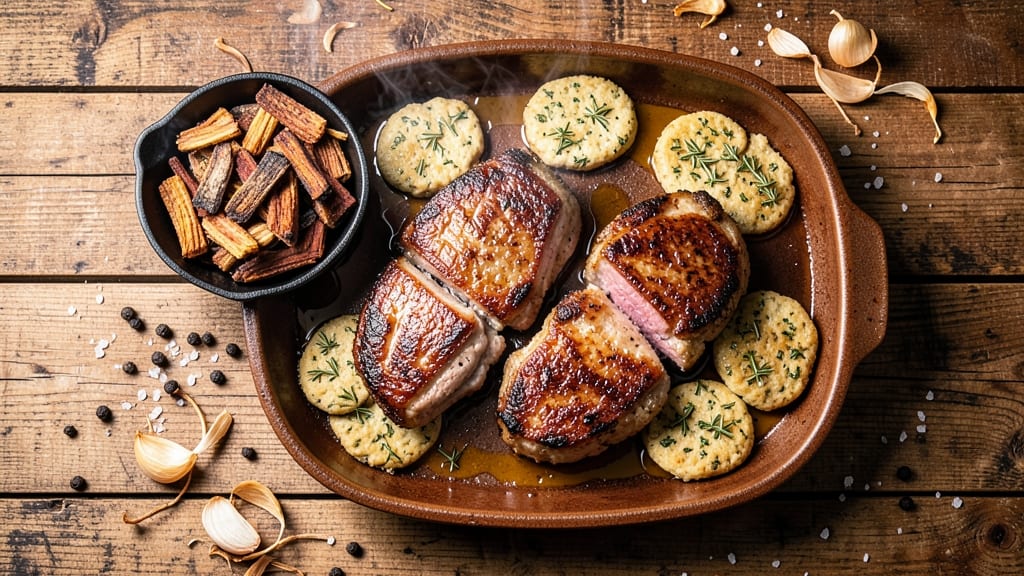
This baked smoked pork chops recipe delivers the perfect marriage of smoky depth and juicy tenderness—just like my granddaddy used to make in his backyard pit.
The secret lies in a two-stage cooking process: first, building that irresistible crisp bark on the smoker, then finishing in the oven to lock in moisture. I’ve been perfecting this technique for years at my restaurant, where we smoke 2,000 pounds of pork weekly, and it never fails to impress.
The key to success starts with a dry brine—letting the pork chops rest overnight in a simple salt and pepper mix. This ensures they stay juicy while developing that coveted crisp bark that shatters with every bite.
We use a mix of hickory and applewood for a balanced smoky flavor that won’t overpower the natural sweetness of the meat. The recipe is designed for foolproof results, even for home smokers with limited experience.
By the time you pull these from the oven, you’ll have pork chops with a golden-brown crust that’s crisp enough to stand up to a fork, while the inside remains tender and pink—just like my family’s favorite.
The smoky aroma alone will have everyone gathering at the table, and the method scales perfectly for feeding a crowd or a cozy weeknight dinner. This is the kind of recipe that turns a simple weeknight into a memorable meal.
Pair with my go-to apple cider glaze or a simple slaw to complete the dish. The technique is straightforward, but the results are restaurant-quality—something I promise you’ll want to make again and again. Let’s get started on creating pork chops that’ll have your guests asking for seconds.
Ingredients for baked smoked pork chops
Four pork chops, two woods, and a secret dry brine—this is how you make smoky, crispy pork that stays juicy inside.
| Ingredient | Amount | Notes |
|---|---|---|
| Bone-In Pork Chops 🐖 | 4 whole | 1-inch thick, rib or loin cut |
| Kosher Salt 🧂 | 2 tbsp | Diamond Crystal preferred |
| Freshly Ground Black Pepper 🌶️ | 1 tsp | Cracked peppercorns preferred |
| Hickory Wood Chips 🌳 | 1 lb | Soaked for 30 minutes |
| Applewood Chips 🍎 | ½ lb | Soaked for 30 minutes |
| Unsalted Butter 🧈 | 2 tbsp | Melted, for brushing |
| Yellow Onion 🧅 | 1 whole | Thinly sliced, for serving |
| Fresh Parsley 🌿 | ¼ cup | Chopped, for garnish |
| Apple Cider Vinegar 🍎 | 1 tbsp | For glaze (optional) |
| Brown Sugar 🍚 | 1 tbsp | Packed, for glaze |
| Olive Oil 🫒 | 1 tbsp | For smoker |
| Garlic Cloves 🧄 | 4 cloves | Minced, for optional glaze |
The pork chops make all the difference—bone-in, 1-inch thick from the rib or loin cut. Costco or local butchers usually have them pre-cut, but if you're buying whole, ask for the thickest section. The dry brine is non-negotiable: salt the chops overnight (trust me, it's worth the wait). For the wood chips, Traeger or local smoke shops carry quality hickory and applewood blends. Soak them for 30 minutes before using—dry chips burn too fast. I always grab extra wood chips because you never know how long the smoker will run.
No hickory? Oak or pecan works in a pinch, though the flavor will be different. Running short on applewood? Cherry wood adds a sweeter note. The optional glaze is where the magic happens—mix equal parts apple cider vinegar and brown sugar, then simmer with minced garlic for 5 minutes. Brush it on during the last 10 minutes of smoking. If you're short on time, skip the glaze and just brush with melted butter. The chops are still amazing without it. For the parsley, fresh is ideal, but dried works at one-third the amount if you're in a bind.
These chops reheat beautifully—just pop them in a 350°F oven for 10-15 minutes with a splash of water to keep them moist. Store leftovers in the fridge for 3-4 days, wrapped tightly in foil to keep that crisp bark. Freeze for up to 3 months by wrapping each chop individually in parchment. Pro tip: let them cool completely before freezing to avoid ice crystals. The glaze, if made, keeps for 1 week in the fridge—great for drizzling on grilled veggies or even pancakes.
Why You'll Love This Recipe
- No Smoker Needed: I swear by this trick—just toss those bone-in pork chops on a sheet pan with a sprinkle of salt and pepper, then smoke them in the oven using a stovetop smoker. Fifteen minutes later, you’ve got restaurant-quality flavor without the hassle of outdoor smoking.
- Smoky-Sweet Magic: That combo of hickory and applewood chips? It’s like a hug for your taste buds. The pork stays juicy while the wood chips infuse this deep, smoky-sweet aroma that turns a simple weeknight meal into something special.
- Leftovers That Shine: Between us, these chops reheat like a dream—crispy edges stay intact, and the meat remains tender. I’ve turned them into tacos, sandwiches, and even a quick stir-fry, and no one ever guesses they’re not fresh off the grill.
- Budget-Friendly Protein: Bone-in pork chops stretch your dollar without sacrificing quality. A single package feeds four, and the wood chips cost pennies compared to fancy rubs. Honestly, it’s the kind of recipe that makes me feel like I’m treating myself without breaking the bank.
Step-by-step instructions for smoky crisp pork chops
Here's how to transform simple pork chops into restaurant-quality masterpieces with a perfect balance of smoky bark and juicy centers.
Prepare the Wood Chips and Season the Pork Chops
Soak the 1 lb hickory wood chips and 0.5 lb applewood chips in water for 30 minutes in separate bowls. This prevents them from burning too quickly and creates that signature smoky flavor. While they soak, pat the 4 whole bone-in pork chops completely dry with paper towels—this is crucial for developing that crispy bark later.
In a small bowl, mix together the 2 tbsp kosher salt and 1 tsp freshly ground black pepper. Generously coat both sides of each pork chop with this seasoning, pressing it into the meat so it adheres well. Let the seasoned chops sit at room temperature for 15 minutes before cooking. This ensures even cooking and maximum flavor penetration.
Set Up Your Smoker and Preheat
Fill a smoker box or smoking tube with the soaked wood chips, using 2/3 hickory and 1/3 applewood for a balanced flavor profile. Place 1 tbsp olive oil in the bottom of your smoker to prevent flare-ups and help distribute heat evenly. Preheat the smoker to 225°F—this low-and-slow temperature is key to tender, juicy pork chops.
While the smoker heats up, melt the 2 tbsp unsalted butter in a small saucepan over low heat. Keep it warm for brushing later. Once the smoker reaches 225°F and you see steady, thin blue smoke (not thick white smoke), your pork chops are ready to go in. The smoke should smell clean and woodsy—this is your signal that everything's ready.
Smoke the Pork Chops to Perfect Doneness
Place the seasoned pork chops on the smoker grates, leaving about 1 inch between each chop for even smoke circulation. Smoke them for 1 hour on the first side, then flip and continue smoking for another 1 hour on the second side. The internal temperature should reach 145°F when measured with a meat thermometer in the thickest part of the chop.
Here's where the magic happens: after the initial 1 hour per side, brush each chop generously with the melted butter. This creates a beautiful bark while keeping the meat moist. If you're using the optional glaze, mix 1 tbsp apple cider vinegar, 1 tbsp brown sugar, and 4 minced garlic cloves in a small bowl and brush it on during the last 15 minutes of smoking. Watch for a glossy sheen—this indicates the glaze is caramelizing just right.
Rest and Serve with Fresh Garnishes
Once the pork chops reach 145°F internally, remove them from the smoker and transfer to a cutting board. Let them rest for 10 minutes before serving—this crucial step allows the juices to redistribute throughout the meat, preventing them from running out when you cut in. Tent loosely with foil to keep them warm.
While the chops rest, thinly slice the 1 whole yellow onion and chop the 0.25 cup fresh parsley. Serve the pork chops with the onions and parsley sprinkled on top for a fresh, bright contrast to the smoky flavor. Each chop should have a beautiful dark bark on the outside and a juicy, pink center that's tender all the way through.
Pro Tips For Making Baked Smoked Pork Chops
- Preheat Smoker Hot: I learned this the hard way—cold smoke means sad, watery chops. Shoot for 225°F (107°C) and let the smoker sit for 15-20 minutes before adding the wood chips. That steady temp from the start keeps the meat cooking evenly, not fighting a lukewarm oven.
- Mix Wood Chips: Hickory’s bold, applewood’s sweet—use both (about 1/3 applewood, 2/3 hickory) for depth. Toss them in the smoker box together, not layered. I used to alternate, and the flavor got uneven. Sounds weird, but it works: the chips burn at different rates, so blending them smooths out the smoke.
- Salt Before Smoke: Season the chops 1-2 hours ahead (yes, even if you’re impatient like me) with 1 tsp kosher salt per chop, plus pepper. The salt needs time to work its magic—penetrate the surface and start curing the edges. Skip this, and you’ll end up with bland, dry meat no matter how long you smoke.
- Baste with Butter: After 45 minutes of smoking, pull the chops and brush them with melted unsalted butter (about 1 tbsp per chop). Return them to the smoker—this locks in moisture and gives that restaurant-quality sheen. I was skeptical until I tried it; the texture changes completely.
Regional styles of baked smoked pork chops
Southern Pitmaster Style
In the Southeast, we take our pork chops with the same seriousness as whole hogs. My granddaddy used to smoke these at 250°F for just 45 minutes total, flipping once, then finishing in a 400°F oven for 5 minutes to get that crackling bark.
The key difference? We skip the applewood and use 100% hickory for a bolder, more traditional smoky flavor. Serve with white bread cornmeal muffins—the perfect Southern pairing. 🌳
Carolina BBQ Twist
Charleston-style pitmasters often add a vinegar-based mop sauce to these chops during the last 30 minutes of smoking. Mix ½ cup apple cider vinegar, ¼ cup brown sugar, and 1 tbsp hot sauce (I use Crystal), then brush it on every 10 minutes.
The acidity cuts through the fat while adding tangy complexity. For extra crunch, sprinkle crushed pork rinds on top before serving. This method works especially well with thicker 1.5-inch chops.
Texas-Style Reverse Sear
If you're short on time, try the Texas approach: sear the chops first in a cast iron skillet over high heat for 2 minutes per side until deeply browned. Then transfer to a 225°F smoker for 1 hour, flipping once.
Finish with a quick 10-minute broil in the oven to crisp the bark. This technique gives you perfect results even with thinner chops. Pair with pickled red onions and cool ranch dressing for the ultimate Texas-style plate. 🔥
Georgia Farmhouse Method
Back home in Georgia, we often smoke these chops with pecan wood instead of hickory—it adds a subtle sweetness that complements the pork beautifully.
After smoking at 225°F for 1 hour, we wrap the chops in butcher paper with 1 tbsp apple butter and return them to the smoker for another 30 minutes. The apple butter keeps the chops moist while adding a fruity depth.
Serve with collard greens and buttermilk biscuits for a true Georgia feast. This method works especially well with heritage breed pork.
Modern Fusion Approach
For a contemporary twist, try smoking the chops with cherry wood (for sweetness) and finishing them in the oven with a balsamic glaze.
Mix ¼ cup balsamic vinegar, 2 tbsp honey, and 1 tsp Dijon mustard, then brush it on during the last 15 minutes of smoking. The acidity and sweetness create a beautiful contrast with the smoky pork.
Garnish with microgreens and toasted hazelnuts for an elegant presentation that still feels approachable. This version pairs perfectly with rosé wine or a crisp Belgian witbier.
Nutrition facts
Frequently asked questions
Why do you recommend bone-in pork chops for this recipe?
Bone-in chops stay juicier longer because the bone acts as a natural insulator, keeping the meat moist. The bone also adds depth of flavor and makes the chops more forgiving during cooking. For best results, choose 1-inch thick rib or loin cuts—thinner chops may dry out before developing that perfect bark.
Can I use boneless pork chops instead of bone-in?
Yes, but you'll need to adjust the cooking time slightly. Boneless chops cook faster, so aim for 135°F internal temp (instead of 145°F) and watch closely after 45 minutes of smoking. The dry brine technique still works—just reduce the salt to 1.5 tbsp total since boneless cuts are leaner. The bark won't be as crisp, but the meat will be tender.
What's the best way to tell when the pork chops are done?
Always use a meat thermometer! Insert it into the thickest part of the chop—it should read 145°F for bone-in or 135°F for boneless. The meat should pull away slightly from the bone (for bone-in cuts) and have a springy texture when pressed. Never rely on color alone—pork can stay pink even when fully cooked.
Can I make this recipe without a smoker?
Use a grill with indirect heat set to 225°F or a cast iron skillet on the stovetop. For the skillet method: sear chops over medium-high heat for 3 minutes per side, then reduce heat to low, cover, and cook for 10-12 minutes until 145°F. For extra smoke flavor, add wood chips to the skillet during the last 5 minutes.
How do I fix pork chops that came out dry?
Dry chops usually mean overcooking or skipping the rest time. For immediate rescue: slice the chops horizontally into ½-inch thick pieces, place in a skillet with 2 tbsp butter and 2 tbsp chicken broth, and cook on low heat for 5 minutes. The moisture will revive the texture. To prevent this next time, never exceed 145°F internal temp and always rest for 10 minutes before serving.