
Main Courses
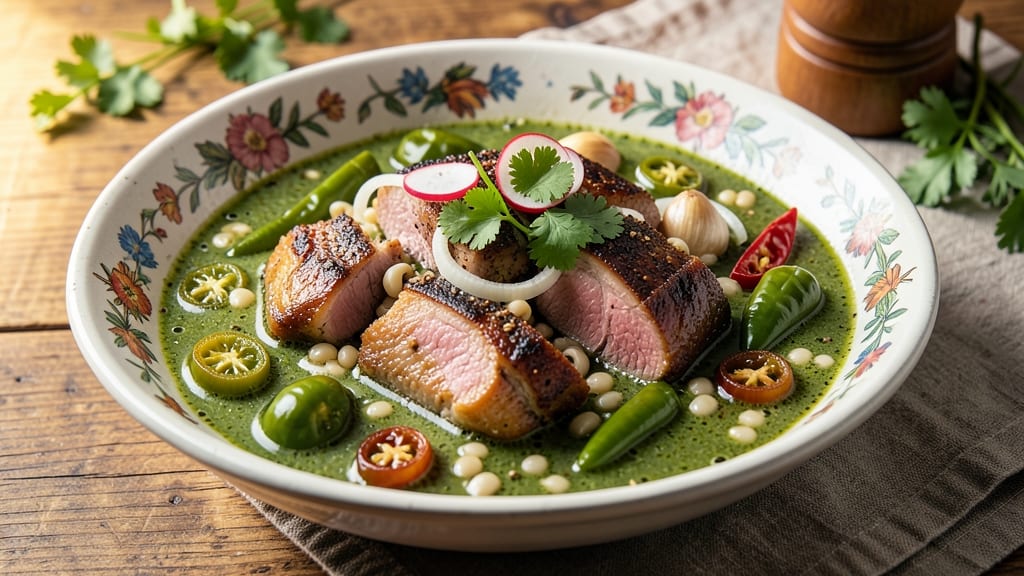
This authentic pork pozole verde recipe brings the soul of Mexican home cooking to your table with its smoky tomato-herb broth and crispy tortilla strips. 🔥 I developed this version after years of perfecting traditional techniques while working with heritage pork—every element, from the hominy to the chili, delivers that deep, comforting flavor that makes pozole unforgettable.
The heart of this dish lies in the broth, where tender pork shoulder simmers with hominy, tomatillos, and green chiles until the meat falls apart and the liquid becomes rich and aromatic. The secret?
Slow-cooking the pork first to render deep flavor, then building the broth with fresh herbs and a touch of smoke. This isn't just a soup—it's a celebration of texture and tradition.
What you'll end up with is a steaming bowl of authentic pozole verde, where tender pork and al dente hominy float in a vibrant green broth, topped with crispy tortilla strips that add crunch and contrast.
The aroma alone will draw everyone to the table, and each bite delivers layers of smoky, herby, and slightly tangy flavors that balance perfectly.
Serve with all the traditional toppings—radishes, avocado, lime, and cilantro—to let everyone customize their bowl. This recipe scales beautifully for gatherings, and the leftovers taste even better the next day. Let's bring the warmth of Mexican home cooking to your kitchen.
Ingredients for authentic pork pozole verde
Sixteen ingredients to bring smoky, herby pozole verde to your table—authentic flavors start here.
| Ingredient | Amount | Notes |
|---|---|---|
| Pork Shoulder 🐖 | 3 lb | Bone-in for flavor, cut into 2-inch chunks |
| Dried Hominy 🌽 | 2 cups | Soaked overnight, drained |
| Tomatillos 🍅 | 1 ½ lb | Husk removed, rinsed, quartered |
| Green Chilies 🌶️ | 4 whole | Anaheim or poblano, stems/seeds removed |
| Garlic Cloves 🧄 | 6 cloves | Peeled, smashed slightly |
| White Onion 🧅 | 1 whole | Quartered, skin on for color |
| Fresh Cilantro 🌿 | ½ cup | Stems included, chopped |
| Fresh Oregano 🌿 | ¼ cup | Mexican oregano preferred |
| Bay Leaves 🍃 | 2 whole | Dried, for depth |
| Lime 🍋 | 1 whole | Juiced, zest reserved |
| Corn Tortillas 🍞 | 8 whole | For crispy strips, cut into triangles |
| Vegetable Oil 🫒 | ¼ cup | For frying tortilla strips |
| Salt 🧂 | 2 tsp | Adjust to taste |
| Ground Cumin 🌿 | 1 tsp | Toasted for aroma |
| Chicken Broth 💧 | 4 cups | Low-sodium preferred |
The pork shoulder is non-negotiable—it's what gives pozole that deep, rich flavor. Look for bone-in cuts at your local butcher or Mexican markets like La Tienda or Mi Pueblo for the best quality. If you can't find bone-in, regular pork shoulder works, but the bones add incredible depth. For hominy, El Mexicano brand is my go-to—it's pre-cooked and ready to go. Tomatillos? Mexican grocery stores sell them in bulk, but if you're at a regular supermarket, look for the green, papery husks. Freshness matters here—avoid any with soft spots or yellowing.
No tomatillos? Green tomatoes work in a pinch, but they won't give you that same tangy brightness. Short on green chiles? Blanched jalapeños or serranos add heat, but reduce the amount by half. The cilantro and oregano are where the magic happens—Mexican oregano has a completely different flavor profile than regular oregano, so if you can find it, grab a little. For the tortillas, Mission brand is my favorite for crispy strips, but any corn tortillas work. The lime zest is worth the extra minute—it brightens up the whole dish. And if you're worried about the broth being too mild, add a splash of fish sauce (just a teaspoon) for umami depth.
Pork keeps 3-4 days in the fridge before cooking—it actually tastes better after a day or two in the freezer, so don't rush it. The hominy and tomatillos can be prepped ahead and stored in airtight containers for up to 5 days. For the tortilla strips, fry them fresh or store in an airtight container with a paper towel to keep them crispy for 2 days. The broth freezes beautifully—just thaw overnight in the fridge. Pro tip: Double the batch and freeze half. You'll thank me when leftovers turn into lunches.
Why You'll Love This Recipe
- Here’s what sold me: the broth gets richer overnight, and the pork? Even more tender. I’ll be real, the first batch is the star, but the second? That’s when it becomes my secret weapon. Freeze extras for those nights when you’re too tired to think, and it’ll taste like you slaved over it. (Spoiler: you didn’t.)
- One-Pot Magic: I swear by this—just toss everything in a big pot, let it simmer, and walk away. No chopping mountains of veggies or fussing with multiple pans. That pork shoulder practically melts into itself, and the hominy soaks up all the smoky goodness while you do whatever else life throws at you.
- Garlic-Green Bomb: Between us, the tomatillos and green chilies give this a bright, tangy kick that’s ridiculously addictive. The garlic? Oh, it’s there—layered in, slow-cooked until it’s sweet and mellow, not overpowering. It’s the kind of flavor that makes you take a second bowl, no question.
- Crowd-Pleaser Flex: This feeds six without breaking the bank, and it’s the kind of dish that works for lazy Sundays or big gatherings. Honestly, I’ve served it at potlucks, game days, and even as a "I’m not cooking" weeknight dinner. Everyone wants seconds, and no one asks what’s in it—just digs in.
Step-by-step instructions for authentic pork pozole verde
Here's how to build this vibrant, smoky pozole with rich layers of flavor and crispy tortilla toppers.
🔥 Step 1: Sear the Pork Shoulder for Deep Flavor
Heat a large Dutch oven over medium-high heat and add the 3 lb pork shoulder cut into 2-inch chunks. Sear undisturbed for 5-6 minutes until deeply browned on all sides. This creates the Maillard reaction that forms the foundation of your pozole's rich flavor.
Remove the pork and set aside. In the same pot, add 0.25 cup vegetable oil and let it heat until shimmering. Add the 6 smashed garlic cloves and 1 whole white onion (skin on for color) and cook for 3-4 minutes until the onion softens and garlic becomes fragrant. Here's the thing—don't rush this step. The aromatics need time to develop their sweet, caramelized notes that will infuse the entire dish.
🍳 Step 2: Build the Tomatillo-Chile Base
Add the 1.5 lb quartered tomatillos and 4 whole green chilies (stems/seeds removed) to the pot. Cook for 5 minutes until the tomatillos soften and release their bright, tangy juices. Stir occasionally to prevent burning—this is where the pozole's signature green color begins to develop.
Pour in the 4 cups chicken broth and bring to a gentle boil. Add the 2 whole bay leaves, 1 tsp toasted ground cumin, and 2 tsp salt. Return the pork shoulder to the pot, then reduce heat to low and cover partially. Simmer for 1 hour 30 minutes until the pork is fork-tender and the broth has deepened in color. You'll know it's ready when the meat pulls apart easily and the broth has a rich, herby aroma.
🥘 Step 3: Incorporate Hominy and Herbs
Add the 2 cups drained hominy to the pot and simmer uncovered for another 15 minutes. The hominy should be heated through but still hold its shape. Stir in the 0.5 cup chopped fresh cilantro and 0.25 cup fresh oregano (Mexican oregano preferred) just before removing from heat. These herbs add freshness that brightens the smoky broth.
Remove the bay leaves and adjust seasoning if needed. The pozole should be seasoned to taste—salty enough to complement the pork, but not overpowering. Here's a pro tip: Add the lime juice and zest just before serving to preserve its bright acidity. The zest adds a subtle citrus note that cuts through the richness of the pork and broth.
🔥 Step 4: Fry the Crispy Tortilla Strips
Cut the 8 whole corn tortillas into triangles. Heat 0.25 cup vegetable oil in a skillet over medium heat until hot but not smoking. Fry the tortilla strips in batches for 1-2 minutes per side until golden brown and crispy. Drain on paper towels and keep warm.
This is where the pozole gets its textural contrast. The crispy tortilla strips should be golden and slightly puffed—almost like mini tortilla chips. If they're not crispy enough, fry them another 30 seconds. The strips should hold their shape when lifted with tongs, not turn to mush. Serve immediately alongside the pozole for that satisfying crunch with every bite.
🍽️ Step 5: Serve with Traditional Garnishes
Ladle the pozole verde into bowls and top with the crispy tortilla strips. Garnish with additional chopped fresh cilantro, a squeeze of lime juice, and a sprinkle of lime zest. The contrast of temperatures—hot pozole, cool lime, crispy tortillas—makes every spoonful exciting.
For an authentic experience, serve with warm tortillas on the side and a simple cabbage slaw. The acidity of the lime and the crunch of the tortilla strips cut through the richness of the pork and broth, creating a perfectly balanced dish. This pozole verde captures the essence of Mexican comfort food—rich, smoky, and full of contrasting textures.
Pro Tips For Making Authentic Pork Pozole Verde
- Char the Tomatillos Properly: Don’t just blanch them—get those tomatillos blistered and charred in a dry skillet for 5-7 minutes. The blackened spots add depth that raw or steamed tomatillos can’t match, and it cuts down on the need for extra salt later. (Yes, even if you’re impatient like me, resist the urge to rush this.)
- Render the Pork Fat First: Before adding anything else, sear the pork shoulder in batches over medium-high heat until the fat renders and the meat develops a deep crust. This isn’t just for flavor—it prevents the broth from turning greasy later. I learned this the hard way when my first batch ended up looking like soup.
- Soak Hominy Overnight: Skip the quick-soak hack—give those dried hominy 8-12 hours in cold water. The texture will be silky, not mealy, and they’ll absorb the broth like a dream. (Pro move: Drain and rinse them well before adding to the pot—no one wants gritty pozole.)
- Toast the Green Chilies: Dry-toast your green chilies (serrano or poblano) in a skillet for 2-3 minutes per side until slightly blistered. This mellows their heat and concentrates their flavor—way better than raw or boiled. (Bonus: If you’re short on time, broil them for 5 minutes instead.)
Pro cooking tips for perfect results
Pork Prep Perfection
Start with a bone-in pork shoulder—the bones add incredible depth to the broth. Cut it into 2-inch chunks for even cooking, and sear them undisturbed for 5-6 minutes on each side until deeply browned.
This isn't just about color; it's about building the Maillard reaction that forms the foundation of your pozole's rich flavor. I swear by using a cast iron Dutch oven for this step—it retains heat better and gives you that perfect crust on the meat. 🔥
After searing, remove the pork and set it aside. In the same pot, add 0.25 cup vegetable oil and let it heat until shimmering. Then, add the 6 smashed garlic cloves and 1 whole white onion (skin on for color) and cook for 3-4 minutes.
Don't rush this—let the garlic soften and the onion caramelize. This is where the sweet, aromatic base for your broth begins to develop.
Broth Development
Add the 1.5 lb quartered tomatillos and 4 whole green chilies to the pot and cook for 5 minutes until the tomatillos soften and release their juices. This is where the pozole's signature bright green color starts to emerge.
Pour in the 4 cups chicken broth and bring to a gentle boil, then add the 2 bay leaves, 1 tsp toasted ground cumin, and 2 tsp salt. Return the pork to the pot and simmer low and covered for 1 hour 30 minutes.
The key here is patience. The pork should be fork-tender, and the broth should deepen in color and aroma. I like to check the pork every 20 minutes to ensure it's not falling apart too quickly.
If it's getting too tender too soon, reduce the heat slightly. The broth should coat the back of a spoon and have a rich, herby aroma—this is the soul of your pozole. 🌿
Hominy and Herbs
Add the 2 cups drained hominy to the pot and simmer uncovered for another 15 minutes. The hominy should be heated through but still hold its shape—it should be tender but not mushy.
Stir in the 0.5 cup chopped fresh cilantro and 0.25 cup fresh oregano (Mexican oregano preferred) just before removing from heat. These herbs add a bright, fresh contrast to the smoky broth.
Remove the bay leaves and adjust the seasoning if needed. The pozole should be salty enough to complement the pork but not overpowering. Here's a pro tip: Add the lime juice and zest just before serving to preserve its bright acidity.
The zest adds a subtle citrus note that cuts through the richness of the pork and broth, balancing the flavors perfectly. ✨
Crispy Tortilla Strips
Cut the 8 whole corn tortillas into triangles and fry them in batches in 0.25 cup vegetable oil over medium heat for 1-2 minutes per side until golden brown and crispy.
This is where the pozole gets its textural contrast—the crispy tortilla strips should be golden and slightly puffed, almost like mini tortilla chips. If they're not crispy enough, fry them another 30 seconds. The strips should hold their shape when lifted with tongs, not turn to mush.
Serve the tortilla strips immediately alongside the pozole for that satisfying crunch with every bite. I like to keep them warm in a 200°F oven while I finish assembling the bowls.
This ensures they stay crispy until the very last serving. The contrast of the hot pozole, cool lime, and crispy tortillas makes every spoonful exciting. 💫
Nutrition facts
Frequently asked questions
What's the difference between pozole verde and pozole rojo?
While both are traditional Mexican soups, pozole verde gets its vibrant green color from tomatillos and green chiles, creating a tangy, herb-forward broth. Pozole rojo uses dried red chiles and annatto for its rich, smoky red color. The green version is lighter and brighter, while the red is deeper and more robust. Both feature hominy and pork, but the flavor profiles couldn't be more different!
Can I make pozole verde without hominy?
Traditionally, no—hominy is the star of pozole, providing that satisfying chewy texture. However, if you're avoiding gluten or can't find it, you can substitute with white beans (like cannellini) or dried corn kernels for a similar texture. Just add them with the pork and simmer until tender. The flavor won't be identical, but it'll still be delicious!
How do I know when the pork is fully cooked?
The pork is done when it's fork-tender—meaning it should easily pull apart with two forks. If you're unsure, check the internal temperature with a meat thermometer; it should reach 203°F for pulled pork perfection. The meat should also have a rich, deep color and release juices when pierced. Never rush this step—the longer it cooks low and slow, the more flavorful the broth becomes.
Can I prepare pozole verde ahead of time?
The broth and pork can be made 1-2 days ahead and stored in the fridge. The hominy and herbs should be added fresh when reheating. For the crispy tortilla strips, fry them fresh before serving—they lose crispness quickly. If making ahead, keep the tortillas separate until serving. The flavors actually improve overnight as the broth develops deeper notes.
What are the best toppings for pozole verde?
Traditional toppings include crispy tortilla strips, diced white onion, chopped cilantro, lime wedges, and radishes. For extra richness, add avocado slices or crumbled queso fresco. Pro tip: Toasted pumpkin seeds add crunch and a nutty flavor. The key is balancing textures—crunchy, creamy, and fresh elements all work together.