
Main Courses
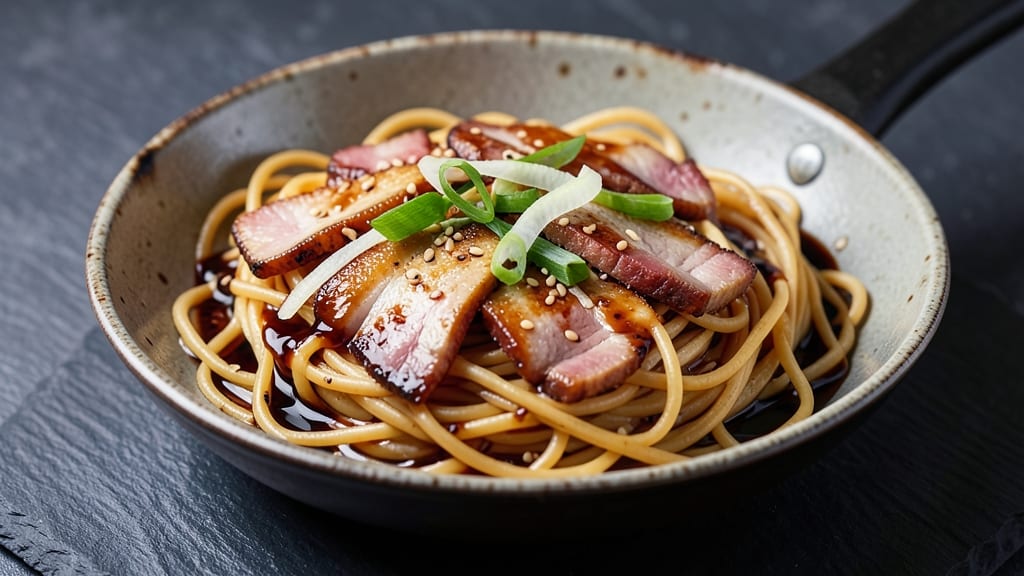
This authentic pork chow mein recipe brings the smoky, savory essence of a bustling Chinese wok into your kitchen. ✨ I perfected it after years of studying traditional stir-fry techniques—where wok hei (breath of the wok) transforms simple ingredients into something extraordinary.
The secret lies in high-heat searing, precise timing, and balancing salty, sweet, and umami flavors that make every bite sing.
The dish starts with chewy wheat noodles tossed in a vibrant sauce of dark soy, light soy, and a touch of sugar—creating that signature glossy sheen while keeping the noodles perfectly al dente.
Thinly sliced pork belly, marinated in Shaoxing wine and ginger, adds tender richness, while crisp bean sprouts and julienned carrots bring fresh crunch. The wok’s rapid heat ensures the pork stays juicy while developing a caramelized crust, and a finishing drizzle of sesame oil elevates the aroma to restaurant-quality levels.
What you’ll achieve is a restaurant-worthy chow mein with layers of texture—silky noodles, tender pork, and crisp vegetables—all coated in a sticky, aromatic sauce. The balance of flavors is key: salty from the soy, sweet from the caramelized pork, and umami from the ginger and garlic.
This isn’t just a stir-fry; it’s a dish that transports you to a bustling street-side stall in Shanghai, where every bite feels like a hug.
Serve it immediately over steamed rice or as a standalone dish, garnished with scallions and a sprinkle of toasted sesame seeds. The leftovers? They’re even better the next day—just reheat gently to preserve that wok hei magic. Let’s get cooking!
Ingredients for authentic pork chow mein
Authentic flavors start with these 15 essential ingredients for wok-tossed perfection.
| Ingredient | Amount | Notes |
|---|---|---|
| Wheat Chow Mein Noodles 🍜 | 12 oz | Dried, chewy variety preferred |
| Pork Belly 🥓 | 1 lb | Thinly sliced, marinated |
| Dark Soy Sauce 🍶 | 3 tbsp | For deep color and flavor |
| Light Soy Sauce 🍶 | 2 tbsp | Balances the sweetness |
| Shaoxing Wine 🍷 | 2 tbsp | Authentic umami depth |
| Fresh Ginger 🌿 | 1 tbsp | Finely grated, aromatic |
| Garlic Cloves 🧄 | 6 cloves | Minced, aromatic foundation |
| White Sugar 🍚 | 1 tbsp | Caramelizes pork beautifully |
| Sesame Oil 🫒 | 1 tbsp | Toasted, for aroma finish |
| Bean Sprouts 🌱 | 4 cups | Fresh, crisp texture |
| Carrots 🥕 | 1 whole | Julienned, vibrant crunch |
| Scallions 🧅 | 3 whole | Thinly sliced, garnish |
| Toasted Sesame Seeds 🌾 | 1 tbsp | For garnish and texture |
| Vegetable Oil 🫒 | ½ cup | High smoke point for wok |
| Cornstarch 🌾 | 1 tbsp | For pork marinade |
The pork belly is non-negotiable for that melt-in-your-mouth texture. Ask your butcher to slice it paper-thin—most Asian markets do this for free. If you can't find Shaoxing wine, dry sherry works in a pinch, but it won't have the same depth. For the noodles, La Choy or King Noodle are reliable brands, but check the package for 'chewy' or 'al dente' labels. Fresh ginger and garlic should smell vibrant—no musty aromas. The carrots need to be julienned into thin matchsticks for that signature crunch.
No dark soy sauce? Substitute 1 tbsp molasses plus 2 tbsp light soy for color. Running short on bean sprouts? Shredded cabbage works, though it won't be as crisp. The sesame oil matters—toasted, not flavored. If you can't find it, lightly toast regular sesame seeds and grind them yourself. For the pork marinade, mix cornstarch with water first to create a slurry—this helps the sauce cling beautifully. The wok hei (breath of the wok) comes from high heat and rapid tossing—don't rush this part.
Pork marinates best overnight, but 30 minutes minimum works in a pinch. Store leftovers in airtight containers for 3 days—they reheat beautifully. The noodles soften when refrigerated, so reheat in hot water for 30 seconds before tossing. For extra authenticity, serve with steamed jasmine rice and a side of chili oil. Garnish with scallions and sesame seeds right before eating—this is where the magic happens.
Why You'll Love This Recipe
- One-Pot Magic: I swear by this recipe—just toss the noodles, pork, and sauce into one wok, and let the Shaoxing wine work its savory alchemy. No extra bowls, no mess, and that caramelized pork belly? It basically cooks itself while you stir.
- Umami Bomb: The combo of dark soy for depth and light soy for brightness, plus a splash of Shaoxing wine, delivers a flavor punch that’s ridiculously hard to resist. That crispy pork edge? Pure satisfaction—like a hug in noodle form.
- Lunchbox Hero: Between us, this is my go-to for packed lunches. The noodles hold up perfectly, and the pork stays tender enough to eat cold the next day. (Yes, even on a Tuesday night when you’re too tired to reheat.)
- Budget Win: Pork belly might sound fancy, but it stretches thinly across the noodles, making this dish way more affordable than takeout. Plus, leftovers reheat like a dream—just add a splash of water and stir. Dinner for days, for less.
Step-by-step instructions for authentic pork chow mein
Here's how to create restaurant-quality chow mein with perfect wok hei and silky noodles.
🍳 Step 1: Prepare the Pork Marinade and Cook
In a bowl, combine the 1 lb pork belly, 1 tbsp cornstarch, 3 tbsp dark soy sauce, 2 tbsp light soy sauce, 2 tbsp shaoxing wine, 1 tbsp white sugar, 1 tbsp fresh ginger, and 6 cloves garlic cloves. Mix thoroughly until the pork is evenly coated and let it marinate for 30 minutes at room temperature.
Heat 0.5 cup vegetable oil in a wok over high heat until shimmering. Add the marinated pork in a single layer and sear for 3-4 minutes until golden brown and crispy on the outside. Remove the pork and set aside—it'll finish cooking later. The oil should be hot enough to sizzle when pork touches it.
👨🍳 Step 2: Cook the Noodles and Vegetables
Bring a large pot of water to a rolling boil and add the 12 oz wheat chow mein noodles. Cook for 3-4 minutes until al dente—they should still have a slight bite. Drain immediately and rinse under cold water to stop cooking. Toss with 1 tbsp sesame oil to prevent sticking.
In the same wok (no need to clean it), add a splash of fresh oil if needed. Toss in 4 cups bean sprouts and 1 whole julienned carrot over high heat. Stir-fry for 2-3 minutes until the vegetables are bright green and crisp-tender. Remove and set aside with the pork.
🔥 Step 3: Wok-Toss the Chow Mein
Return the wok to high heat and add the cooked noodles. Toss vigorously for 1 minute to reheat. Add the pork and vegetables back to the wok, then pour in 1 tbsp light soy sauce and 1 tbsp dark soy sauce. Toss everything together for 2-3 minutes until everything is coated and heated through. The wok should be smoking slightly—this is your "wok hei" flavor.
Here's the thing—don't overcrowd the wok. Work in batches if needed to maintain that smoky aroma. The noodles should be silky and glossy, not mushy, and the pork should be crispy again from the residual heat.
🥘 Step 4: Finish and Garnish
Transfer the chow mein to serving plates and garnish with 3 whole thinly sliced scallions and 1 tbsp toasted sesame seeds. The seeds should be sprinkled evenly for both texture and visual appeal. Serve immediately while everything is hot and the noodles are still silky.
For that authentic touch, I like to serve with a side of steamed dumplings or pickled vegetables. The contrast of textures—crispy pork, chewy noodles, and crunchy sprouts—makes this dish unforgettable. Real talk: the first bite should deliver that perfect balance of savory, sweet, and umami flavors.
Pro Tips For Making Authentic Pork Chow Mein
- STIR-FRY IN BATCHES: The noodles and pork won’t cook evenly if you toss everything in at once. Cook the pork belly first until it’s just browned and tender—about 80% done—then set it aside. When you add the noodles, the pork will finish cooking in the residual heat without turning rubbery. (Yes, even if you're impatient like me.)
- SALT THE NOODLES WELL: Fresh chow mein noodles are bland until you work with them. Soak them in warm water with 1 teaspoon salt for 10 minutes before draining—this softens them and seasons them deeply. Skipping this step means your noodles will taste like cardboard no matter how much sauce you add.
- USE COLD NOODLES: Hot noodles release too much starch and turn mushy when stir-fried. Drain them, rinse briefly with cold water, and shock them in an ice bath for 30 seconds. They’ll hold their shape better and absorb the sauce without falling apart. (Your future self will thank you.)
- DEGLAZE WITH SHAOXING WINE: Don’t just dump the Shaoxing wine in at the end—use it to deglaze the wok immediately after removing the pork. The caramelized bits on the bottom hold all the flavor, and the alcohol helps lift it into the sauce. A splash of light soy sauce right after will round out the depth. (Sounds weird, but it works.)
Essential equipment for great authentic pork chow mein
Wok Essentials
A carbon steel wok is non-negotiable for authentic chow mein—it heats up fast and retains heat beautifully. I swear by a 14-inch Calphalon wok with a flat bottom for stovetop use. If you're on a budget, a Lodge pre-seasoned carbon steel wok works just as well.
The key is maintaining that wok hei—the smoky aroma that comes from high heat and rapid tossing. 🔥
Never use nonstick woks for stir-frying—they can't handle the high heat needed for that perfect crust on the pork. A wok ring (about 12 inches in diameter) elevates the wok for better heat circulation and easier tossing.
I keep mine on my stove's highest heat setting—usually 14,000 BTU—to achieve that signature char.
Heat Source Matters
Gas burners are ideal for wok cooking because they give you precise control over flame intensity. If you have a propane burner (like a Weber Bullet), even better—it mimics the high, direct heat of a traditional Chinese coal stove.
Avoid electric stoves unless you have a high-wattage induction burner (at least 3,000 watts). The heat needs to be intense and even to create that wok hei flavor.
Tongs and Spatulas
Invest in a long-handled wok spatula (about 18 inches) with a wide, flat blade—I use a Victorinox wok spatula—to scrape and toss ingredients. For tossing noodles and vegetables, a 12-inch pair of fish spatula tongs (like OXO Good Grips) gives you the best control.
These tools let you work quickly while keeping your hands safe from the heat. 💪
Marinade Tools
A fine-mesh strainer (about 6 inches) helps drain excess marinade from the pork without breaking up the slices. I also keep a small mixing bowl (about 8 inches) for marinating—just big enough to coat the pork evenly.
For mincing garlic and ginger, a microplane gives you the finest texture, which is crucial for authentic flavor. Don’t skimp on fresh ingredients here—they make all the difference.
Garnish Must-Haves
Fresh scallions and toasted sesame seeds are your garnish game-changers. I like to slice scallions paper-thin with a sharp chef’s knife (a Wüsthof Ikon is my go-to). For sesame seeds, a small skillet on medium heat toasts them perfectly—just 1-2 minutes until golden and fragrant.
Store them in a small airtight container to keep them fresh between uses. ✨
Nutrition facts
Frequently asked questions
Can I substitute pork belly with chicken or beef for this recipe?
While pork belly is traditional for its rich, fatty flavor, you can use chicken thigh or lean beef sirloin—just slice it paper-thin and marinate for 20-30 minutes instead of 30. Chicken will stay juicier, but beef needs slightly longer searing (4-5 minutes) to develop that caramelized crust. The texture will differ, but the technique remains the same!
Why does my chow mein taste bland? How do I fix it?
Blandness usually comes from low heat or insufficient sauce. Boost flavor by using both dark and light soy sauce (dark adds color, light balances sweetness) and ensuring your wok is smoking hot. Add a splash of Shaoxing wine or a pinch of white pepper at the end for depth. Pro tip: Taste as you cook—adjust with extra soy or a drizzle of sesame oil!
How do I get crispy noodles without burning them?
Crispy noodles are all about timing and high heat. Cook noodles just al dente (3-4 minutes), rinse in cold water, and toss with 1 tbsp sesame oil to prevent sticking. When stir-frying, work in batches—don’t overcrowd the wok. The residual heat will crisp them up as you toss. For extra crunch, add 1 tsp cornstarch to the noodles before tossing!
Can I make this ahead of time?
Chow mein is best served fresh, but you can prep components ahead: marinate the pork (overnight for deeper flavor), cook the noodles (rinse and store in airtight container), and chop veggies. Reheat noodles in hot water for 30 seconds before tossing. For leftovers, reheat gently in the wok over medium heat—add a splash of water to restore that wok hei aroma!
What’s the secret to that smoky wok flavor (wok hei)?
Wok hei comes from high, direct heat and rapid tossing. Use a carbon steel wok on the highest heat setting—gas burners work best. Keep ingredients moving constantly so they sear quickly. The smoke and sizzle release aromatic compounds. For extra drama, finish with a drizzle of sesame oil right before serving—it amplifies the smoky aroma instantly!