
Main Courses
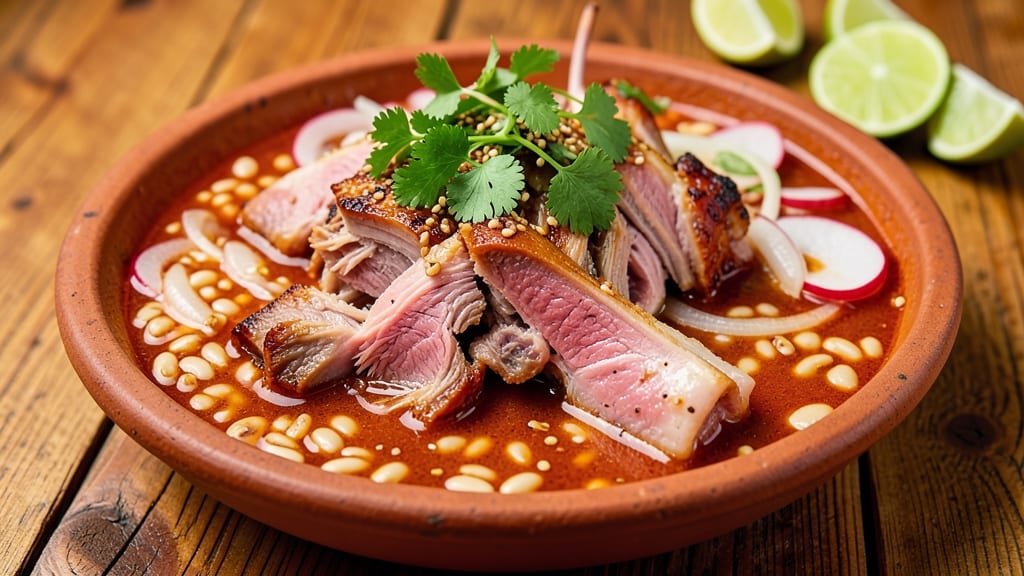
This authentic Mexican pork pozole recipe brings the soul of Mexican homestyle cooking to your kitchen, where every spoonful tells a story of slow-simmered spices and tender meat. 🌟 After years of perfecting the balance between smoky chiles, earthy hominy, and rich pork, I've created a version that stays true to tradition while being approachable for home cooks.
The heart of pozole lies in its broth—built from scratch with pork bones, aromatic spices, and dried chiles that infuse deep, complex flavors. We'll start with a base of pork shoulder and head (for maximum richness), then add hominy that's been soaked and boiled to achieve that signature creamy texture.
Traditional ingredients like epazote and oregano elevate the dish beyond ordinary stews.
What makes this recipe special is the harmony of textures and flavors: tender pork that falls apart easily, hominy with its unique grainy bite, and a broth so flavorful it deserves its own bowl.
The result is a dish that's both comforting and impressive—perfect for gatherings or cozy weeknight dinners when you crave something hearty and authentic.
Serve it with all the classic toppings: shredded cabbage, radishes, avocado slices, lime wedges, and warm tortillas to scoop up every last bit. This is pozole as it should be made—rich, flavorful, and full of tradition. Let's get started on creating your own homestyle masterpiece.
Ingredients for authentic mexican pork pozole
Sixteen ingredients for a dish packed with tradition and homestyle warmth.
| Ingredient | Amount | Notes |
|---|---|---|
| Pork Shoulder 🐖 | 3 lb | Bone-in for richer broth |
| Pork Head 🐷 | 1 whole | Optional but adds gelatin |
| Dried Hominy 🌽 | 2 cups | Soaked overnight, drained |
| Dried Guajillo Chiles 🌶️ | 6 whole | Stems/seeds removed, toasted |
| Dried Ancho Chiles 🌶️ | 4 whole | Stems/seeds removed, toasted |
| Onion 🧅 | 1 whole | Yellow or white, chopped |
| Garlic Cloves 🧄 | 8 cloves | Peeled, smashed slightly |
| Fresh Epazote 🌿 | ½ cup | Or 1 tbsp dried if unavailable |
| Mexican Oregano 🌿 | 2 tbsp | Not regular oregano |
| Ground Cumin 🌿 | 1 tbsp | Toasted for deeper flavor |
| Bay Leaves 🍃 | 2 whole | For aromatic depth |
| Salt 🧂 | 2 tsp | Adjust to taste |
| Lime 🍋 | 1 whole | Juiced, for brightness |
| Vegetable Oil 🫒 | ¼ cup | For initial searing |
| Chicken or Vegetable Broth 💧 | 4 cups | Low-sodium preferred |
The pork shoulder and head are non-negotiable for that authentic depth. Ask your butcher to trim excess fat—you want flavor, not grease. For the chiles, MexGrocer or Latin markets have the best selection, but any dried chile aisle will work. Toast them in a dry skillet until fragrant—this brings out their natural oils. The hominy needs a good soak (overnight in water), then boil for 20 minutes to soften. Fresh epazote is a game-changer if you can find it, but dried works in a pinch (just use less).
No guajillo or ancho chiles? Arbol chiles at half the amount add heat, but you'll lose that signature smoky sweetness. Mexican oregano is different from Italian—look for it in the Latin section of your grocery store. For the broth, low-sodium is key so you can control the saltiness. If you're short on time, canned hominy in the Latin aisle (like Goya) works, but soaking dried gives the best texture. The pork head is optional but adds incredible richness—skip it if you're serving a crowd who might be squeamish about ears or snouts.
This dish tastes even better the next day as flavors meld. Store in the fridge for 4-5 days or freeze for 3 months. I always make a double batch—one for dinner, one for leftovers that turn into tacos the next day. The broth alone is worth saving! For serving, keep toppings like shredded cabbage, radishes, and avocado separate so everyone can customize their bowl. The lime should be fresh-squeezed—bottled juice just doesn't cut it.
Why You'll Love This Recipe
- No-Chop Necessary: I swear by the slow cooker for this one—just toss in the pork shoulder and head (no trimming, no fuss), and let it melt into tender perfection. The hominy soaks overnight, but honestly? That’s the only work you’ll do ahead.
- Smoky Depth Magic: Between the charred guajillo and ancho chiles (soaked, seeded, blended—yes, it’s worth the 10 minutes), and the pork head’s gelatinous richness, every spoonful tastes like a fiesta in your mouth. The hominy adds that satisfying chew, like a hug from your abuela.
- Leftovers That Beg for More: This soup only gets better the next day—flavors meld, broth deepens. I freeze half the batch; reheating it with a splash of water and a quick stir makes it taste like you slaved all day. (Between us, I’ve served it cold as pozole verde the next night. Don’t judge.)
- Budget-Friendly Crowd-Pleaser: Pork shoulder and heads are cheap cuts, and dried chiles stretch further than fresh. For under $15, you feed six people a meal that’ll have them licking their bowls. My college roommate cried the first time I made it—true story.
Step-by-step instructions for authentic Mexican pork pozole
Let's bring the soul of Mexican home cooking to your kitchen with this traditional pozole.
🔥 Step 1: Prepare the Meat and Hominy
Start by cutting the 3 lb pork shoulder into 2-inch chunks and reserving the pork head for broth. If using, separate the pork head meat from the bone - the bone will add incredible depth to your broth. Soak the 2 cups dried hominy in plenty of water overnight, then drain before using.
In a large Dutch oven, heat the 0.25 cup vegetable oil over medium-high heat. Add the pork shoulder chunks and brown them on all sides for about 5-7 minutes. This step is crucial as it develops deep flavor through the Maillard reaction. Remove the pork and set aside.
🍳 Step 2: Toast and Blend the Chiles
While the pork browns, toast the 6 whole dried guajillo chiles and 4 whole dried ancho chiles in a dry skillet over medium heat for 30 seconds per side until fragrant. This awakens their natural flavors. Remove stems and seeds, then blend them with the 1 whole chopped onion, 8 smashed garlic cloves, 2 tbsp Mexican oregano, 1 tbsp ground cumin, 2 whole bay leaves, and 2 tsp salt until smooth.
Here's the thing - the chiles need to be toasted just enough to smell amazing but not burned. You'll know it's perfect when you can smell that deep, earthy aroma filling your kitchen. This blend will become the flavor base for your pozole.
🥘 Step 3: Build the Flavorful Broth
Return the browned pork to the Dutch oven and add the blended chile mixture. Cook for 3-4 minutes, stirring constantly to coat the pork completely. This step ensures every bite gets that complex, smoky flavor. Pour in the 4 cups chicken or vegetable broth and bring to a boil.
Once boiling, reduce heat to low, cover partially, and simmer for 2 hours. This long cook time is essential - it allows the pork to become fork-tender and the broth to develop its rich, velvety texture. Skim off any foam that rises to the surface during the first 30 minutes of simmering.
⏰ Step 4: Cook the Hominy and Finish
After the pork has simmered for 2 hours, add the drained 2 cups dried hominy and continue cooking for another 30-45 minutes until the hominy is tender. The hominy should be soft enough to pierce easily with a fork but still hold its shape.
Stir in the 0.5 cup fresh epazote (or 1 tbsp dried) and the juice of 1 whole lime during the last 10 minutes of cooking. The epazote adds that distinctive herbal note that makes pozole truly authentic. Taste and adjust seasoning with additional salt if needed.
🍽️ Step 5: Serve Traditionally
Once everything is tender and the broth has reduced slightly, ladle the pozole into bowls. For an authentic experience, serve with traditional toppings: sliced radishes, shredded cabbage, chopped cilantro, lime wedges, and warm tortillas. The contrast of textures and temperatures makes each bite exciting.
This pozole should have a rich, slightly smoky broth with tender pork that practically falls apart in your mouth. The hominy adds that perfect hearty texture that makes pozole so satisfying. Enjoy immediately while it's hot and steaming!
Pro Tips For Making Authentic Mexican Pork Pozole
- Char the Chiles Properly: Toss guajillo and ancho chiles in a dry skillet over medium-high heat for 30 seconds per side—just until fragrant and slightly blistered. I used to soak them straight away, but charring deepens that smoky, earthy flavor that’s the soul of pozole broth. (Yes, even if you’re impatient like me, don’t skip this.)
- Simmer Pork Head Low: After the initial boil, drop the pork head to a gentle simmer—think tiny bubbles, not rolling. I learned this the hard way when my first batch turned out mushy because I kept the heat too high. Low and slow (2.5–3 hours) renders the collagen into silky broth without falling apart.
- Soak Hominy Overnight: Dried hominy needs at least 8 hours in water to soften properly—no shortcut here. I tried the 4-hour soak once, and the texture was still gritty. Drain and rinse well before adding to the pot, or the broth will taste chalky. (Your future self will thank you.)
- Skim Fat Early: After the first 30 minutes of cooking, skim off the thick layer of fat rising to the surface with a slotted spoon. Too much fat later makes the broth greasy, and no one wants that. Do it while the meat’s still cooking—it’s easier before the broth thickens. (Does it look weird? Yes. Does it work? Every single time.)
Serving suggestions for leftovers
Warm Tortilla Essentials
Nothing beats the experience of dipping warm tortillas into pozole's rich broth. I keep a stack of corn tortillas (about 12-16) in a cast iron skillet over medium heat for 30 seconds per side until they're pliable and slightly charred.
For extra authenticity, use blue corn tortillas—they add a subtle earthy flavor that pairs beautifully with the smoky chiles. 🌽
Classic Topping Bar
Set up a toppings station with all the traditional elements: thinly sliced radishes, shredded green cabbage, avocado slices, and chopped cilantro. Add lime wedges for that essential bright finish.
I also include diced onion and a sprinkle of Mexican crema for those who prefer a creamier texture. Let everyone customize their bowl!
Broth for Dipping
Save some of that flavorful broth and serve it in a separate bowl for dipping tortillas. The broth should be ladled from the pot where it's been simmering—this ensures maximum flavor.
For extra richness, I sometimes add a splash of warm chicken broth to keep it hot and prevent it from cooling too quickly when serving.
Side Dish Pairings
Complement your pozole with a simple Mexican street corn salad or a crisp mango-avocado salad. The sweetness of the mango cuts through the richness of the pozole beautifully. For a heartier option, serve with black beans and charro beans—both add protein and texture that balance the dish perfectly.
Drink Recommendations
Pozole pairs wonderfully with a Mexican lager like Modelo Especial or Pacífico. The crisp, clean taste refreshes your palate between bites. For a non-alcoholic option, try horchata—its sweet, creamy flavor contrasts nicely with the smoky pozole. I always have a pitcher of both on hand when serving this dish.
Leftovers Transformation
Turn tomorrow's leftovers into pozole tacos by shredding the pork and hominy, then assembling with toppings on warm tortillas. For a quick fix, reheat the pozole in a pot with a splash of broth to maintain moisture.
The flavors actually deepen overnight, making leftovers just as delicious as the first serving. 💫
Nutrition facts
Frequently asked questions
What's the secret to authentic pozole flavor?
The magic lies in the chile blend and slow cooking. Toasting guajillo and ancho chiles until fragrant, then blending with garlic, onion, and Mexican oregano creates the complex base. Simmering the pork for 2 hours develops deep, rich flavors that can't be rushed.
Can I make pozole without a pork head?
While the pork head adds incredible gelatin for richness, it's optional. Use extra pork shoulder or add 1 cup chicken broth during cooking to compensate. The dish will still be delicious—just slightly less velvety.
How do I prevent my pozole from being too spicy?
Remove seeds from the chiles before toasting, and use half the amount of guajillo chiles if you prefer mild heat. Always taste the blended chile mixture before adding it to the pot—you can adjust with more onion or broth to mellow the flavor.
What's the best way to reheat pozole?
Reheat gently on low heat with a splash of broth or water to prevent drying. For leftovers, simmer for 10-15 minutes until hot through. Never microwave—it ruins the texture and separates the broth. The flavors actually improve after resting overnight!
Where can I find the special ingredients?
Look for dried chiles and Mexican oregano in the Latin foods aisle at most grocery stores. For the best selection, visit MexGrocer or specialty markets. If you can't find fresh epazote, dried works (use 1 tbsp instead of 0.5 cup).