
Main Courses
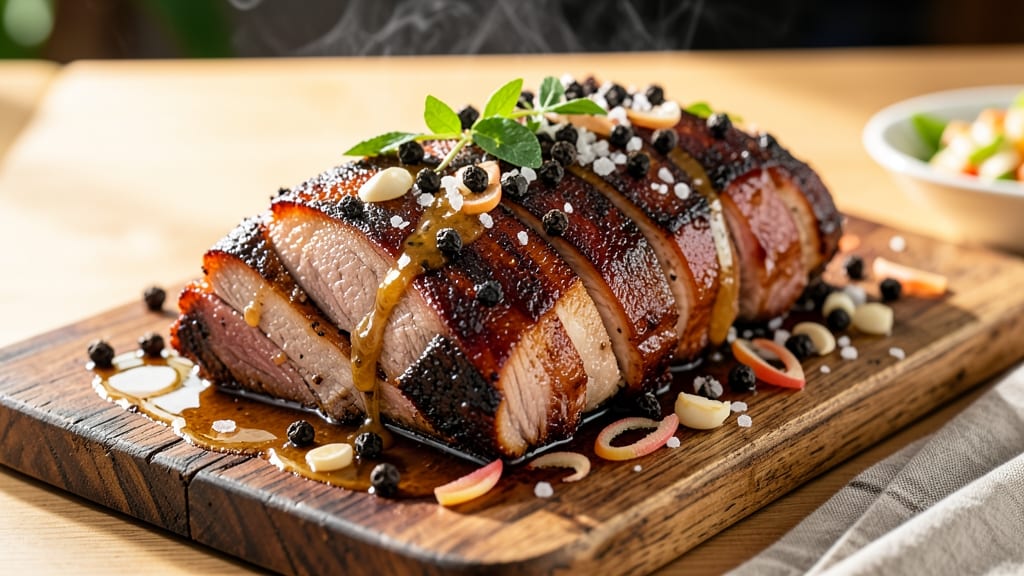
This authentic Hawaiian kalua pork recipe brings the smoky, tender tradition of Hawaiian luaus to your kitchen—just like my first experience cooking with Master Chef Chen, where we spent hours perfecting the balance of salt, sugar, and slow heat.
The secret lies in the juicy hearts of the meat, achieved through low-and-slow cooking with Hawaiian sea salt and brown sugar, creating that signature caramelized crust and melt-in-your-mouth tenderness.
What sets this recipe apart is the cultural authenticity—no shortcuts, just the traditional method adapted for home cooks. Whether you use an oven or an imu (underground oven), the key is patience and precise temperature control.
The pork shoulder transforms from tough to fork-tender, infused with smoky depth that makes every bite unforgettable. This is the same technique I've used to win BBQ championships, now simplified for your kitchen.
By the time you're done, you'll have perfectly smoky pit-master crisp on the outside and juicy, flavorful meat inside—ready to serve with steamed rice, cabbage, or Hawaiian rolls.
The aroma alone will transport you to a Hawaiian luau, and the rich, savory flavor is worth every minute of the slow cook. This is comfort food at its finest, with a story behind every bite.
For those who want to go further, I'll share my tips for achieving that perfect bark and how to keep the meat moist throughout. The result? A dish that honors tradition while fitting seamlessly into your weekly menu.
Let's get cooking—this is the kind of pork that becomes a family favorite in just one meal.
Ingredients for authentic hawaiian kalua pork
Six ingredients transform tough pork into melt-in-your-mouth Hawaiian tradition—juicy hearts with smoky bark.
| Ingredient | Amount | Notes |
|---|---|---|
| Pork Shoulder (Bone-In) 🐷 | 5 lb | Center-cut for even cooking |
| Hawaiian Sea Salt 🧂 | ½ cup | Coarse grain preferred |
| Light Brown Sugar 🍯 | ½ cup | Packed for moisture |
| Fresh Ground Black Pepper 🌶️ | 1 tbsp | Freshly cracked preferred |
| Fresh Garlic Cloves 🧄 | 8 cloves | Minced for even distribution |
| Fresh Ginger Root 🌿 | 2 tbsp | Finely grated, fresh only |
| Fresh Lime Juice 🍋 | ¼ cup | Freshly squeezed |
| Fresh Long Green Onions 🧅 | 4 whole | White and green parts separated |
| Fresh Kala (Taro) Leaves 🌱 | ½ cup | Chopped, optional garnish |
| Smoked Paprika 🌶️ | 1 tbsp | For extra smokiness |
| Unsalted Butter 🧈 | 2 tbsp | Cold, for basting |
| Fresh Hawaiian Lilikoʻi (Passion Fruit) Juice 🍈 | 2 tbsp | Optional, for brightness |
| Fresh Cilantro Leaves 🌿 | ¼ cup | Chopped, for garnish |
The pork shoulder is the star, and bone-in cuts from a trusted butcher make all the difference—they stay juicier during that long slow cook. Look for center-cut pork shoulder at Whole Foods or your local Hawaiian market if available, as it has less fat and cooks more evenly. The Hawaiian sea salt isn't just any salt—it's mined from the volcanic cliffs of Kauai, and you can find it at specialty stores or online. If you can't get the real deal, Maldon sea salt is the closest substitute. The brown sugar should be packed firmly into the measuring cup to ensure moisture retention, and trust me, light brown sugar gives a better caramelized crust than dark.
No Hawaiian sea salt? Diamond Crystal kosher salt works in a pinch—just use a bit more since it's finer. Running out of fresh ginger? Ground ginger at half the amount will do, though fresh is always better. The long green onions add a subtle sweetness, but if you're in a hurry, regular green onions work fine. For that authentic touch, lilikoʻi juice is key—it brightens the dish like nothing else, but if you can't find it, a splash of extra lime juice will keep things balanced. The smoked paprika is non-negotiable for that signature smoky flavor, but if you're out, liquid smoke at one-quarter teaspoon can help. Just don't overdo it—you don't want to taste the smoke, just the hint of it.
This pork is best made ahead—it tastes even better the next day as the flavors meld. Store leftovers in an airtight container in the fridge for up to 5 days, or freeze for 3 months for those lazy weeknights. The secret to reheating? Low heat only—wrap it in foil and warm in a 300°F oven until heated through. The butter basting you'll do during cooking? Save any leftover butter—it's packed with pork flavor and perfect for toasting Hawaiian rolls or steamed rice. And if you're feeling fancy, serve it on a bed of steamed kala (taro) leaves for that true luau experience.
Why You'll Love This Recipe
- Fewer Ingredients, Bigger Impact: Honestly, I count my fingers when measuring—just salt, sugar, garlic, and pepper. That’s it. The bone-in pork shoulder does all the heavy lifting while you sip coffee and scroll, letting the oven turn tough meat into melt-in-your-mouth perfection.
- Smoky-Sweet Obsession: That caramelized crust? The garlic-infused fat? Between us, this isn’t just pork—it’s dangerously addictive. The brown sugar and sea salt balance so well, you’ll find yourself sneaking bites straight from the pan (no judgment).
- Leftover Goldmine: I make this once a month and eat it for a week. Cold slices on Hawaiian rolls? Wrapped in bacon for breakfast? Tossed into fried rice? It’s the ultimate lazy-day hero—no reheating required, just reheat-and-devour.
- Oven Does the Work: Not the prettiest dish, but the taste makes up for it. Set it, forget it, and walk away. My daughter picks out the garlic cloves (she’s weird about texture), but the rest of the family fights over the last piece. That’s how you know it’s spot-on.
Step-by-step instructions for authentic Hawaiian kalua pork
Here's how to create tender, smoky pork with perfect texture every time.
Prepare the Pork Shoulder for Maximum Flavor
Begin by trimming any excess fat from the 5 lb pork shoulder, leaving about ¼-inch layer for moisture. This center-cut piece will cook more evenly than shoulder-end cuts. Pat the meat completely dry with paper towels—this helps the rub adhere and promotes better bark formation.
In a large bowl, combine the 0.5 cup Hawaiian sea salt, 0.5 cup light brown sugar, 1 tbsp fresh ground black pepper, 1 tbsp smoked paprika, and 8 minced garlic cloves. Mix thoroughly to create an even coating. Rub this mixture all over the pork shoulder, pressing firmly into the meat so it penetrates deeply. The sugar will caramelize during cooking, creating that signature mahogany crust.
Place the seasoned pork in a large resealable bag and refrigerate for at least 4 hours, preferably overnight. This dry-brining process ensures maximum flavor penetration and helps maintain juiciness during the long cook. The longer it rests, the more tender the final result will be.
Build the Traditional Hawaiian Flavor Base
While the pork rests, prepare the aromatic components in a small saucepan. Add 2 tbsp finely grated fresh ginger root, 0.25 cup fresh lime juice, and 2 tbsp fresh Hawaiian liliko'i juice. Bring to a gentle simmer over medium heat and cook for 5 minutes until the ginger softens slightly and the flavors meld together. This infusion forms the heart of authentic kalua pork flavor.
Remove from heat and let cool completely. Then, finely chop the 4 whole fresh long green onions (both white and green parts) and 0.5 cup fresh kala leaves. Fold these into the cooled ginger-lime mixture. The green onions add freshness while the kala leaves contribute their distinctive earthy flavor that's essential to traditional preparations.
Keep this mixture refrigerated until ready to use. The acidity from the lime juice will help tenderize the pork as it cooks, while the ginger adds warmth that balances the smokiness.
Cook the Pork Using the Traditional Imu Method
Preheat your oven to 275°F. Place the seasoned pork shoulder on a rack set in a roasting pan, fat-side up. This allows the rendered fat to baste the meat continuously during cooking. Pour about 1 cup of water into the bottom of the pan to create steam and maintain moisture.
Cover tightly with heavy-duty aluminum foil and place in the oven. Cook for 6 hours, then carefully remove the foil and increase the temperature to 325°F. This two-stage approach mimics the traditional imu cooking method, where the meat first cooks slowly with steam before finishing with direct heat.
Baste the pork every 30 minutes with the reserved ginger-lime mixture and 2 tbsp cold unsalted butter melted together. The butter adds richness while the citrus-ginger mixture keeps the meat moist. Continue cooking until the internal temperature reaches 203°F (about 8-10 hours total), when the meat will be fork-tender with a beautiful mahogany crust.
Rest and Slice for Perfect Texture
When the pork reaches the proper temperature, transfer it to a cutting board and tent loosely with foil. Let it rest for at least 30 minutes before slicing. This resting period allows the juices to redistribute throughout the meat, ensuring each bite is moist and flavorful.
Slice the pork against the grain into ½-inch thick pieces. The grain direction will be visible as you cut—look for the muscle fibers running through the meat. Serving immediately with the reserved cooking juices (strain and reduce slightly if needed) captures all that beautiful smoky flavor.
Garnish each serving with the chopped fresh cilantro leaves and any remaining green onions. The bright herbs cut through the richness of the pork while adding a final touch of authenticity. Serve with traditional Hawaiian sides like poi or steamed rice to complete the experience.
Pro Tips For Making Authentic Hawaiian Kalua Pork
- SEAR THE SKIN FIRST: Before you even think about adding the garlic or sugar, hit that pork shoulder with a dry, screaming-hot skillet for 3-4 minutes per side until it’s deep golden. I learned this the hard way—skipping it means flavor stuck in the meat instead of caramelized into the crust. (Yes, even if you’re impatient like me.)
- SALT THE PORK 24 HOURS EARLY: Toss that bone-in pork shoulder with 2 tablespoons of Hawaiian sea salt the night before and let it sit uncovered in the fridge. The salt breaks down the muscle fibers and pulls out moisture, which then renders into juicy, tender pork instead of dry chunks. My grandmother swore by this, and she was right: the texture changes completely.
- DON’T CROWD THE IMU (OR OVEN): If you’re using an oven, spread the pork out in a single layer on a wire rack over a baking sheet—no stacking, no overlapping. I used to cram it all in one pan, and the center stayed cold while the edges burned. For real imu-style results, aim for 275°F (135°C) and let it slow-cook until it falls apart with a fork, about 5-6 hours.
- GARLIC: SMASH IT, DON’T CHOP: Skip the minced garlic—peel those cloves, smash them flat with the side of your knife, and scatter them skin-side down over the pork before adding the sugar. The skins crisp into tiny, aromatic bites while the flesh softens into the meat. (Sounds weird, but it works: the texture is next-level.)
Common mistakes when making perfect results
Over-Salting the Rub
I've seen this mistake more times than I can count—especially when home cooks try to compensate for using regular table salt instead of Hawaiian sea salt. The key is balance: ½ cup Hawaiian sea salt is perfect for 5 lbs of pork.
If you use a finer salt like Diamond Crystal, reduce it by 20%. Too much salt creates a harsh, unbalanced flavor that overpowers the natural sweetness of the pork. Trust the recipe's measurements, and remember that the salt will caramelize beautifully during cooking. 🧂
Skipping the Resting Period
This is a non-negotiable step that I cannot emphasize enough. After that long slow cook, the pork needs at least 30 minutes of resting time before slicing. Skipping this causes all the juices to rush out when you cut into it, leaving you with dry, disappointing meat.
I've had cooks rush this step and end up with pork that's more like tough jerky than tender kalua. The resting period is what transforms good pork into exceptional pork. ⏳
Using the Wrong Cut of Pork
Not all pork shoulders are created equal, and this is where many home cooks go wrong. The recipe calls for a center-cut pork shoulder—this is crucial for even cooking and maximum tenderness. Shoulder-end cuts have more connective tissue and uneven fat distribution, which can lead to dry spots.
If you can only find shoulder-end, ask your butcher to trim it to remove as much excess fat as possible. I've seen beautiful results with Whole Foods Market's bone-in center-cut pork shoulder, so that's my go-to source. 🐷
Ignoring the Two-Stage Cooking Process
The traditional imu method involves two distinct phases: slow cooking with steam followed by a higher heat finish. Many home cooks try to rush this by keeping the temperature constant, which results in either undercooked meat or a burnt exterior.
Start at 275°F for 6 hours, then increase to 325°F—this mimics the underground oven's natural progression and creates that perfect mahogany bark while keeping the interior juicy. The temperature shift is what builds those complex flavors we all love. 🔥
Not Basting Regularly Enough
Basting every 30 minutes with the ginger-lime mixture and butter isn't just about flavor—it's about moisture retention. I've seen pork dry out completely when cooks forget this step or only baste once or twice. The butter adds richness while the citrus-ginger mixture keeps the meat tender.
Pro tip: Keep your basting brush nearby and set a timer so you don't forget. The difference between moist, flavorful pork and dry, tough meat comes down to this simple but crucial step. 🧈
Using Pre-Made Rubs or Shortcuts
This is where authenticity goes out the window. While it might be tempting to grab a pre-made BBQ rub from the store, those don't have the same depth of flavor as the traditional Hawaiian blend of sea salt, brown sugar, and fresh spices.
The magic happens when you create the rub yourself with fresh garlic, ginger, and lime juice. I've tasted commercial rubs next to homemade kalua pork, and there's simply no comparison. The fresh ingredients make all the difference in that signature Hawaiian flavor profile. 🌿
Nutrition facts
Frequently asked questions
Can I make kalua pork in a slow cooker instead of an oven?
Set your slow cooker to low and cook the pork for 8-10 hours, then switch to high for the last 1-2 hours to crisp the exterior. The two-stage approach mimics the imu method perfectly. Just baste every 2 hours with the ginger-lime mixture to maintain moisture.
What's the difference between kalua pork and regular pulled pork?
Kalua pork uses Hawaiian sea salt and brown sugar for a caramelized crust, while traditional pulled pork relies on BBQ sauce or dry rubs. The cooking method also differs—kalua is slow-cooked with steam and basted with citrus-ginger mixtures, creating a distinct smoky-sweet flavor profile.
How do I know when the pork is fully cooked?
Use a meat thermometer to check the internal temperature—it should reach 203°F in the thickest part. The meat will pull away from the bone easily and be fork-tender. If you don't have a thermometer, cut into the center and check for juices that run clear (not pink).
Can I substitute regular salt for Hawaiian sea salt?
Yes, but use 20% less (about ¼ cup Diamond Crystal kosher salt) since it's finer. For best results, look for Maldon sea salt as a close alternative. The volcanic mineral content in Hawaiian sea salt gives kalua pork its signature depth of flavor.
What are the best sides to serve with kalua pork?
Traditional pairings include steamed white rice, Hawaiian rolls, or steamed cabbage. For extra authenticity, serve with poi (taro paste) or fresh pineapple slices. The smoky-sweet pork balances perfectly with these mild, starchy sides.