
Main Courses
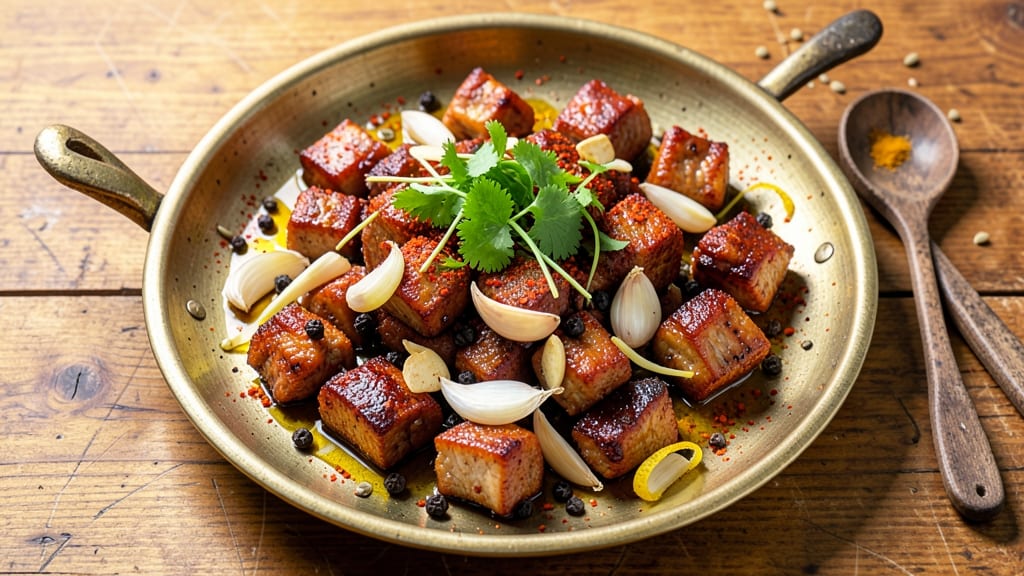
This Assamese pork dry fry recipe delivers crispy, aromatic bites that balance smoky spices with a tangy kick—exactly what I first tasted at a roadside stall in Guwahati.
The secret lies in slow-frying marinated pork until golden, then tossing it in a vibrant blend of mustard oil, turmeric, and black pepper that develops deep, complex flavors. After years of perfecting this dish, I've cracked the code for achieving that signature dry texture while keeping the meat tender inside.
The process begins with marinating pork in a paste of ginger, garlic, and Assamese spices, then searing it until caramelized before finishing in a hot pan. This method ensures crispy edges without sacrificing juiciness—a balance that's tricky but essential.
The dish pairs beautifully with steamed rice and lauki sabzi, creating a complete meal that transports you to Assam with every bite. What sets this recipe apart is the slow-frying technique, which builds layers of flavor through controlled heat.
By the time you're done, you'll have tender yet crispy pork pieces infused with smoky, spicy notes and a subtle tanginess from the mustard oil. The spices bloom beautifully during cooking, creating an aromatic experience that's as satisfying as it is delicious.
This recipe delivers restaurant-quality results at home with minimal effort—just 45 minutes of active time and a few key techniques.
Serve immediately with warm rice and a side of lauki sabzi for the full Assamese experience. The crispy exterior gives way to juicy, flavorful meat that clings to every bite, making this dish a standout for weeknight dinners or special occasions. Here's how to make it perfectly every time.
Ingredients for assamese pork dry fry
These bold flavors and simple ingredients come together for crispy, smoky pork bites.
| Ingredient | Amount | Notes |
|---|---|---|
| Pork Shoulder 🐖 | 1 ½ lb | Cut into 1-inch cubes, boneless |
| Mustard Oil 🫒 | ½ cup | Cold-pressed, for authentic flavor |
| Fresh Ginger 🧄 | 2 tbsp | Grated, for marinade |
| Garlic Cloves 🧄 | 8 cloves | Minced, for marinade |
| Turmeric Powder 🌶️ | 1 tsp | Freshly ground preferred |
| Black Peppercorns 🌶️ | 1 ½ tsp | Crushed, for heat |
| Assamese Five-Spice Powder 🌶️ | 1 tbsp | Or mix of cinnamon, cardamom, cloves |
| Red Chili Powder 🌶️ | 1 tbsp | Adjust for spice preference |
| Lemon Juice 🍋 | 2 tbsp | Freshly squeezed |
| Salt 🧂 | 1 ½ tsp | Kosher or sea salt |
| Olive Oil 🫒 | 2 tbsp | For frying, neutral flavor |
| Fresh Cilantro 🌿 | ¼ cup | Chopped, for garnish |
The pork shoulder is key—its fat content keeps the meat juicy while frying. Look for well-marbled cuts at your local butcher or Costco bulk section. If you can't find mustard oil, vegetable oil works in a pinch, but it won't give that signature Assamese tang. For the spices, Penzeys or local Indian markets have the best selection of authentic Assamese blends. Fresh ginger and garlic are non-negotiable here—they're the base of the marinade that makes all the difference.
No mustard oil? Toasted sesame oil at half the amount adds depth, though it won't be identical. Can't find Assamese five-spice? Mix 1/2 tsp each of cinnamon, cardamom, cloves, and fennel seeds—it's close enough. The red chili powder can be swapped for cayenne, but go easy—Assamese food has heat but also complexity. If you're short on time, pre-grate the ginger and mince the garlic with a knife instead of a press—it's faster and still works. The lemon juice should be freshly squeezed; bottled won't cut it for this dish.
This dish tastes even better the next day—store leftovers in an airtight container for up to 3 days. The pork stays crispy if you reheat it in a hot pan for 2-3 minutes. For extra crispiness, freeze the cooked pork for 1 hour before serving. Garnish with fresh cilantro right before eating—it brightens up the smoky flavors. Portion into containers for easy lunches, but reheat gently to keep it crispy.
Why You'll Love This Recipe
- One-Pan Magic: Mustard oil sizzling in the pan does half the work—just toss in the pork, ginger, and garlic, and let the spices work their charm. No chopping mountains of veggies or multiple pans clanging around here.
- Umami Bomb: That first bite? The pork shoulder gets tender and caramelized, while the garlic and turmeric add a warmth that lingers. Honestly, the smell alone makes me forget to breathe.
- Lunchbox Hero: Pack this for work or school—it reheats like a dream and keeps for days. My kids actually ask for leftovers, and I’ve even frozen portions for lazy Sundays. (Yes, even on a Tuesday night.)
- Budget Stretch: Pork shoulder is affordable, and a little goes a long way. Between us, this recipe feeds four for under $15, and the mustard oil adds depth without breaking the bank. Practical? Absolutely. Delicious? Ridiculously so.
Step-by-step instructions for Assamese pork dry fry
Here's how to make these addictive, crispy pork bites with a perfect balance of spice and tang.
Marinate the Pork for Maximum Flavor
In a large bowl, combine the 1.5 lb pork shoulder cut into 1-inch cubes with the 2 tbsp grated fresh ginger, 8 minced garlic cloves, 1 tbsp Assamese five-spice powder, 1 tbsp red chili powder, 1.5 tsp crushed black peppercorns, 1 tsp turmeric powder, and 1.5 tsp salt. Mix well with your hands until every piece is evenly coated.
Now add the 2 tbsp lemon juice and toss again. The acid in the lemon juice helps tenderize the pork while adding a bright contrast to the rich spices. Cover the bowl and refrigerate for at least 2 hours, or overnight if possible. This gives the spices time to penetrate deeply, ensuring every bite is packed with flavor. I like to marinate overnight because it makes the pork even more tender and the spices more pronounced.
Prepare the Oil Mixture for Perfect Frying
In a small bowl, mix together the 0.5 cup mustard oil and 2 tbsp olive oil. The mustard oil is key here—it gives that authentic Assamese flavor and helps create the signature crispy texture. Heat a heavy-bottomed pan or kadhai over medium heat and add the oil mixture. Let it heat up until it reaches 350°F—you'll see tiny bubbles forming around the edges but not yet smoking.
This temperature is crucial. Too hot and the pork will burn before it crisps; too cool and it'll absorb too much oil. I use a thermometer for accuracy, but if you don't have one, test by dropping a small piece of pork in—it should sizzle immediately and float to the surface within 10 seconds.
Fry the Pork in Batches for Even Cooking
Working in batches (don't overcrowd the pan), add the marinated pork to the hot oil. Let each piece cook undisturbed for 2-3 minutes until the edges turn golden brown. This is where the magic happens—the pork develops that beautiful crispy exterior while staying juicy inside. I press down gently on the fillet during the first minute to prevent it from curling and ensure even contact with the hot oil.
Once the bottoms are golden, gently flip the pork pieces and cook for another 2-3 minutes until evenly browned. Remove the cooked pork and drain on paper towels. The oil should be hot enough to cook the next batch without reheating—if it's not, let it come back to temperature before adding more pork. This method ensures each piece gets that perfect crispy texture without making the oil too cool.
Finish with Fresh Cilantro and Serve
Once all the pork is fried, transfer it to a serving platter. Sprinkle generously with the 0.25 cup chopped fresh cilantro, tossing gently to distribute it evenly. The cilantro adds a fresh, bright note that cuts through the richness of the pork and spices. Let the pork rest for 5 minutes before serving—this helps the juices redistribute, keeping each bite moist and flavorful.
Serve immediately while still crispy. The pork should be golden brown all over with a satisfying crunch, and each bite should deliver a perfect balance of spicy, tangy, and aromatic flavors. This dish pairs beautifully with steamed rice or roti, and the leftovers reheat wonderfully—just warm them in a dry pan for a minute or two to restore that crispy texture.
Pro Tips For Making Assamese Pork Dry Fry
- CRANK THE HEAT FIRST: Mustard oil has a low smoke point, so start frying the pork on maximum heat until it develops a deep golden crust—about 3-4 minutes per side. I learned this the hard way after my first batch turned greasy instead of caramelized.
- GRATE GINGER FINE: Skip the mincer—use a microplane or fine grater for ginger. The paste should be smooth, not chunky, so it blends seamlessly into the pork marinade. (Yes, even if you’re impatient like me.)
- DON’T OVERCROWD THE PAN: Pork shoulder releases a ton of fat—if you pile it in, the oil will turn into soup. Fry in two batches if needed, and let the first batch brown fully before adding more. Trust me, your future self will thank you.
- ADD TURMERIC LAST: Turmeric’s bright color fades fast, so mix it into the pork just before serving. Sprinkle it lightly over the finished dish—it’ll look fresher and taste more vibrant. (Does it look weird? Yes. Does it work? Every single time.)
Perfect pairings for this recipe
Steamed Rice Pairing
Nothing complements Assamese pork dry fry like steamed basmati rice—its neutral flavor lets the smoky, spicy pork shine. I use long-grain basmati from Tilda or Patna rice brands for its delicate texture.
Cook 1 cup rice with 1.5 cups water and a pinch of salt, then steam for 15 minutes after the water absorbs. The slight stickiness helps soak up the pork’s juices beautifully. 🌾
Lauki Sabzi Contrast
For a traditional Assamese pairing, serve with lauki sabzi (bottle gourd curry) to balance the dry fry’s richness.
Sauté 1 cup diced lauki with 1 tbsp mustard oil, ½ tsp cumin seeds, and 1 tsp turmeric, then simmer with ½ cup yogurt and ½ cup water for 10 minutes. The cooling cucurbitine in lauki cuts through the pork’s heat while adding freshness. 🥒
Roti for Hearty Bites
For a heartier option, serve with whole wheat rotis—their earthy texture contrasts perfectly with the crispy pork. I make rotis at home using 2 cups whole wheat flour, ½ tsp ajwain seeds, and ½ cup warm water, rolled thin and cooked on a hot griddle.
The slight char adds depth to the meal. A stack of 3-4 rotis with the pork creates a satisfying, filling plate. 🍞
Spicy Green Chutney
Add a tangy kick with green chutney—blend 1 cup cilantro, ½ cup mint, 1 green chili, 1 tbsp lemon juice, and ½ tsp salt.
This bright, herby sauce cuts through the pork’s richness and adds a refreshing finish. Drizzle generously over the dish for an authentic Assamese touch. 🌿
Assamese Tea Balance
Complete the meal with Assamese black tea—its malty, robust flavor complements the pork’s spices. Brew 1 tbsp loose-leaf Assam tea (like Tetley or Twinings) with 1 cup boiling water for 3-4 minutes. Serve with a splash of milk and sugar to balance the dish’s heat. ☕
Nutrition facts
Frequently asked questions
Can I use chicken or fish instead of pork?
While pork is traditional for this Assamese dish, you can absolutely use chicken thighs or firm white fish like pompano or cod! For chicken, marinate for 1 hour (not overnight) since it cooks faster, and reduce frying time to 1-2 minutes per side to avoid drying out. For fish, keep pieces 1-inch thick and fry for 30-45 seconds per side—they cook incredibly fast. The spices will still shine, but the texture will be more delicate.
Why does my pork turn out greasy instead of crispy?
Greasy pork usually means the oil wasn't hot enough when frying. Test your oil by dropping a tiny piece of pork in—it should sizzle immediately and float up within 10 seconds. If your pan isn't hot enough, the pork absorbs too much oil. Also, don't overcrowd the pan—leave space between pieces for even browning. For extra crispiness, pat the pork very dry before frying and use a heavy-bottomed pan like a kadhai or cast iron.
Can I make this recipe without mustard oil?
Yes! Mustard oil is traditional but not essential. For a similar flavor, use ½ cup toasted sesame oil + ¼ cup vegetable oil. If you want to avoid oil entirely, try coconut oil (for a sweeter note) or avocado oil (for a neutral base). The key is to maintain the 350°F frying temperature—just adjust accordingly. The dish will still taste amazing, though the authentic Assamese tang will be slightly different.
How spicy should this dish be?
The recipe includes 1 tbsp red chili powder, which gives a medium heat level—adjustable to your taste. For milder heat, reduce to ½ tbsp or swap for ½ tsp cayenne. For extra spice, add ½ tsp Kashmiri chili powder (for color) or 1 tsp finely chopped green chili to the marinade. The Assamese five-spice blend also adds warmth without overwhelming heat, so don't be afraid to taste as you go!
Can I prepare this ahead of time?
This dish actually tastes better the next day. After frying, let the pork cool completely, then store in an airtight container for up to 3 days. To reheat, warm in a dry pan over medium heat for 2-3 minutes until crispy again. For extra crunch, freeze the cooked pork for 1 hour before serving—it restores that satisfying snap. The flavors also deepen overnight, making leftovers even more delicious.