
Main Courses
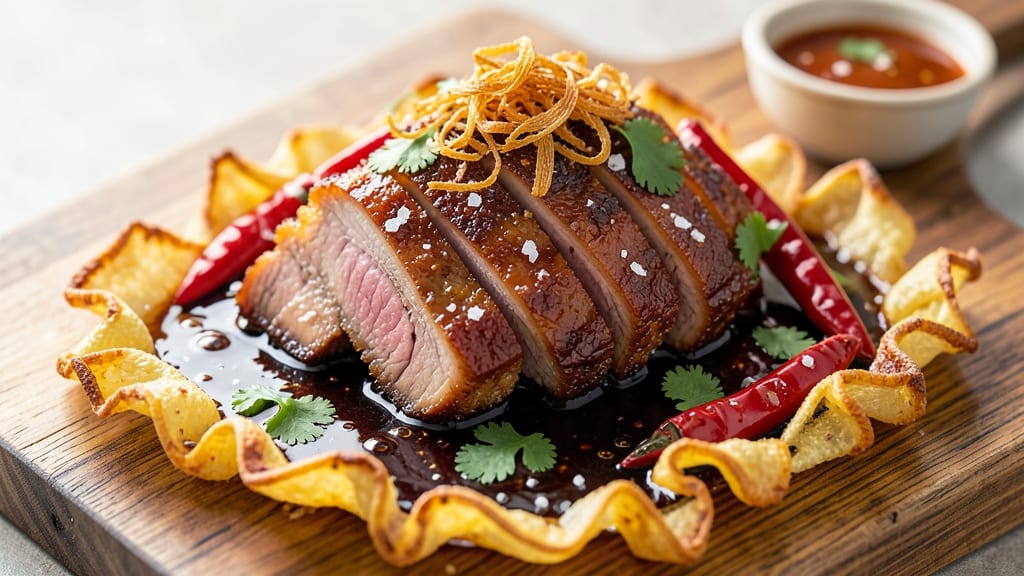
This Trinidad-style char siu pork recipe transforms Cantonese tradition with Caribbean boldness—think five-spice marinade kissed by scotch bonnet heat and caramelized into a tropical crunch. 🌶️ I developed this after discovering how Trinidad's love of fire and sweetness could elevate classic char siu, creating a dish that's both nostalgic and entirely new. The secret lies in balancing traditional techniques with local ingredients, resulting in pork that's sticky, smoky, and packed with layers of flavor that'll have everyone asking for seconds.
The process starts with a marinade that's equal parts Cantonese and Caribbean—five-spice powder meets scotch bonnet for heat, while brown sugar and soy sauce create that signature sweet-savory balance. After marinating overnight, the pork roasts until the edges develop a deep mahogany crust, while the interior stays tender.
What makes this version special is the tropical twist: a final glaze that incorporates lime zest and a touch of rum, giving it that bright, island-inspired finish that sets it apart from traditional recipes.
By the time you serve this dish, you'll have perfectly caramelized pork with a texture that's both crispy on the outside and tender within, all coated in a glossy glaze that's sweet, smoky, and just a little spicy.
The aroma alone will transform your kitchen into a Caribbean-Cantonese fusion dream. This isn't just pork—it's a celebration of how flavors can travel and transform, creating something truly unique.
Pair it with Trinidadian favorites like roasted breadfruit or steamed rice and peas for the full experience. The leftovers reheat beautifully too, making this the perfect recipe for feeding a crowd or meal prepping for the week. Let's get cooking—your taste buds are about to go on an adventure!
Ingredients for char siu pork recipe trinidad
Six ingredients transform traditional Cantonese char siu into Trinidad's bold, tropical fusion masterpiece.
| Ingredient | Amount | Notes |
|---|---|---|
| Pork Shoulder (Bone-In) 🐖 | 3 lb | Cut into 1-inch thick slices |
| Five-Spice Powder 🌶️ | 2 tbsp | Authentic Chinese blend |
| Scotch Bonnet Peppers 🌶️ | 2 whole | Seeds removed, finely chopped |
| Light Brown Sugar 🍚 | ¾ cup | Packed, for caramelization |
| Dark Soy Sauce 🥄 | ½ cup | Kikkoman preferred |
| Rice Vinegar 🍶 | ¼ cup | For tangy balance |
| Hoisin Sauce 🥄 | ¼ cup | For umami depth |
| Garlic Cloves 🧄 | 8 cloves | Minced, fresh preferred |
| Fresh Ginger 🌿 | ½ cup | Grated, peeled |
| Lime Zest 🍋 | 1 tbsp | Bright tropical finish |
| Dark Rum 🍹 | ¼ cup | Aged 3+ years |
| Sesame Oil 🫒 | 1 tbsp | Toasted, for aroma |
| Cornstarch 🌾 | 1 tbsp | For glaze crispness |
| Diamond Crystal Kosher Salt 🧂 | 1 ½ tsp | Adjust to taste |
| Fresh Limes 🍋 | 2 whole | Juiced, for acidity |
The pork shoulder is your canvas—bone-in cuts from Trader Joe's or your butcher give the best flavor and texture. Look for well-marbled meat, not lean cuts, as the fat renders beautifully during roasting. Five-spice powder is non-negotiable here; Penzeys Spices or any authentic Chinese brand delivers that signature aromatic complexity. The scotch bonnet peppers are the Caribbean secret weapon—Caribbean Marketplace or local Latin markets carry them fresh year-round. If you can't find them, habanero at half the amount works in a pinch, but the flavor won't be identical. Fresh ginger and garlic are essential too—never dried substitutes for this dish.
No five-spice powder? Mix 1 tsp each ground cinnamon, fennel, cloves, star anise, and black pepper as a substitute. Running low on hoisin? Substitute with 2 tbsp soy sauce plus 1 tbsp molasses. The rum can be swapped for dark brown sugar syrup (equal parts sugar and water), though it loses some depth. For the tropical twist, if you can't find scotch bonnet, red jalapeño at half the amount adds heat without the same fruity complexity. The sesame oil is crucial—toast it in a dry pan for 30 seconds before adding to the marinade to deepen its nutty aroma. And always zest your limes fresh; pre-made zest loses its brightness quickly.
Marinated pork keeps 3 days in the fridge, covered tightly. For longer storage, freeze the marinated slices up to 2 months—thaw overnight in the fridge before roasting. The glaze can be made 2 days ahead and reheated gently. Roasted pork reheats best at 350°F for 10-15 minutes until crispy again. For serving, keep the glaze in a small saucepan on low heat—it reheats beautifully and can be drizzled over the pork at the table. Leftovers make incredible sandwiches or fried rice the next day.
Why You'll Love This Recipe
- One-Pan Magic: I swear by this—just the pork, five-spice, and a quick sear on the bone-in shoulder. No extra dishes, no fuss, and that caramelized crust? Worth every second of the 45-minute roast.
- Scotch Bonnet Heat: That pepper isn’t just for show—it’s the secret weapon. One charred pepper in the marinade turns this into something ridiculously flavorful, with just enough kick to wake up your taste buds without overpowering.
- Leftover Hero: Between us, this pork begs to be made in bulk. Shred it for tacos, toss it in fried rice, or just reheat slices straight from the fridge—it’s that good, and the sugar keeps it juicy every time.
- Budget-Friendly Feast: Bone-in pork shoulder stretches further than you’d think, and the spices cost next to nothing. Honestly, I’ve fed six people for under $15 with this—plus, the leftovers fund my coffee habit for a week. Win-win.
Step-by-step instructions for char siu pork with Trinidadian flair
This fusion method delivers smoky-sweet char siu with a bold Caribbean kick—crispy edges, sticky glaze, and that perfect five-spice warmth.
👨🍳 Step 1: Marinate the Pork with Tropical Depth
Slice the 3 lb pork shoulder (bone-in) into 1-inch thick pieces and pat completely dry with paper towels—this ensures maximum glaze adhesion. In a large bowl, combine the 2 tbsp five-spice powder, 1.5 tsp kosher salt, 0.5 cup dark soy sauce, 0.25 cup hoisin sauce, 0.25 cup rice vinegar, 0.25 cup dark rum, and 1 tbsp lime zest. Mix until the powder dissolves completely.
Add the pork to the marinade and turn to coat evenly. Cover and refrigerate for at least 4 hours (overnight is ideal)—this lets the spices penetrate deeply and the flavors meld. I like to flip the pork halfway through marination to ensure even coating. The marinade should look glossy and infused with that bright citrus aroma.
🔥 Step 2: Build the Glaze with Caramelized Sugar and Heat
In a small saucepan, combine the 0.75 cup packed light brown sugar, 8 minced garlic cloves, 0.5 cup grated fresh ginger, 2 finely chopped Scotch bonnet peppers (seeds removed), and 1 tbsp sesame oil. Cook over medium heat for 5-7 minutes, stirring constantly, until the sugar melts and the mixture turns a deep amber color—this is your caramelized base.
Remove from heat and stir in 1 tbsp cornstarch to thicken the glaze slightly. The mixture should coat the back of a spoon and have a rich, syrupy consistency. If it's too runny, add 1 teaspoon water at a time until it reaches the right texture. Let it cool slightly before using—this prevents the glaze from cooking off too quickly when applied to the pork.
🔥 Step 3: Sear and Glaze for Crispy Perfection
Preheat your oven to 400°F and position a rack in the middle position. Arrange the marinated pork on a wire rack set over a baking sheet—this allows air to circulate underneath for even cooking. Brush each piece generously with the caramelized glaze, making sure to coat all sides.
Roast for 25 minutes, then flip the pork and brush with another layer of glaze. Return to the oven for another 20-25 minutes until the pork reaches 145°F internally and the glaze is deep golden brown with crispy edges. The pork should pull away from the bone slightly when tested with a fork, and the glaze should be sticky but not liquid.
⏰ Step 4: Rest and Finish with Lime Zing
Remove the pork from the oven and let it rest for 10 minutes—this allows the juices to redistribute and the glaze to set slightly. While it rests, juice the 2 whole fresh limes and strain out any seeds. Brush the pork lightly with the lime juice, just enough to brighten the flavors without overpowering the glaze.
Slice the char siu against the grain for ¼-inch thick pieces and serve immediately. The exterior should be crispy and glossy, with a crackly texture that gives way to tender, juicy meat. Each bite delivers that perfect balance of smoky five-spice warmth, sweet caramelized notes, and a tropical lime finish that makes this dish uniquely Trinidadian.
Pro Tips For Making Char Siu Pork Recipe Trinidad
- Marinate Overnight: This isn’t just a suggestion—it’s the difference between flavor that hits and flavor that exists. The five-spice and Scotch bonnet need time to penetrate that tough pork shoulder, so don’t rush it. Even 12 hours in the fridge works, but 24? That’s when the meat starts singing.
- Trim Fat Sparingly: You want enough fat to render and baste, but leave a thin layer—about ¼-inch—on the bones. I learned this the hard way after over-trimming and ending up with dry meat. The fat keeps it juicy while roasting, and it adds richness to the pan juices.
- Blot Before Browning: Pat that pork dry with paper towels before searing, even if it feels like overkill. Wet meat steams instead of browns, and you’ll end up with a pale, sad crust. A quick wipe-down guarantees a caramelized exterior that locks in all those sweet-savory flavors.
- Char the Sugar: Let the brown sugar melt into a sticky, golden syrup before adding liquid. I used to rush this step, and the sauce always ended up thin and clingy. Give it 3-4 minutes on medium heat—watch it bubble and darken—then deglaze with the soy and Scotch bonnet. That’s when the real magic happens.
Storing and reheating your char siu pork recipe trinidad
Fridge Storage
Store marinated pork in an airtight container for up to 3 days—I use glass Pyrex with a tight lid to preserve that bright citrus aroma. The marinade will keep its potency, though the pork may absorb more flavor over time.
For the glaze, transfer it to a small jar and refrigerate separately. When reheating, always bring the pork to 145°F to maintain food safety. 🌶️
Freezer Prep
Freeze marinated pork slices in a single layer on a tray before transferring to a freezer bag—this prevents sticking. Label with the date and freeze for up to 2 months. Thaw overnight in the fridge before roasting.
The glaze can be frozen separately in an ice cube tray for easy portioning later. Just reheat gently in a saucepan before brushing back on the pork. ❄️
Reheating Crispy Perfection
Revive the crispy crust by reheating at 350°F for 10-15 minutes on a wire rack—this mimics the original roasting method. For extra shine, brush with a little lime juice and a quick pass under the broiler for 1-2 minutes.
The glaze reheats beautifully in a small saucepan on low heat, so you can drizzle it fresh at the table. 🔥
Leftovers Magic
Transform reheated char siu into fried rice by dicing and tossing with day-old rice, peas, and a fried egg. Or slice thinly for sandwiches with pickled onions and mayo. The glaze also makes an incredible dipping sauce for spring rolls or dumplings—just thin it with a splash of water. 💡
Glaze Refresh
If the glaze looks dry after storage, revive it by adding 1 teaspoon water and reheating until glossy again. For extra depth, stir in ½ teaspoon toasted sesame oil before using.
The lime zest in the marinade means the glaze stays vibrant longer—no need for extra acidity. This trick keeps it tasting fresh even after days in the fridge. 🍋
Portioning Tips
Slice pork into ¼-inch pieces for easy reheating—smaller portions cook faster and more evenly. Store in individual containers if meal prepping, so everyone gets perfectly crispy edges. For serving, keep the glaze in a small pot on low heat—it reheats in minutes and adds that restaurant-quality finish. 🍽️
Nutrition facts
Frequently asked questions
Can I use pork tenderloin instead of pork shoulder for this recipe?
While pork tenderloin would work, it's not ideal for this Caribbean-inspired char siu. The leaner cut lacks the fat needed to create that signature crispy crust and tender texture. For best results, stick with pork shoulder or pork loin—both have enough marbling to deliver the perfect balance of crispy exterior and juicy interior.
How do I adjust the heat level if Scotch bonnet peppers aren't available?
For a milder version, reduce the scotch bonnet to 1 pepper (seeds removed) or substitute with ½ red jalapeño or ½ habanero. For extra heat, add ½ teaspoon cayenne pepper to the marinade. Remember, the Caribbean heat builds gradually—start with less if you're sensitive to spice!
What's the best way to serve this Trinidad-style char siu?
This fusion dish shines with Caribbean sides like roasted breadfruit, steamed rice and peas, or fried plantains. For a Cantonese touch, serve with jasmine rice and pickled vegetables. The glaze also makes an amazing dipping sauce for spring rolls or mantou buns.
Why did my glaze turn too runny during roasting?
This usually happens when the sugar caramelizes too quickly or the oven isn't properly preheated. For next time, let the glaze cool slightly before applying to the pork, and roast at 400°F with a wire rack for better air circulation. If it gets too runny mid-roast, increase heat to 425°F for the last 5 minutes to thicken the glaze.
Can I grill this char siu instead of roasting?
Grilling works beautifully for this recipe. Preheat your grill to medium-high heat and cook the pork for 4-5 minutes per side, basting frequently with the glaze. For extra flavor, add ½ cup chopped pineapple to the marinade—this Caribbean touch pairs perfectly with the smoky grill. Just watch the heat to avoid burning the glaze.