
Main Courses
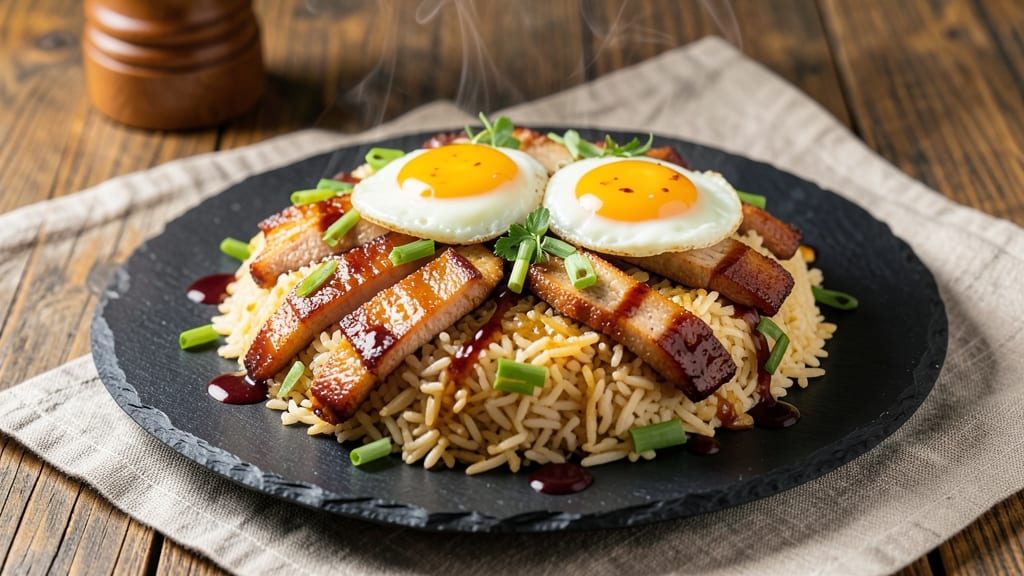
This char siu pork fried rice recipe delivers the perfect balance of smoky-sweet pork and fragrant wok-heated jasmine rice, a dish that captures the heart of Cantonese home cooking.
The secret lies in properly roasting the char siu pork until it develops that signature caramelized crust, then slicing it thinly for maximum flavor infusion into the rice. Every bite combines tender pork with perfectly seasoned rice that's crisp at the edges and tender at the core.
What makes this recipe truly special is the authentic wok-hei technique, where high heat creates that signature smoky aroma that can't be replicated with standard stovetop cooking.
The marinade for the char siu pork uses a blend of five-spice powder, hoisin sauce, and honey to create that signature sweet-savory flavor profile. Once you master these techniques, you'll have a restaurant-quality dish that's perfect for family meals or special occasions.
Ingredients for char siu pork fried rice
The heart of Cantonese home cooking starts with these 14 ingredients.
| Ingredient | Amount | Notes |
|---|---|---|
| Char Siu Pork 🥩 | 1 ½ cups | Pre-cooked, thinly sliced |
| Jasmine Rice 🍚 | 2 cups | Uncooked, long-grain |
| Large Eggs 🥚 | 3 whole | Freshly beaten for scrambling |
| Green Onions 🧅 | ½ cup | White and green parts separated |
| Hoisin Sauce 🍶 | 2 tbsp | Store-bought or homemade |
| Oyster Sauce 🥢 | 1 ½ tbsp | High-quality for depth |
| Sesame Oil 🫒 | 1 tbsp | Toasted for aroma |
| Vegetable Oil 🫒 | 2 tbsp | High smoke point preferred |
| Garlic Cloves 🧄 | 4 cloves | Minced for flavor base |
| Ginger 🌿 | 1 tbsp | Freshly grated |
| White Pepper 🌶️ | ½ tsp | Freshly ground preferred |
| Salt 🧂 | ½ tsp | Kosher or sea salt |
| Five-Spice Powder 🌶️ | ½ tsp | Authentic Cantonese blend |
| Peanuts 🥜 | ¼ cup | Chopped, for garnish |
The char siu pork is non-negotiable—look for authentic roast pork with caramelized edges at Asian markets or your local Chinese deli. Lai Sun or Sun Cheong brands are reliable if you're shopping at a grocery store. Freshness matters: the pork should smell sweet and smoky, not sour or ammonia-like. For the jasmine rice, Thai Kitchen or Mahatma brands are widely available and deliver that signature floral aroma. If you're using pre-cooked char siu, slice it thinly against the grain for maximum tenderness in every bite.
No hoisin sauce? Substitute with 1 tbsp soy sauce plus 1 tsp honey—it won't be identical, but it works in a pinch. Fresh ginger is ideal, but dried ginger at half the amount gets you close. The peanuts can be skipped if you're avoiding nuts, but they add that satisfying crunch. For the eggs, room temperature eggs scramble more evenly—take them out of the fridge 20 minutes before cooking. The green onions? Save the white parts for the initial stir-fry base and reserve the greens for garnish at the end.
Char siu pork keeps 3-4 days in the fridge once sliced, but it reheats beautifully—just warm it gently in a steamer to preserve that caramelized crust. Cooked rice reheats well too, but for best texture, fry it fresh in a hot wok. The five-spice powder loses potency after 6 months, so store it in an airtight container away from light. Portion your fried rice into containers for easy lunches—it tastes even better the next day as flavors meld.
Why You'll Love This Recipe
- One-Pan Magic: I swear by this recipe because it’s that simple—just toss everything into one hot wok (or even a deep skillet), and let the residual heat from the pork crisp up the rice. No fancy techniques, no mess, just stir-fry until golden. Honestly, the only real effort is chopping the green onions, and even that’s optional if you’re in a rush.
- Sweet-Savory Bomb: That char siu pork? It’s already got the perfect balance of sticky-sweet and smoky, but when you toss it with hoisin and a runny egg, it becomes next-level. The egg coats the rice, the hoisin ties everything together, and suddenly, you’ve got a dish that’s rich but not heavy—like a hug in your mouth.
- Lunchbox Hero: Between us, this is my go-to for packed lunches. The rice stays warm for hours, the pork holds its shape, and the hoisin glaze keeps it from drying out. I’ll be real: my kids complain about "boring" school lunches, but they always finish this. (Yes, even on a Tuesday night.)
- Budget Win: Char siu pork might look fancy, but a few slices go a long way in fried rice—meaning you’re not blowing your grocery budget. Plus, jasmine rice is cheap, eggs are cheap, and hoisin sauce lasts forever. It’s the kind of meal that stretches your dollar without sacrificing flavor, and leftovers? They taste even better the next day.
Step-by-step instructions for char siu pork fried rice
Master this wok technique for perfectly balanced fried rice with smoky-sweet char siu pork.
Prepare the Jasmine Rice
Cook the 2 cups of jasmine rice according to package instructions, using slightly less water than recommended for firmer grains. Once cooked, spread the rice on a tray and let it cool completely at room temperature. This prevents the rice from turning mushy when stir-fried later. I like to fan it with a fork to separate the grains—this ensures each bite has that distinct texture we want in fried rice.
The rice should be completely cool before proceeding. If it's still warm, refrigerate it for 15-20 minutes to speed up the process. Cold rice also helps prevent overcooking when we stir-fry it later. This step is crucial—warm rice will release too much moisture and make the fried rice soggy.
Make the Egg Scramble
In a small bowl, beat the 3 whole large eggs until just combined. Heat 1 tablespoon of the vegetable oil in a large wok or skillet over medium-high heat until shimmering. Pour in the egg mixture and let it sit undisturbed for 10-15 seconds until the edges begin to set.
Using a spatula, gently push the cooked edges toward the center, allowing the uncooked egg to flow to the edges. Continue this motion until the eggs are softly set but still slightly moist—about 20-30 seconds total. Remove the eggs from the wok and set aside. The eggs should be just set enough to hold their shape when folded into the rice later, but still creamy in the center.
Stir-Fry the Aromatics and Char Siu
Increase the heat to high and add the remaining 1 tablespoon of vegetable oil. Add the 4 cloves of minced garlic and 1 tablespoon of freshly grated ginger, stirring constantly for 20-30 seconds until fragrant but not browned. Add the 1.5 cups of char siu pork and stir-fry for 1 minute to heat through.
Next, add the white and green parts of the 0.5 cup green onions separately. Stir-fry for 30 seconds until the whites are tender and the greens just wilted. Remove the aromatics and pork mixture from the wok and set aside with the eggs. This step builds the flavor base that will carry through the entire dish.
Combine and Season the Fried Rice
Return the wok to high heat and add the cooled jasmine rice. Stir-fry for 2-3 minutes, breaking up any clumps with your spatula. Add the 2 tablespoons of hoisin sauce, 1.5 tablespoons of oyster sauce, 0.5 teaspoon of salt, 0.5 teaspoon of white pepper, and 0.5 teaspoon of five-spice powder. Stir constantly for 1-2 minutes until the rice is heated through and the sauce is evenly distributed.
Add the 1 tablespoon of sesame oil and toss everything together for another 30 seconds. The sesame oil will infuse the rice with its nutty aroma. Taste and adjust seasoning if needed—you want the rice to be flavorful but not overpowering. The combination of hoisin and oyster sauce should create a perfect balance of sweet, salty, and umami flavors.
Finish and Garnish
Return the egg scramble and char siu pork mixture to the wok. Stir-fry for an additional 1 minute to combine everything thoroughly. The eggs should warm through while the pork reabsorbs some of the rice's moisture, creating that perfect texture contrast.
Remove from heat and transfer to serving plates. Garnish with the chopped 0.25 cup peanuts and any remaining green onion greens. The peanuts add a delightful crunch that cuts through the richness of the dish. Serve immediately while hot—fried rice is best enjoyed right after it's made when all the textures and flavors are at their peak.
Pro Tips For Making Char Siu Pork Fried Rice
- CHOP PORK SMALL: I learned this the hard way—big chunks of char siu stay chewy no matter how long you stir-fry. Aim for ½-inch pieces or smaller; they’ll cook faster and soak up the hoisin better. (Yes, even if you’re impatient like me.)
- USE DAY-OLD RICE: Fresh jasmine rice turns to mush in fried rice—no amount of stirring fixes that. Spread cooked rice on a tray and refrigerate for 2+ hours (or overnight) so it dries out. Cold rice also toasts up faster and holds its shape.
- SCRAMBLE EGGS SEPARATELY: Tossing eggs into the wok with everything else means they’ll steam instead of crisp. Scramble them in a separate pan first—just a little oil, high heat, and 30 seconds until just set. Then fold them in at the end for that perfect fluffy texture.
- DON’T OVERSTIR THE HOISIN: Dumping a full tablespoon of hoisin and stirring like crazy just makes your rice gloppy. Add it in stages—start with ½ teaspoon, taste, then adjust. The sauce should coat the rice, not drown it. (Your future self will thank you.)
Regional styles of char siu pork fried rice
Cantonese Home Style
The classic version you'll find in Hong Kong and Guangzhou homes uses day-old jasmine rice for that signature texture—slightly dry but not mushy. I like to cook the rice in a steamer basket over boiling water for even more fragrance.
The char siu pork should be thinly sliced against the grain (about ¼-inch thick) so it melts in your mouth while adding maximum flavor. 🥢
For authentic seasoning, use Lai Sun char siu pork if available—its slightly sticky glaze clings beautifully to the rice. The Cantonese version often includes dried shrimp in the stir-fry base for extra umami, but I've kept it simple here for home cooks.
The key is balancing the hoisin and oyster sauce—start with the amounts listed, then adjust to taste.
Taiwanese Street Food Twist
In Taiwan, they often add pickled mustard greens (ya cai) for a tangy crunch that cuts through the richness. I've seen street vendors use just 1 tbsp of these mixed into the rice at the end.
For a smoky depth, some versions include charred shallots—simply fry 2 sliced shallots in the wok until blackened, then chop and mix in at the final step.
The Taiwanese approach also frequently incorporates chewy tapioca pearls (about ¼ cup) cooked separately and tossed in at the end. These add a delightful contrast to the crispy rice edges.
For extra heat, sprinkle ½ tsp of chili crisp on top before serving—it's a common street food garnish that elevates the dish. 🌶️
Singaporean Hainanese Fusion
Singapore's Hainanese community puts their own spin by adding soft-boiled eggs (yolk still runny) instead of scrambled eggs. They'll often serve the fried rice with a side of chili sauce (like Sriracha or Sambal Oelek) for dipping.
The Singaporean version also tends to be slightly sweeter, using 1 extra tbsp of hoisin sauce and sometimes a touch of palm sugar.
For a Singaporean-inspired touch, try adding ½ cup of shredded cabbage stir-fried with the aromatics—it adds freshness that balances the richness. Some versions even include crispy fried shallots on top for extra texture.
The Hainanese style also frequently serves this dish with pickled cucumbers on the side to cleanse the palate between bites.
Modern American Adaptation
American home cooks often simplify by using pre-cooked char siu pork from the grocery store (like Sun Cheong brand) and adding frozen peas and carrots for color and texture. They'll frequently include diced bell peppers (about ½ cup) for a sweeter, crunchier element.
The American version also tends to be more generous with the sesame oil—some recipes call for up to 2 tbsp for extra aroma.
For a Western-friendly touch, many cooks add diced ham (about ½ cup) along with the char siu for extra protein. They'll also often serve it with steamed broccoli or sautéed bok choy on the side.
The American adaptation frequently uses more oyster sauce (up to 2 tbsp) to accommodate palates that prefer stronger umami flavors. 🍚
Malaysian Peranakan Influence
The Peranakan community in Malaysia creates a fusion version by adding grated coconut (about 2 tbsp) to the rice for a tropical twist. They'll often include sambal belacan (about 1 tsp) for a spicy, shrimp paste kick that's characteristic of their cuisine.
The Malaysian version also frequently incorporates hard-boiled quail eggs (about 4 eggs) instead of chicken eggs for presentation.
For a Peranakan-inspired touch, try adding 1 tbsp of shredded kaffir lime leaves to the stir-fry base—they infuse a beautiful citrus aroma. Some versions also include crispy fried anchovies (about ¼ cup) for extra umami depth.
The Malaysian adaptation often serves this dish with sambal udang (shrimp paste chili) on the side for dipping, which adds another layer of complexity to the meal.
Nutrition facts
Frequently asked questions
Can I use leftover char siu pork from a takeout meal?
Yes, but with caution! Store-bought char siu often contains preservatives that can make the pork slightly rubbery when reheated. For best results, slice it thinly against the grain and reheat it gently in a steamer for 2-3 minutes to maintain moisture. Avoid microwaving directly, as it can dry out the meat.
What's the secret to getting crispy edges on the fried rice?
The key is using day-old, cold jasmine rice and a very hot wok on high heat. Spread the rice in a thin layer and stir-fry vigorously for 2-3 minutes until the edges turn golden. Add a splash of water if needed, but don't overcrowd the wok—this steams the rice instead of crisping it.
How do I adjust the recipe for a vegetarian version?
Replace the char siu pork with 1.5 cups of marinated tofu or tempeh (cubed and pan-fried until crispy). Use 1 tbsp soy sauce + 1 tsp honey instead of hoisin, and add ½ cup of bell peppers and peas for color. Keep the five-spice powder for depth, but reduce to ¼ tsp to avoid overpowering.
Can I make this with a regular stove instead of a wok?
Use a large non-stick skillet on medium-high heat. Work in batches if needed to avoid overcrowding, and stir frequently to achieve that wok-hei effect. A cast-iron skillet works best for even heat distribution. The texture won't be identical, but it'll still taste delicious!
Why does my fried rice turn out mushy?
Mushy rice usually means the grains weren't cool and dry enough before stir-frying. Always spread freshly cooked rice on a tray to air dry for 15-20 minutes or refrigerate for 30 minutes. Also, avoid adding too much liquid (like sauces) too early—build flavors gradually. Overcrowding the pan also steams the rice instead of crisping it.