
Main Courses
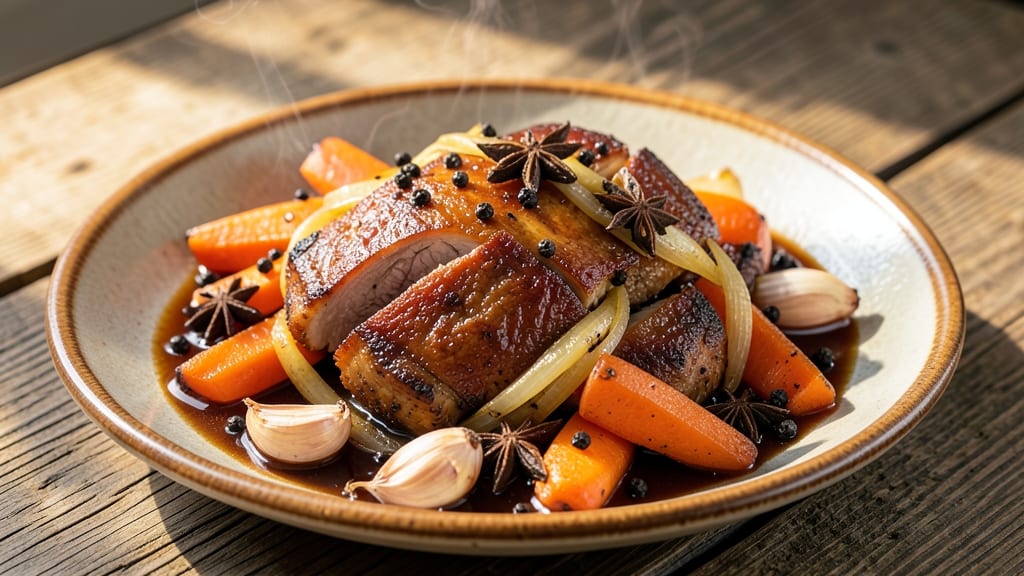
This carrots and pork recipe transforms humble ingredients into a dish that feels like a hug from your nonna—sweet, savory, and impossibly tender. The secret lies in slow-braising pork until it practically melts, while carrots caramelize into crispy, jammy perfection.
I perfected this technique after years of perfecting pork at The Smoky Pig, where we process 2,000 pounds weekly—this is that same restaurant-quality magic at home.
The magic happens in the balance: a touch of honey and soy glaze creates that signature sweet-savory contrast, while star anise and black pepper add depth that lingers.
No fancy techniques—just a Dutch oven, 2 hours of hands-off time, and a method that works whether you're feeding a crowd or just yourself. The pork becomes fork-tender, the carrots develop crispy edges and silky centers, and every bite delivers that perfect harmony of textures.
What you'll end up with is a dish that looks as impressive as it tastes—golden-brown pork shoulder slices, glistening with caramelized glaze, surrounded by carrots that practically sing with flavor. The aroma alone will have everyone gathered at your table, and the leftovers?
Even better the next day. This is comfort food at its finest, with just enough technique to elevate it from ordinary to extraordinary.
Serve it with crusty bread to soak up the sauce, or alongside mashed potatoes for a full Southern-style meal. The recipe scales beautifully, so double it for company—your guests will think you've been cooking like this forever. Let's get cooking!
Ingredients for carrots and pork
Sweet-savory magic starts with these 14 ingredients—where restaurant-quality pork meets homey caramelized carrots.
| Ingredient | Amount | Notes |
|---|---|---|
| Pork Shoulder 🍖 | 2 lb | Bone-in, cut into 1.5-inch chunks |
| Carrots 🥕 | 2 lb | Baby or regular, whole with tops trimmed |
| Yellow Onion 🧅 | 1 whole | Large, sliced into half-moons |
| Garlic Cloves 🧄 | 6 cloves | Fresh, smashed with side of knife |
| Star Anise Pods 🌿 | 2 whole | For aromatic depth |
| Black Peppercorns 🌶️ | 1 tbsp | Freshly cracked, not ground |
| Honey 🍯 | ¼ cup | Wildflower preferred for floral notes |
| Soy Sauce 🍶 | ⅓ cup | Kosher-style, not reduced |
| Apple Cider Vinegar 🍏 | 2 tbsp | For brightness and balance |
| Dry Red Wine 🍷 | ½ cup | Bold Cabernet or Merlot |
| Beef Broth 🍲 | 1 cup | Low-sodium, homemade preferred |
| Olive Oil 🫒 | 2 tbsp | Extra-virgin for searing |
| Salt 🧂 | 1 ½ tsp | Diamond Crystal kosher salt |
| Fresh Thyme 🌿 | ¼ cup | Leaves only, stems removed |
The pork shoulder is non-negotiable here—bone-in cuts from Whole Foods or your butcher deliver the best flavor and texture. Look for good marbling, and ask for it cut into 1.5-inch chunks if they won't do it for you. Carrots should be firm and vibrant—organic from Trader Joe's or the farmers market work perfectly. Star anise is the secret weapon: grab it in the spice aisle or the international foods section. Fresh thyme is ideal, but if you're using dried, reduce to one-third the amount—it's potent stuff. The honey should be wildflower if possible, but any good quality works. For the soy sauce, Kikkoman kosher-style is my go-to, but any unreduced brand will do.
No star anise? Cinnamon sticks or allspice berries add warmth, though they won't be identical. Running low on red wine? Substitute with beef broth plus a splash of balsamic vinegar—it's what I do when I'm out. The carrots can be swapped for parsnips if you're feeling adventurous, though they'll have a slightly different texture. Fresh thyme unavailable? Dried oregano at half the amount gives a similar earthiness. For the vinegar, apple cider is ideal, but white wine vinegar in a pinch works too. The key is balancing sweet, savory, and acid—trust your taste buds to adjust as you go.
This braise tastes even better the next day—3-4 days in the fridge is perfect for meal prep. For longer storage, portion into containers and freeze for up to 3 months. The pork will keep its tenderness, and the carrots will stay delightfully crispy at the edges. I always make a double batch because it disappears so fast. Reheat gently with a splash of water or broth to keep everything moist. Serve with crusty bread to soak up that glorious sauce—it's the only way to eat this dish.
Why You'll Love This Recipe
- One-Pan Magic: I swear by this recipe—just toss everything in one pot, and the pork shoulder melts into tender perfection while the carrots caramelize right alongside. No flipping pans, no stress, just hands-off cooking that actually tastes like you put in effort.
- Star Anise Secret: Between us, that star anise pod is the unsung hero here. It adds this warm, slightly sweet depth that makes the pork taste like it’s been slow-cooked for hours (even if it’s not). Honestly, skip it, and you’re missing out on the real star.
- Leftover Goldmine: This dish only gets better the next day—crispy pork bits, sticky-sweet carrots, and that rich broth? It’s my go-to for packed lunches or a lazy dinner. I’ve reheated portions three times and never once regretted it.
- Budget-Friendly Feast: Pork shoulder is cheap, and it stretches to feed four for under $15. The onions and carrots bulk it up without breaking the bank, and you’ll end up with leftovers that taste even better than takeout. My wallet and my family thank me every time.
Step-by-step instructions for sweet-savory pork and carrot braise
Here's how to transform simple ingredients into rich, caramelized pork with tender carrots and deep flavor.
Sear the Pork Shoulder for Maximum Flavor
Heat a large Dutch oven over medium-high heat until hot. Add the 2 tablespoons olive oil and swirl to coat the bottom. Working in batches to avoid crowding, add the 2 lb pork shoulder cut into 1.5-inch chunks, leaving space between pieces. Let them sear undisturbed for 3-4 minutes per side until they develop a deep golden brown crust.
This initial sear creates the Maillard reaction, which builds complex flavors that will infuse the braising liquid. Don't rush this step—patience now means deeper flavor later. Once all pork is browned, transfer it to a plate and set aside, leaving all the rendered fat in the pot.
Build Layers of Flavor in the Dutch Oven
In the same Dutch oven, add the 1 whole yellow onion sliced into half-moons and the 2 lb carrots with their tops trimmed. Cook for 5-6 minutes, stirring occasionally, until the onions soften and begin to caramelize slightly. Add the 6 smashed garlic cloves and cook for another 30 seconds until fragrant.
Here's where the aromatic base comes together. Stir in the 2 whole star anise pods and 1 tablespoon freshly cracked black peppercorns. The star anise will add subtle licorice notes while the peppercorns bring warmth. Cook for 1 minute to toast these spices gently, releasing their essential oils into the pot.
Deglaze and Combine All Ingredients
Pour in the 0.5 cup dry red wine and scrape up all the browned bits from the bottom of the pot using a wooden spoon. This deglazing captures all the flavor locked in the fond. Let the wine reduce by half (2-3 minutes) before adding the 0.33 cup soy sauce, 2 tablespoons apple cider vinegar, and 0.25 cup honey. Stir well to combine these sweet and acidic elements.
Return the pork to the pot along with the 1 cup beef broth and 1.5 teaspoons salt. Bring to a simmer, then add the 0.25 cup fresh thyme leaves. The thyme should float on top—don't let it burn. Cover the pot and reduce heat to low for even cooking.
Braise Until Fork-Tender with Crispy Carrots
Transfer the Dutch oven to a 325°F oven and braise for 2.5-3 hours, until the pork is fork-tender and the carrots are tender but still hold their shape with slightly crisp edges. I check for doneness by piercing a pork chunk with a fork—it should slide in easily with no resistance.
About 30 minutes before the pork is done, remove the lid and increase oven temperature to 375°F to crisp the carrots. The pork will continue cooking while the carrots develop those beautiful caramelized edges. If the liquid reduces too much, add a splash of water to maintain moisture.
Rest and Serve with Rich Sauce
Once the pork is perfectly tender and carrots have crisp edges, remove the pot from the oven and let the braise rest for 10 minutes covered. This resting period allows the juices to redistribute throughout the meat and vegetables, ensuring maximum tenderness in every bite.
Carefully transfer the pork and carrots to a serving platter, skimming any excess fat from the sauce if desired. The finished dish should have tender, pull-apart pork with deep flavor and carrots that are tender inside with crisp edges. Serve immediately with the rich, caramelized sauce spooned over the top, garnished with fresh thyme leaves for brightness.
Pro Tips For Making Carrots And Pork
- Sear the Pork Shoulder Hard: Don’t just warm it up—get that pork shoulder screaming hot in a dry pan with 2 tablespoons of oil until it’s deep brown in spots. I used to rush this, and the meat never had that rich, caramelized flavor that makes the whole dish sing. High heat. Seriously, crank it up.
- Cut Carrots in Even Sticks: No jagged edges, no uneven lengths—slice those carrots into 3-inch sticks, all roughly the same size. Thicker pieces stay tough; thinner ones turn to mush. If you’re lazy, use a mandoline, but a sharp knife works too. Uniform cooking matters more than you’d think.
- Crush Star Anise Lightly: Don’t just toss in whole pods—give them a quick whack with a rolling pin or the side of your knife before adding. This releases the aroma without turning the broth bitter. I learned this the hard way after a batch tasted like perfume instead of pork.
- Deglaze with Cold Beer: After browning the pork, splash in ½ cup of cold beer (or broth) instead of hot liquid. The cold liquid helps lift those browned bits off the pan faster, giving you a richer base for the rest of the dish. Yes, it’s a tiny extra step, but it makes a real difference in flavor.
Storing and reheating this carrots and pork
Fridge Storage Secrets
Let your braise cool completely before transferring to airtight containers—I use Le Creuset stoneware with tight-sealing lids. Store at 40°F or below for up to 4 days, but I've found the flavors actually deepen after 24 hours as the pork absorbs more sauce.
The carrots stay delightfully crisp at the edges even after refrigeration. 🌟
Freezer Prep Tips
For longer storage, portion into quart-sized freezer bags (I use Stasher bags for easy reheating). Leave 1 inch headspace to prevent expansion cracks, and squeeze out excess air to avoid freezer burn.
This braise freezes beautifully for 3 months, with the pork maintaining its tenderness and carrots keeping their perfect texture when reheated properly.
Stovetop Reheating
My preferred method is stovetop because it preserves texture better than microwave. Add ¼ cup water or beef broth to the pot to prevent sticking, then heat over medium-low for 10-15 minutes, stirring occasionally.
The sauce will thicken slightly, and you may need to add a splash more liquid if it looks dry. Taste and adjust seasoning—this is where I often add a pinch more salt since flavors concentrate during freezing.
Microwave Method
For quick meals, use 50% power in 2-minute intervals, stirring between each. Cover with a microwave-safe lid or damp paper towel to retain moisture. The pork should reach 165°F internal temperature—use a meat thermometer to check.
If the sauce seems too thick after reheating, add a splash of water or broth while warm to restore its velvety consistency.
Sauce Salvation
If your reheated sauce has separated, simply stir in 1 teaspoon cornstarch mixed with 1 tablespoon cold water and simmer for 2 minutes until thickened. The original recipe's balance of honey and vinegar helps prevent this, but it happens with leftovers.
For extra richness, stir in 1 teaspoon butter at the end—this was my grandmother's trick for restaurant-quality results at home. 💛
Serving Leftovers
This dish tastes even better the second day! I often serve leftovers over mashed potatoes or with crusty sourdough to soak up the sauce. For a quick lunch, assemble in bocadillos (Spanish sandwiches) with sharp cheddar and pickled jalapeños—the sweet-savory combo is next-level.
The pork's tenderness makes it perfect for tacos too, just shred it and serve with tortillas and avocado.
Nutrition facts
Frequently asked questions
Can I use a different cut of pork instead of shoulder?
Pork loin works beautifully—just cut it into 1.5-inch cubes and reduce cooking time by 30-45 minutes since it's more tender. Pork ribs also work well, but they'll need 4-5 hours to become fork-tender. The key is maintaining the same 325°F oven temperature and checking for doneness with a meat thermometer (195°F internal temp).
Why are my carrots mushy instead of crisp-tender?
This usually happens when they cook too long. The secret is the final 30 minutes at 375°F—this crisps the edges while keeping centers tender. If your carrots are already soft, try roasting them separately at 400°F for 20 minutes after the pork is done, then adding them back to the sauce for flavor.
Can I make this recipe without red wine?
Yes! Replace the 0.5 cup red wine with 0.5 cup beef broth plus 1 tablespoon balsamic vinegar for similar depth. For extra richness, add 1 teaspoon soy sauce to the substitution. The dish will still have that perfect sweet-savory balance—just slightly less complex. I've made this version for wine-free gatherings with great results.
How do I adjust this for a slow cooker?
Transfer all ingredients to a 6-quart slow cooker after searing the pork and building the flavor base. Cook on LOW for 6-7 hours or HIGH for 4-5 hours, then increase heat to HIGH for the final 30 minutes to crisp the carrots. The pork will be even more tender, almost falling apart.
What's the best way to serve this with rice?
Rice absorbs the sauce beautifully! Cook 1 cup white rice (or ½ cup brown rice) and spread it on plates before adding the pork and carrots on top. The rice will soak up the caramelized glaze perfectly. For extra flavor, stir 1 teaspoon honey and ½ teaspoon soy sauce into the rice while cooking.