
Main Courses
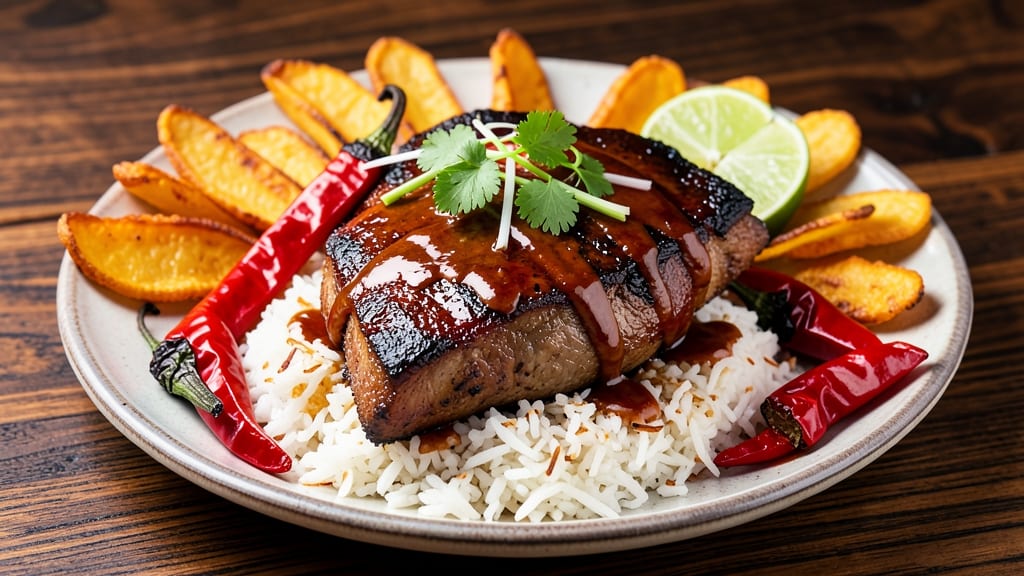
This Caribbean jerk pork loin recipe delivers the bold, smoky-sweet flavors of Jamaica's fire roasts in your own kitchen. After perfecting this dish at Atlanta The Smoky Pig, I've adapted the traditional pit-style method for home cooks using just one pan.
The secret lies in the marinade—allspice, Scotch bonnet peppers, and brown sugar working together to create that signature balance of heat and sweetness.
What sets this recipe apart is the combination of slow marinating and high-heat cooking that mimics authentic jerk techniques. You'll start with a tender pork loin that absorbs the marinade deeply, then finish with a caramelized crust that locks in all those complex flavors.
The process is straightforward but delivers restaurant-quality results that will have your guests asking for seconds.
By the time you're done, you'll have perfectly cooked jerk pork loin with tender, juicy meat and a sticky, caramelized crust. The aroma alone will transport you to Caribbean shores, while the bold flavors make this dish the centerpiece of any meal.
Serve it alongside steamed rice, fried plantains, and a refreshing coleslaw for the complete island experience.
This method works equally well on the grill, in the oven, or even in a Dutch oven for those cooler days. The key is maintaining that high heat finish to achieve the authentic jerk bark.
Whether you're hosting a dinner party or just craving a taste of the Caribbean, this recipe delivers every time.
Ingredients for caribbean jerk pork loin
Pantry staples meet Caribbean boldness—just 14 ingredients for restaurant-worthy jerk pork.
| Ingredient | Amount | Notes |
|---|---|---|
| Pork Loin 🐖 | 1 ½ lb | Center-cut, bone-in preferred |
| Scotch Bonnet Peppers 🌶️ | 2 whole | Seeds removed for less heat |
| Allspice Berries 🌿 | 1 tbsp | Ground or whole, toasted |
| Brown Sugar 🍯 | ½ cup | Light or dark variety |
| Soy Sauce 🥢 | 2 tbsp | Low-sodium preferred |
| Garlic Cloves 🧄 | 6 cloves | Minced or finely chopped |
| Onion 🧅 | 1 whole | Yellow or red, diced |
| Thyme Leaves 🌿 | 1 tbsp | Fresh or 1 tsp dried |
| Olive Oil 🫒 | 2 tbsp | Extra-virgin for richness |
| Lime Juice 🍋 | 2 tbsp | Freshly squeezed |
| Salt 🧂 | 1 ½ tsp | Kosher or sea salt |
| Ground Black Pepper 🌶️ | ½ tsp | Freshly cracked |
| Ginger Root 🌿 | 1 tbsp | Freshly grated |
| Honey 🍯 | 1 tbsp | Wildflower preferred |
The Scotch bonnet peppers are non-negotiable for authentic heat, but find them at Latin markets or specialty stores—regular grocery stores rarely carry them. If you can't, habanero peppers work (use half the amount) or even red pepper flakes (one-third the amount). For allspice, toast the whole berries in a dry pan for 30 seconds before grinding—this brings out deeper flavor. The pork loin should be center-cut and bone-in if possible, as it stays juicier during cooking. Costco or Whole Foods usually have great quality cuts.
No Scotch bonnet? Habanero or even cayenne can stand in, but reduce the amount by half. Fresh thyme is ideal, but dried works at one-third the amount. The honey adds that signature sweetness—substitute maple syrup if you're avoiding honey. For the marinade, combine everything in a blender for a smooth paste, or whisk vigorously if you prefer texture. The pork absorbs marinade best when refrigerated overnight or at least 4 hours. If you're short on time, marinate for 2 hours minimum, but flavor will be less intense.
The marinade keeps 3 days in the fridge, but the pork should be cooked within 24 hours of marinating. Pat the pork dry before cooking—this helps create that caramelized jerk bark. Leftovers reheat beautifully—wrap in foil and warm in a 300°F oven for 15 minutes. The flavor actually deepens overnight, so make extra if you can. Store cooked pork in an airtight container for 3-4 days or freeze for 3 months. For meal prep, slice against the grain and serve with rice or plantains.
Why You'll Love This Recipe
- Here’s what sold me: this pork tastes even better the next day. Shred it for tacos, sandwiches, or rice bowls—it’s my lazy Sunday go-to. Plus, the marinade stretches thin, so I make extra and freeze it for future cravings.
- I’ll be real: pork loin isn’t cheap, but this recipe makes it feel like a splurge without breaking the bank. A single loin feeds four, and the leftovers stretch across three meals. The Scotch bonnet and allspice? A tiny jar goes a long way.
Step-by-step instructions for Caribbean jerk pork loin
Here's how to create bold, smoky flavors in one pan without missing a beat.
Prepare the Jerk Marinade
In a blender or food processor, combine the 2 whole Scotch Bonnet peppers (seeds removed), 1 tbsp allspice berries, 0.5 cup brown sugar, 2 tbsp soy sauce, 6 cloves garlic, 1 whole onion, 1 tbsp thyme leaves, 2 tbsp lime juice, 1.5 tsp salt, 0.5 tsp ground black pepper, 1 tbsp ginger root, and 1 tbsp honey. Pulse until smooth but still slightly textured—this ensures vibrant color and proper coating.
Taste the marinade and adjust seasoning if needed. The Scotch Bonnet peppers will make this fiery, so if you prefer milder heat, reduce the pepper quantity slightly. Transfer the marinade to a bowl and set aside for now.
Marinate the Pork Loin
Pat the 1.5 lb pork loin dry with paper towels—this helps the marinade adhere better and promotes crispy skin. Place the pork in a large resealable plastic bag or shallow dish and pour the marinade over it, coating all sides thoroughly. Seal the bag or cover the dish and refrigerate for at least 4 hours (overnight is even better).
Turn the pork occasionally during marinating to ensure even flavor penetration. The acidity from the lime juice and soy sauce will begin tenderizing the meat, while the allspice and Scotch Bonnet peppers infuse their signature Caribbean punch.
Sear the Pork for Maximum Flavor
Remove the pork from the fridge and let it sit at room temperature for 30 minutes before cooking. Heat 2 tbsp olive oil in a large oven-safe skillet over medium-high heat until shimmering. Add the pork and sear on all sides for 3-4 minutes per side until deeply browned. Don't rush this step—those caramelized edges are packed with flavor.
Once browned, transfer the skillet to a 400°F preheated oven. The residual heat will continue cooking the pork while allowing the marinade to caramelize and form a sticky glaze on the meat.
Roast to Juicy Perfection
Roast the pork for 25-30 minutes until the internal temperature reaches 145°F when measured with a meat thermometer. The pork should be tender but not dry—this cooking time ensures it stays juicy while developing that perfect jerk crust. If the marinade starts to bubble vigorously, reduce the oven temperature to 375°F to prevent burning.
For the final 5 minutes, increase the oven temperature to 425°F to crisp the edges. This high-heat finish creates a beautiful caramelized bark that contrasts beautifully with the tender interior. Remove the pork from the oven and let it rest for 10 minutes before slicing—this resting period allows the juices to redistribute, ensuring each bite is moist and flavorful.
Slice and Serve
Slice the pork loin into ½-inch thick pieces against the grain for maximum tenderness. The jerk marinade should be thick and sticky, clinging beautifully to each slice. Serve immediately with your choice of sides like grilled plantains, coconut rice, or a fresh mango salsa to balance the heat.
This one-pan method delivers restaurant-quality jerk pork with minimal cleanup. The combination of smoky Scotch Bonnet peppers, sweet brown sugar, and tangy lime juice creates a complex flavor profile that's sure to impress. Enjoy the bold, spicy-sweet fire roast!
Pro Tips For Making Caribbean Jerk Pork Loin
- Char the Scotch Bonnet First: Toss the whole pepper into a dry skillet over medium-high heat—just until it blackens in spots. The smoky, bitter notes from the char deepen the jerk flavor more than raw peppers ever will. (Yes, even if you’re tempted to skip it for convenience.)
- Crush Allspice Berries: Don’t just toss in whole allspice berries—lightly crush them with the flat side of a knife before adding to the marinade. This releases their oils and aroma, making the jerk seasoning actually work instead of just sitting there like decorative seeds.
- Marinate Overnight, Not Hours: Pork loin needs time to absorb the jerk mix, but 4–6 hours is the sweet spot. Any less and the flavors won’t penetrate; any more and the meat turns mushy. Set it in the fridge the night before—it’s foolproof.
- Rest Before Slicing: Let the cooked pork loin sit under foil for 5–10 minutes after coming off the heat. Cutting it too soon means dry, stringy slices—no one wants that, especially after all the effort. (Your future self will notice.)
Troubleshooting perfect results
Uneven Cooking
If your jerk pork loin emerges with some areas overcooked and others underdone, the issue is likely uneven heat distribution. I’ve seen this happen when using crowded pans or when the pork isn’t evenly seared before roasting.
For a foolproof solution, always use an oven-safe skillet that’s large enough to accommodate the pork with at least ½ inch of space around it. Before roasting, sear the pork on all sides until deeply browned—this ensures even heat penetration.
If your oven has hot spots, rotate the pan halfway through cooking. A thermometer probe helps monitor internal temperature accurately, so you can adjust as needed. 🌡️
Dry or Tough Meat
Jerky texture? That usually means the pork cooked too long at high heat. The key is hitting 145°F internal temperature and removing it immediately—don’t let it climb higher.
I’ve found that bone-in pork stays juicier, so if you’re using boneless, brining it for 30 minutes in a saltwater solution (1 cup water + ¼ cup salt) helps retain moisture. Also, avoid overcrowding the pan during searing—this traps steam and can make the meat steam instead of sear.
For extra tenderness, slice against the grain after resting. 💡
Pale or Bland Flavor
If your jerk pork lacks that signature deep color and bold taste, the marinade likely didn’t infuse properly. The Scotch bonnet peppers and allspice are non-negotiable for authentic flavor, but even these can fail if the pork isn’t marinated long enough.
I recommend at least 4 hours in the fridge, but overnight is ideal. For extra punch, toast the allspice berries and brown the onion before blending into the marinade—this adds depth.
If the marinade tastes weak, add 1 extra tbsp of lime juice or soy sauce to brighten it up. 🌶️
Sticky or Burnt Marinade
When the marinade caramelizes too aggressively, it can burn before the pork is fully cooked. To prevent this, reduce the oven temperature to 375°F if you see excessive bubbling. I’ve also had success by tenting the pan loosely with foil during the roasting phase—this allows heat to circulate without scorching.
For a cleaner finish, brush any excess marinade away from the edges before the final high-heat crisp. If the marinade burns, the pork will still taste great, but the bark might be bitter—just scrape off the burnt bits before serving. ⚡
Marinade Too Thin or Runny
A watery marinade won’t stick to the pork and can make it soggy. The fix is simple: reduce the liquid components. If your marinade is too thin, simmer it uncovered for 5-10 minutes to thicken it slightly.
For a smoother texture, blend the marinade until fully emulsified—this helps it cling better. If you’re short on time, thicken it with 1 tsp cornstarch mixed with 1 tbsp cold water, then stir it in. A properly thick marinade will create that coveted sticky glaze we all love. 🍯
Nutrition facts
Frequently asked questions
Can I use boneless pork loin for this recipe?
Yes, but bone-in pork stays juicier. If using boneless, pat it extra dry and consider a 30-minute brine (1 cup water + ¼ cup salt) to prevent dryness. The bone helps retain moisture during high-heat cooking, so boneless versions need careful monitoring with a thermometer to hit 145°F precisely.
What if I can't find Scotch bonnet peppers?
Use habanero peppers (½ the amount) or red pepper flakes (⅓ the amount) for heat. For milder flavor, substitute with jalapeños (remove seeds) or 1 tbsp cayenne powder. The key is balancing heat with sweetness—adjust brown sugar to ⅓ cup if reducing spice intensity.
How do I make this jerk pork in a slow cooker?
Marinate the pork as directed, then sear it briefly in a skillet. Transfer to a slow cooker with ¼ cup marinade** and cook on low for 4-5 hours or high for 2-3 hours. Finish with a 5-minute broil to create the jerk bark. The slow cooker keeps it tender, but you’ll lose some crust development.
Can I prep the marinade ahead of time?
Store the marinade in an airtight container in the fridge for 3 days or freeze for 3 months. Thaw overnight in the fridge before using. For best results, marinate the pork for 4 hours minimum (overnight is ideal) to ensure deep flavor infusion. The marinade can also be doubled and frozen for future use.
What sides pair best with jerk pork loin?
Classic pairings include coconut rice, fried plantains, or black beans for a complete Caribbean meal. For a lighter option, try mango salsa or pineapple coleslaw to balance the heat. I also love serving it with grilled pineapple slices for a sweet contrast.