
Soups & Stews
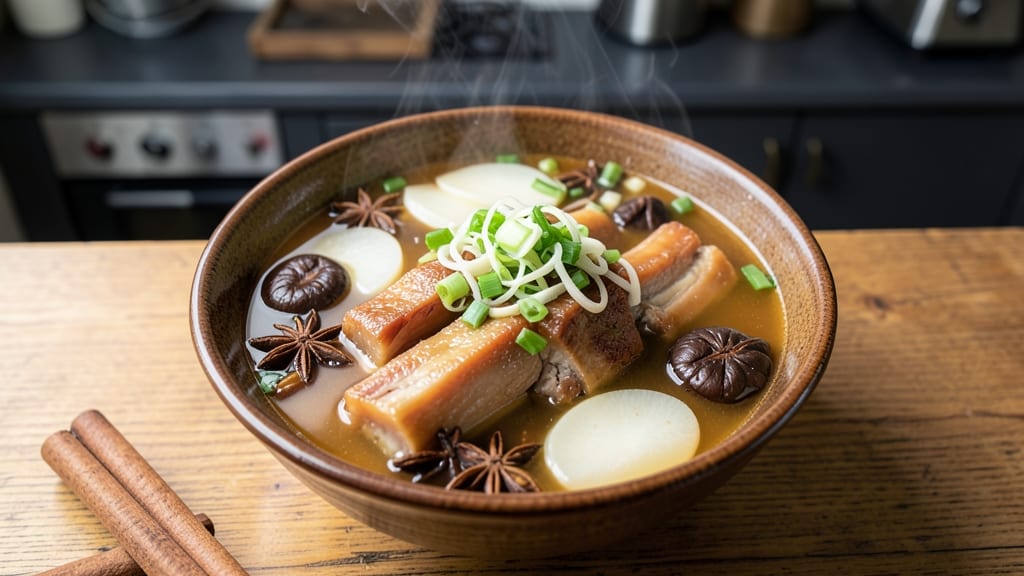
This Cantonese pork bone soup delivers the kind of silky-tender meat and five-spice-infused broth that turns weeknights into family feasts. 🔥 I remember the first time I tasted it at a Hong Kong market stall—the aroma alone made my stomach growl.
What sets this recipe apart is the slow extraction of collagen from pork bones, creating a broth so rich it practically melts into your bones.
The secret lies in low-and-slow simmering—at least 8 hours, but preferably overnight—for maximum flavor development. We'll start with charring the bones for depth, then build layers using star anise, cinnamon, and Sichuan peppercorns. These spices infuse the broth with warmth without overpowering the natural sweetness of the pork.
By the time you're done, you'll have fall-apart pork swimming in a golden, aromatic broth that's perfect for serving with steamed rice and quick-pickled vegetables.
The technique might seem time-consuming, but the results are worth every minute—this is comfort food at its finest, with restaurant-quality depth you can make at home.
For those short on time, we'll include a quick version that still delivers impressive results, though purists will insist on the full simmer. Either way, this soup becomes better with each reheat, making it ideal for meal prep or feeding a crowd. Let's get started on creating something truly special.
Ingredients for cantonese pork bone soup
Six pounds of bones and a handful of aromatic spices transform into restaurant-quality Cantonese pork bone soup.
| Ingredient | Amount | Notes |
|---|---|---|
| Pork Bones 🍖 | 4 lb | Knuckle or marrow bones preferred |
| Dried Shiitake Mushrooms 🍄 | 6 whole | Stems removed, soaked if dry |
| Daikon Radish 🥕 | 1 lb | Cut into 2-inch chunks |
| Green Onions 🧅 | 1 bunch | Cut into 2-inch pieces |
| Star Anise 🌶️ | 2 whole | Lightly crushed |
| Cinnamon Sticks 🌿 | 2 whole | 2-inch pieces |
| Sichuan Peppercorns 🌶️ | 1 tbsp | Lightly toasted |
| Five-Spice Powder 🌶️ | 1 tbsp | Store-bought or homemade |
| Fresh Ginger Root 🌿 | 2 oz | Peeled, sliced into ¼-inch pieces |
| Garlic Cloves 🧄 | 8 cloves | Smashed, not minced |
| Light Soy Sauce 🥄 | ½ cup | Kikkoman preferred |
| Dark Soy Sauce 🥄 | 2 tbsp | For color depth |
| Sesame Oil 🫒 | 1 tbsp | Toasted for aroma |
| White Rice 🍚 | 2 cups | Uncooked, for serving |
| Salt 🧂 | 1 ½ tsp | Diamond Crystal preferred |
The bones are non-negotiable here—knuckle or marrow bones give you that melt-in-your-mouth texture. Costco sells them pre-packaged, or ask your butcher for the best cuts. Look for bones with good marrow—they'll be slightly greasy to the touch. The shiitake mushrooms should be dried and hard—soak them in hot water for 20 minutes before adding. Fresh ginger and garlic? Buy organic if possible, and get the root form for maximum flavor. The five-spice powder is where the magic happens—Penzeys brand has a great blend, but any quality store-bought works. Toast your Sichuan peppercorns in a dry pan for 30 seconds—they'll sizzle and release their aroma, which is exactly what you want in this soup.
No Sichuan peppercorns? Substitute with a pinch of black pepper plus a dash of cayenne—it won't be identical, but you'll still get the warmth. Running low on daikon? Regular radishes or even turnips work in a pinch, though the texture will be slightly different. The soy sauces are crucial—Kikkoman for light, Lee Kum Kee for dark. If you can only find one, use light soy and add a teaspoon of molasses for depth. The sesame oil should be toasted—heat it gently in a pan until fragrant, then cool before adding. For the five-spice powder, if you're feeling ambitious, make your own blend with star anise, cinnamon, cloves, fennel, and peppercorns. But honestly, the jarred stuff is fine if you're short on time.
This soup tastes even better the next day—plan ahead. Store it in the fridge for up to 5 days, or freeze portions for 3 months. The bones will keep simmering in the broth, so the longer it cooks, the richer it gets. I like to make a big batch and portion it into containers—one for immediate serving, others for quick lunches. The rice should be steamed just before serving to keep it light. If you're prepping ahead, cook the rice separately and reheat it with a splash of water. The broth can be reheated on the stove or in the microwave, though stove-top gives you more control over the temperature.
Why You'll Love This Recipe
- No Chopping Chaos: I swear by the daikon radish—just slice it thick, no peeling, no fuss. The mushrooms soak while I simmer, and the star anise infuses the broth like magic without me even trying.
- Umami Bomb: That first sip of pork bone broth? Rich, deep, and packed—thanks to the bones and shiitakes. The star anise adds a warm, earthy kick, while the green onions at the end brighten it all up.
- Leftovers That Shine: This soup begs for seconds, and it only gets better the next day. I freeze portions for lazy nights—just reheat, add a splash of water, and boom, instant comfort.
- Budget-Friendly Powerhouse: Pork bones and dried mushrooms stretch this into three meals for pennies. Honestly, it’s the kind of dish where you’ll wonder why you ever ordered takeout.
Step-by-step instructions for Cantonese pork bone soup
Here's how to build a deeply aromatic broth where silky pork melts effortlessly from the bone.
🔥 Step 1: Parboil and Blanch the Pork Bones
Rinse the 4 lb pork bones thoroughly under cold water to remove any blood or impurities. Place them in a large stockpot and cover with cold water by about 2 inches. Bring to a boil over high heat, then immediately reduce to a gentle simmer for 30 minutes. This parboiling removes impurities and prepares the bones for maximum flavor extraction.
After 30 minutes, drain the bones and rinse them again under cold water. Return them to the same pot and cover with fresh cold water. Bring to a boil again, then drain and rinse a final time. This thorough cleaning ensures your broth stays crystal clear and free from any off-flavors. The bones should now look clean and pale.
🍳 Step 2: Build the Five-Spice Aromatic Base
In a dry skillet over medium heat, toast the 1 tbsp Sichuan peppercorns for 1-2 minutes until fragrant and slightly puffed. Transfer them to a mortar and pestle and lightly crush (don't grind into powder). In the same skillet, toast the 2 whole star anise and 2 whole cinnamon sticks for 30 seconds until aromatic.
Add the toasted spices along with the 1 tbsp five-spice powder, 2 oz peeled and sliced fresh ginger root, and 8 smashed garlic cloves to the pot with the pork bones. Pour in 2 cups cold water and bring to a rolling boil. Immediately reduce heat to low and let it simmer uncovered for 30 minutes. This step develops the complex spice profile that defines Cantonese bone broth.
🥘 Step 3: Simmer the Broth for Maximum Depth
Add the 6 whole dried shiitake mushrooms (stems removed), 1 lb daikon radish (cut into 2-inch chunks), 1 bunch green onions (cut into 2-inch pieces), 0.5 cup light soy sauce, 2 tbsp dark soy sauce, and 1.5 tsp salt to the pot. Bring to a gentle simmer and maintain this temperature for 4-5 hours. The broth should never boil vigorously—keep it at a steady, quiet simmer to prevent cloudiness.
After 3 hours, skim off any foam that rises to the surface with a ladle. This ensures a smooth, velvety texture. The pork bones should become fork-tender and easily separate from the meat. The broth will develop a rich, amber color and an intoxicating aroma of five-spice and ginger. This long simmering time is what transforms simple ingredients into a restaurant-quality soup.
⏰ Step 4: Finish with Sesame Oil and Serve
Once the pork is fork-tender (about 4-5 hours total), strain the broth through a fine-mesh sieve into a clean pot. Discard the solids or save for other uses. Return the broth to the stove and stir in 1 tbsp toasted sesame oil. This adds a nutty aroma that perfectly complements the five-spice profile.
Ladle the hot broth over 2 cups uncooked white rice in individual bowls. The rice will absorb the flavorful broth as it cooks. Serve immediately with the tender pork meat, shiitake mushrooms, daikon, and green onions arranged artfully on top. Each spoonful should deliver a harmonious blend of sweet, spicy, and umami flavors with perfectly tender meat that falls apart at the touch.
Pro Tips For Making Cantonese Pork Bone Soup
- BLANCH BONES FIRST: Toss your pork bones in boiling water for 2-3 minutes before simmering—this removes impurities and speeds up collagen extraction. I learned this the hard way after my first batch turned cloudy; now my broth stays crystal clear.
- SOAK MUSHROOMS LONG: Rehydrate dried shiitake in warm water for at least 30 minutes (or overnight if you’re patient). Cold water leaves them tough, and skipping this step means your soup will taste like chewing on leather. Trust me, your future self will notice.
- DON’T SKIP THE STAR ANISE: Crack the star anise with the flat side of a knife before adding it—this releases the oils faster and infuses the broth with deeper flavor. I used to toss it in whole, and the aroma was half as strong. A tiny effort for big payoff.
- SLICE DAIKON THIN: Cut the daikon into ¼-inch thick half-moons so it cooks evenly without turning to mush. Thick slices stay crunchy but undercooked; thin slices melt just enough to thicken the broth naturally. Your soup will thank you.
Regional styles of this recipe
Hong Kong Market-Style
In Hong Kong, this soup is often made with smaller pork bones—about 3-4 pounds—for a more concentrated flavor. The key difference? A shorter simmer time of 3-4 hours instead of overnight, balanced by adding 1 extra star anise and ½ tsp extra five-spice powder.
The broth stays lighter but packs more umami punch. I remember my first time eating it at a bustling wet market stall in Kowloon—vendors would stir in a splash of Shaoxing wine just before serving for brightness. 🌶️
Guangdong Farmhouse Version
Rural Guangdong households take their pork bone soup simpler but richer, focusing on longer simmering (up to 12 hours) with no soy sauce—just salt and a splash of rice wine. The bones are often charred over an open flame first for smoky depth.
They also add bamboo shoots and dried tangerine peel for a subtly citrusy note. My mentor in Charleston taught me this method, and it became my go-to for weekend family meals. The broth develops a deep mahogany color and a caramelized sweetness that’s impossible to resist.
Modern Singaporean Twist
Singapore’s version embraces fusion flavors while keeping the Cantonese soul. Look for chili paste (like Sambal Oelek) and limes in the final broth for a spicy-tangy kick. Some chefs add coconut milk at the end for creaminess, though purists will scoff.
I’ve experimented with this—adding 1 tbsp chili paste and zest of 1 lime at the end gives it a bold, restaurant-worthy finish. Serve with lemongrass-infused jasmine rice for the full experience. 🍋
Taiwanese Comfort Version
Taiwanese home cooks often double the ginger (using 4 oz instead of 2 oz) and add preserved mustard greens for a funky, tangy contrast. The broth is thicker—almost like a stew—thanks to less water and longer reduction (up to 8 hours).
They also toss in soft tofu at the end for texture. This version is heartier, perfect for cold nights. I’ve made it with my heritage pigs’ trotters for extra collagen—absolute game-changer for texture. 🐷
Quick Weeknight Adaptation
Short on time? Use pre-made chicken stock (like Kettle & Fire) and pork shoulder instead of bones. Sear the meat first, then simmer with all spices for just 2 hours. Add 1 packet miso paste** for depth.
It won’t be exactly the same, but it’s a weeknight lifesaver that still delivers that five-spice warmth. I’ve done this when my farm deliveries run late—still delicious, just faster. ⏰
Nutrition facts
Frequently asked questions
Why do Cantonese pork bone soups need such a long simmer time?
That 8+ hour simmer is what unlocks the magic! The slow cooking breaks down collagen in the bones into gelatin, creating that signature silky, velvety texture while extracting maximum flavor. The spices—especially five-spice and star anise—also need time to infuse properly. Think of it like tea steeping: the longer it simmers, the richer the flavor becomes.
Can I use regular pork bones instead of knuckle or marrow bones?
You can, but you'll miss out on the ultimate texture. Knuckle and marrow bones contain more connective tissue that melts into the broth, creating that luxurious mouthfeel. Regular bones will still make good soup, but it'll be less tender. If that's all you have, just add an extra 30 minutes to the simmering time for better results.
What's the best way to tell when the pork is fully tender?
Use the fork test: gently press a fork into the meat. If it slides in easily and the meat separates cleanly from the bone, it's ready. You should also see the broth turning deep amber and smelling intensely aromatic. The bones should feel soft when squeezed—almost like they're collapsing under pressure.
Can I make this soup in a slow cooker? The slow cooker is perfect for this recipe. After the initial 30-minute parboil and spice toast**, transfer everything to your slow cooker and cook on low for 8-10 hours. Just
How can I make my broth clearer?
For a crystal-clear broth, use the double-boil method after straining: place the strained broth in a heatproof container set over a pot of simmering water (don't let it touch). Heat gently for 15-20 minutes—this clarifies the broth without boiling it. Also,