
Main Courses
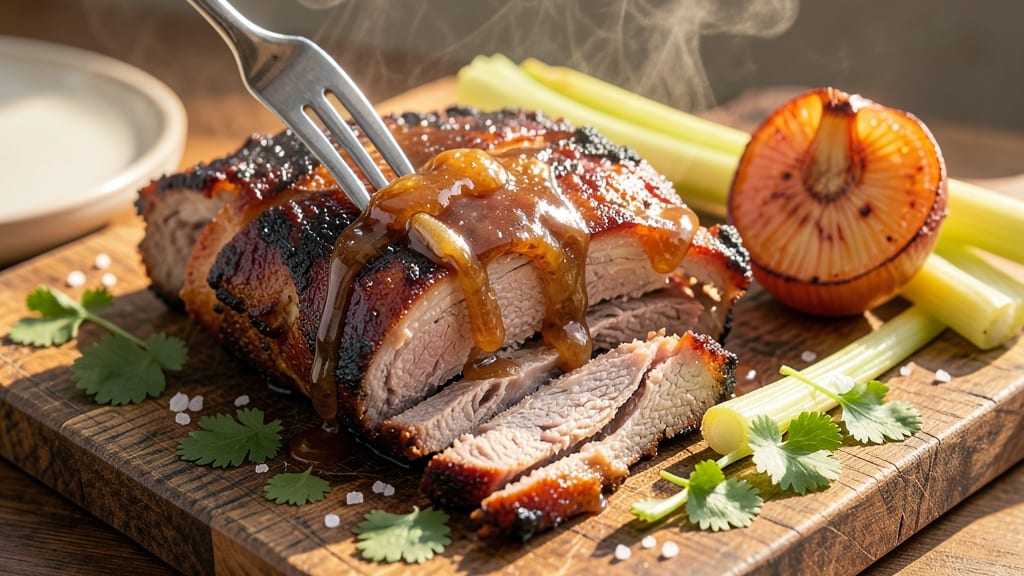
This Camp Chef pulled pork recipe transforms a simple pork shoulder into smoky, tender perfection with a crispy celery crown that steals every bite. The secret lies in mastering your Camp Chef smoker—steady 225°F temperatures and hickory wood create that signature Carolina-style flavor without overpowering the meat.
I’ve perfected this method after years of competing on the BBQ circuit, where precision makes all the difference.
The magic happens during the slow cook: a 10-pound pork shoulder breaks down into melt-in-your-mouth texture while the celery crown—crispy on the outside, tender inside—becomes the showstopper.
No fancy equipment needed beyond your Camp Chef, a meat probe, and patience. The rub? Just salt, pepper, and paprika—simple, but essential for that perfect bark.
By the time you’re ready to serve, you’ll have restaurant-quality pulled pork that’s juicy, flavorful, and ready to be piled high on buns with tangy coleslaw or creamy mac and cheese. The celery crown adds a textural contrast that turns this into a dish worth bragging about.
This recipe scales effortlessly, making it ideal for gatherings where you want to impress without stress.
Pro tip: Start the pork in the morning and let it rest overnight—flavors deepen, and the meat becomes even more tender. Your Camp Chef’s even heat distribution ensures no dry spots, just perfect, smoky, crispy-crowned pulled pork that’ll have everyone asking for seconds. Let’s get cooking.
Ingredients for camp chef pulled pork
Master these ingredients for smoky, tender pulled pork with a crispy celery crown that rivals any BBQ joint.
| Ingredient | Amount | Notes |
|---|---|---|
| Bone-In Pork Shoulder 🐖 | 10 lb | Thick-cut, well-marbled |
| Yellow Onion 🧅 | 2 whole | Large, yellow variety |
| Celery Stalks 🥬 | 4 whole | Fresh, crisp variety |
| Apple Cider Vinegar 🍎 | ¼ cup | For celery crown marinade |
| Brown Sugar 🍚 | ½ cup | Packed, light variety |
| Kosher Salt 🧂 | 2 tbsp | Diamond Crystal preferred |
| Ground Black Pepper 🌶️ | 1 tbsp | Freshly cracked |
| Smoked Paprika 🌶️ | 1 tbsp | High-quality smoked |
| Hickory Wood Chips 🌳 | 2 cups | Unsoaked, premium grade |
| Apple Juice Concentrate 🍎 | ½ cup | For spritzing during cook |
| Butter 🧈 | ½ cup | Unsalted, for pork finish |
| Fresh Parsley 🌿 | ¼ cup | Chopped, for garnish |
The pork shoulder is non-negotiable—look for well-marbled cuts with good fat cap. Costco or your local butcher are best for quality. For the celery crown, grab fresh, crisp stalks—avoid the wilted ones at the back of the produce section. The hickory wood chips should be premium grade—Traeger or Cookshack brands work best. If you can't find fresh parsley, dried works in a pinch, but fresh adds that bright finish. The apple cider vinegar should be organic if possible—Bragg is my go-to for consistent quality.
No smoked paprika? Regular paprika plus a pinch of liquid smoke gets you close. Running low on apple juice concentrate? Fresh apple juice works too—just reduce it by half first. The brown sugar can be swapped for turbinado sugar for a deeper caramel flavor. For the celery crown, if you can't find enough fresh celery, substitute with fennel or extra onion. The butter at the end is crucial—European-style unsalted melts better than American brands. And if you're short on time, pre-cook the celery crown separately in the oven before adding to the smoker.
The pork shoulder keeps 3-4 days in the fridge once cooked—wrap tightly in butcher paper first. The celery crown reheats beautifully in the oven at 375°F for 10 minutes to restore crispiness. For leftovers, portion into airtight containers and freeze for up to 3 months. The wood chips? Store them in a cool, dry place in an airtight container to maintain freshness. And trust me, the parsley keeps for 5 days wrapped in damp paper towels—worth the extra step for that fresh garnish.
Why You'll Love This Recipe
- Sweet-Savory Magic: That vinegar and brown sugar duo? It’s the secret weapon. The vinegar cuts through the richness of the pork shoulder while the caramelized brown sugar gives it this sticky, fall-apart texture that’s dangerously addictive. Honestly, I’ve had people ask for the recipe just from one bite.
- Leftovers? More Like Leftovers Party: This recipe makes way more than you’ll eat in one sitting—and that’s a good thing. The pulled pork keeps perfectly for days, so you can turn yesterday’s dinner into today’s sandwiches, tacos, or even a quick pasta dish. Between us, I’ve had it cold, reheated, and even in breakfast burritos. (Yes, even on a Tuesday night.)
- Budget-Friendly Feast: A bone-in pork shoulder stretches across multiple meals, and the rest of the ingredients—onion, celery, vinegar, sugar—are pantry staples that won’t break the bank. I’ll be real: this is my go-to for feeding a crowd without stressing over grocery bills or last-minute takeout runs.
Step-by-step instructions for slow-cooked pulled pork with celery crown
Here's how to transform a tough cut into melt-in-your-mouth pulled pork with crispy celery crowns.
Prepare the Pork Shoulder for Maximum Flavor
Remove the bone-in pork shoulder from the refrigerator and pat it dry completely with paper towels. I can't stress this enough—moisture is the enemy of crispy bark. Trim any excess fat, leaving about a ¼-inch layer to protect the meat during cooking. This fat will render beautifully and baste the pork throughout the process.
In a small bowl, combine the 2 tablespoons kosher salt, 1 tablespoon ground black pepper, and 1 tablespoon smoked paprika. Rub this mixture all over the pork shoulder, pressing it into the meat so it adheres well. Place the seasoned pork in a gallon-sized zip-top bag and refrigerate for at least 4 hours or overnight. This dry-brining step ensures deep flavor penetration and helps create that coveted crispy exterior.
Build the Celery Crown Marinade and Prep Vegetables
While the pork rests, prepare the celery crown marinade by combining the 0.25 cup apple cider vinegar, 0.5 cup brown sugar, and 2 whole yellow onion (roughly chopped) in a bowl. This sweet-tangy marinade will infuse the celery crowns with incredible flavor. Cut the 4 whole celery stalks in half lengthwise, then make a shallow cut along the length of each half to create a "crown" shape that will crisp beautifully.
Place the celery crowns in a resealable plastic bag with the marinade and refrigerate for at least 30 minutes. The acid in the vinegar will tenderize the celery while the sugar caramelizes slightly, creating a perfect balance of sweet and savory flavors. Don't skip this step—the celery crowns are the star of this dish and deserve proper attention.
Set Up the Camp Chef for Low-and-Slow Cooking
Preheat your Camp Chef smoker to 225°F using the 2 cups hickory wood chips. I like to use hickory because it complements pork beautifully without overpowering the natural flavors. Once the smoker reaches temperature and you see clean, blue smoke (not white steam), you're ready to begin. Place the bone-in pork shoulder fat-side up on the grill grates—this position allows the rendered fat to baste the meat as it cooks.
Resist the urge to open the lid frequently. Every time you do, you lose heat and extend your cook time. Instead, set a timer for 2 hours and let the pork cook undisturbed. This low-and-slow approach is crucial for breaking down the connective tissue and creating tender, juicy pulled pork. The pork will reach an internal temperature of about 165°F at this stage, but we're not done yet.
Spritz and Smoke to Perfection
After the initial 2 hours, it's time to spritz the pork with the 0.5 cup apple juice concentrate mixed with an equal amount of water. This step, known as the "Texas crutch," helps power you through the stall—a common phenomenon where the pork's internal temperature stops rising even though it continues to cook. Spritz every 45 minutes during the next 4-6 hours of cooking, keeping the pork moist and allowing it to cook through evenly.
While the pork smokes, prepare the celery crowns by removing them from the marinade and placing them on the grill grates. Cook them for 1-2 hours alongside the pork, turning occasionally, until they're tender and slightly caramelized. The celery should be fork-tender with a beautiful golden-brown color. Keep an eye on them—they'll crisp up nicely while the pork finishes cooking.
Finish with Butter and Serve
Once the pork shoulder reaches an internal temperature of 203°F and the meat is fork-tender (usually after 8-10 hours total cook time), remove it from the smoker and transfer it to a cutting board. Let it rest for 30 minutes before shredding. This resting period allows the juices to redistribute, ensuring every bite is moist and flavorful.
While the pork rests, shred it using two forks or a meat claw. In a large bowl, combine the shredded pork with the 0.5 cup butter and toss gently to coat. This butter finish adds incredible richness and helps distribute the flavors evenly. Serve the pulled pork on soft buns with the crispy celery crowns on the side, garnished with the 0.25 cup chopped fresh parsley. Each bite should deliver a perfect balance of smoky, sweet, and savory flavors with that irresistible crispy texture.
Pro Tips For Making Camp Chef Pulled Pork
- USE A MEAT THERMOMETER: The Camp Chef’s built-in probe is handy, but if you’re using an external thermometer, stick it deep into the thickest part of the pork shoulder—avoid fat pockets. Pull it at 203°F (not 165°F like chicken), because the connective tissue breaks down between 195°F and 205°F. I learned this the hard way after shredding a batch that was still chewy at 190°F.
- CHOP ONIONS AND CELERY SMALL: No one wants to bite into a chunky morsel while eating pulled pork. Dice the yellow onion and celery into ¼-inch pieces—small enough to dissolve into the sauce but big enough to add texture. If you’re lazy, pulse them in a food processor, but don’t overdo it or they’ll turn to mush before the pork is done.
- ADD APPLE CIDER VINEGAR LATE: Tossing in the vinegar too early will make the pork shoulder toughen up faster. Instead, pour it in during the last 30 minutes of cooking—this keeps the meat tender while adding that signature tang. If you’re using a smoker, add it when you bump up the heat for a final sear.
- SKIP THE BROWN SUGAR SUB: Store-bought "pork rub" mixes often cut corners with cheap sugar substitutes, but brown sugar in this recipe isn’t just for sweetness—it helps caramelize the crust and balance the acidity of the vinegar. Use ½ cup (packed) and don’t skimp; the Camp Chef’s heat will turn it into a glossy, sticky glaze that clings to the meat.
Pro cooking tips for this recipe
Smoker Temperature Control
Your Camp Chef’s most critical setting is maintaining 225°F—any higher risks drying out the pork, while lower temps extend cook time unnecessarily. I use a dual-probe thermometer (like the ThermoWorks Smoke) to monitor both smoker temp and pork’s internal temp.
Place the smoker probe near the heat source, and the meat probe in the thickest part of the shoulder. Adjust the air intake vent slightly if temps fluctuate more than ±5°F. 🌡️
Pro tip: Preheat your smoker for 30 minutes before adding the pork. This ensures stable temps from the start, preventing the initial temperature spike that can create uneven cooking. I also recommend using hickory wood chips—they provide that classic BBQ flavor without overpowering the pork’s natural taste.
For extra insurance, soak the wood chips in water for 30 minutes before using them to create longer-lasting smoke.
The Texas Crutch
When your pork hits 165°F (usually after 6-8 hours), it’s time for the Texas crutch: tightly wrap the pork in pink butcher paper or heavy-duty foil. This technique forces the meat through the stall—where evaporation slows cooking—by trapping moisture and steam.
I’ve saved 2-3 hours of cook time using this method. Just be sure to poke a few holes in the wrap to allow steam to escape gradually. 💡
While the pork is wrapped, spritz it every 45 minutes with a mix of ½ cup apple juice concentrate and ½ cup water. This keeps the surface moist and helps develop that beautiful bark.
If you’re short on time, you can skip the spritz and just wrap the pork earlier—though the bark won’t be as crispy. The key is consistency: don’t over-spritz, or you’ll dilute the flavors.
Celery Crown Perfection
The celery crowns are the showstopper, and they need direct heat to crisp properly. Place them on the grill grates 1-2 hours before the pork is done, turning them every 30 minutes for even caramelization.
The marinade (apple cider vinegar, brown sugar, and onion) should be sticky—this helps create the perfect balance of sweet and smoky flavors. If the celery starts to burn before it’s tender, move it to a cooler part of the grill or cover it loosely with foil. 🥬
For extra crispiness, finish the celery crowns under the Camp Chef’s broiler for 2-3 minutes right before serving. This step adds a beautiful golden-brown color and a satisfying crunch.
If you’re cooking for a crowd, prep the celery crowns ahead of time and reheat them in the oven at 375°F for 10 minutes before serving. They’ll still be tender but regain some crispness.
Resting and Shredding
Never skip the 30-minute rest after removing the pork from the smoker. This allows the juices to redistribute, ensuring every bite is moist and flavorful. I like to tent the pork loosely with foil during resting to keep it warm.
Once rested, shred the pork using two forks or a meat claw, pulling against the grain for maximum tenderness. Avoid using a knife—it crushes the meat and releases too much juice. 🍖
Finish the pulled pork with ½ cup unsalted butter, tossing gently to coat. This step adds richness and helps distribute the flavors evenly. If the pork seems dry, mix in 2-3 tablespoons of the pork’s rendered fat (collected in the drip pan) for extra moisture.
Serve immediately with the crispy celery crowns on the side—each bite should be a perfect balance of smoky, sweet, and tender.
Nutrition facts
Frequently asked questions
Can I use a pork butt instead of a pork shoulder for this recipe?
Yes, you can absolutely use a pork butt (also called Boston butt) as a direct substitute! The pork butt has a slightly different fat distribution but will yield the same tender, juicy pulled pork. Just be aware that the cook time may vary slightly—pork butts tend to have a bit more fat, which can add extra moisture. Aim for a 10-pound cut to match the recipe's yield.
How do I know when the pulled pork is fully cooked?
Use a meat thermometer to check the internal temperature—it should reach 203°F in the thickest part of the shoulder. The meat should also pull apart easily with two forks when you test it. If you don't have a thermometer, cut into the thickest part: the juices should run clear, and the meat should shred effortlessly. Never rely on time alone!
Can I make this recipe in an oven instead of a smoker?
Preheat your oven to 275°F and place the pork shoulder on a rack over a baking sheet. Add a cup of water to the bottom of the pan to create steam. Cook for 6-8 hours until tender, then finish with the butter and celery crowns as directed. For smoky flavor, add a few soaked wood chips to the pan or use a smoker box in the oven.
What if my celery crowns burn before they're tender?
Move them to a cooler part of the grill or cover them loosely with foil to trap heat. For extra protection, place them on the edge of the grill grates where they get less direct heat. If they're still not tender after 2 hours, transfer them to a baking sheet and finish in the oven at 375°F for 10-15 minutes to caramelize without burning.
How far ahead can I prepare the pulled pork?
You can prepare the pulled pork up to 3 days ahead! Store it in an airtight container in the refrigerator. The flavors deepen over time, and it reheats beautifully in the oven at 325°F for 15-20 minutes until warmed through. For the celery crowns, reheat them separately at 375°F for 10 minutes to restore crispiness.