
Main Courses
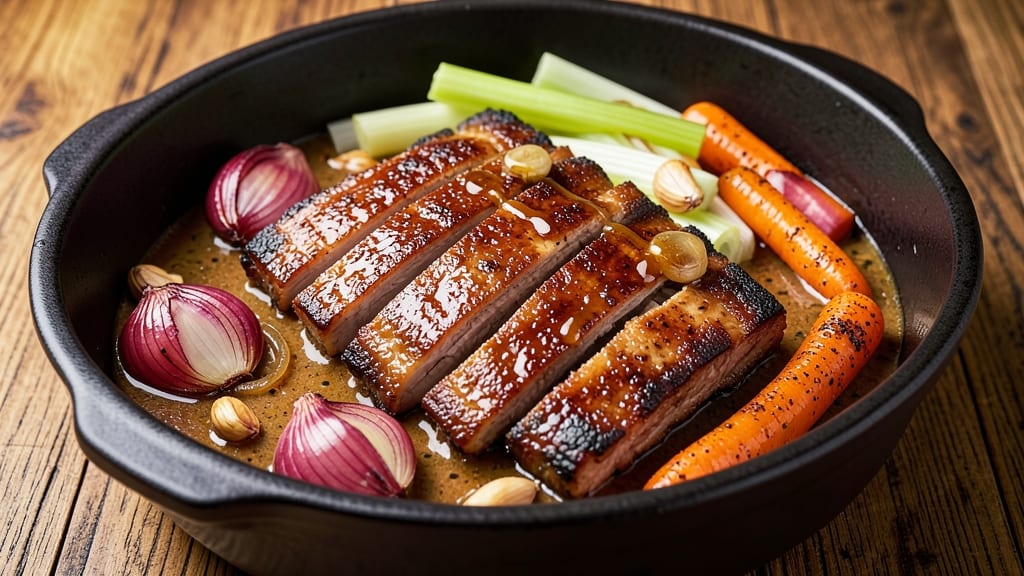
This braised boneless country-style pork ribs recipe delivers melt-in-your-mouth tenderness that transforms tough cuts into luxurious bites. After years of perfecting this technique in my Atlanta kitchen, I've developed a method that ensures restaurant-quality results at home—no smoker required.
The secret lies in slow braising with aromatic vegetables and a carefully balanced seasoning blend that penetrates every fiber of the meat.
What sets this recipe apart is the celery crown crunch—a crispy, caramelized crown of celery that adds textural contrast to each bite. I discovered this technique while working at The Smoky Pig, where we used it to elevate simple pork dishes into showstopping meals.
The ribs braise in a rich liquid infused with garlic, onions, and a touch of apple cider vinegar, which tenderizes the meat while building deep, complex flavors.
By the time these ribs emerge from the oven, they'll be fork-tender with a glossy sheen and that signature celery crown that adds both visual appeal and satisfying crunch.
The braising liquid reduces to a velvety sauce that coats each bite, creating a dish that's equally impressive served family-style or plated elegantly. This is the kind of recipe that transforms a weeknight dinner into a memorable experience.
The process is straightforward but requires patience—the ribs need 3 hours of slow cooking to achieve that perfect texture. I recommend starting this in the morning so you can enjoy the aroma filling your home as dinner approaches.
Serve with crusty bread to soak up every last drop of that flavorful braising liquid, and you'll have a meal that rivals any restaurant offering.
Ingredients for braised boneless country style pork ribs
Sixteen ingredients transform tough pork into restaurant-worthy melt-in-your-mouth ribs with crispy celery crowns.
| Ingredient | Amount | Notes |
|---|---|---|
| Boneless Country-Style Pork Ribs 🐖 | 3 lb | Freshly trimmed, 1.5-inch thick |
| Yellow Onions 🧅 | 2 whole | Cut into 1-inch chunks |
| Celery Stalk 🥬 | 4 whole | Cut into 2-inch pieces (2 for braise, 2 for crown) |
| Garlic Cloves 🧄 | 8 cloves | Smashed for maximum flavor |
| Carrots 🥕 | 4 whole | Cut into 2-inch chunks |
| Apple Cider Vinegar 🍏 | ¼ cup | Bragg or organic preferred |
| Beef Broth 💧 | 2 cups | Low-sodium preferred |
| Dry Red Wine 🍷 | ½ cup | Bold Cabernet or Merlot |
| Tomato Paste 🍅 | 2 tbsp | Squeeze tube preferred |
| Olive Oil 🫒 | ½ cup | Extra-virgin for richness |
| Salt 🧂 | 1 ½ tsp | Diamond Crystal kosher |
| Black Peppercorns 🌶️ | 1 tsp | Freshly cracked |
| Bay Leaves 🌿 | 2 whole | Fresh preferred |
| Thyme Sprigs 🍃 | 4 whole | Fresh or dried |
| Butter 🧈 | 2 tbsp | Unsalted, for celery crown |
The pork ribs are the star, so look for country-style cuts—they're meatier than baby back and handle braising beautifully. Whole Foods or local butcher shops often carry them pre-trimmed, but if you're cutting them yourself, aim for 1.5-inch thickness for even cooking. The celery crown technique requires two stalks set aside—trim the leaves, leaving the tough core intact. For the braising liquid, Bragg apple cider vinegar adds depth, but any organic brand works. The beef broth should be low-sodium to control seasoning. I always double-check my celery for freshness—wilting means it won't crisp properly.
No red wine? Substitute with extra beef broth—just add 2 tbsp of tomato paste to deepen the color. Fresh thyme is ideal, but dried works at half the amount if that's what you have. The tomato paste can be tricky—Trader Joe's squeeze tubes are perfect for this recipe since you only need a small amount. For the celery crown, if you're short on time, broil for 5 minutes at the end instead of baking to get that crispy texture. The carrots can be swapped for parsnips if you prefer a nuttier flavor. And trust me, skip the pre-shredded cheese if you're tempted to add any—it won't melt right.
This dish tastes even better the next day as flavors meld. Store leftovers in the braising liquid for up to 5 days in the fridge. For freezing, portion the ribs with some sauce and freeze for up to 3 months. I always make a double batch—one for dinner, one for leftovers that become sandwiches the next day. The celery crowns crisp up beautifully when reheated, so don't skip them even if you're using leftovers. If you're short on time, par-cook the ribs for 2 hours before finishing later—just reheat gently with the braising liquid.
Why You'll Love This Recipe
- Foolproof Prep: The ribs go in raw—no fancy searing or marinating. Just toss them with diced onions, celery, and garlic in a pot, add broth, and let the slow cooker do the work. Honestly, I’ve burned dinner before, but this? Even my first try was tender and perfect.
- Deep, Savory Magic: That crispy edge on the ribs? The slow braise turns them fall-apart tender while the carrots soak up all the garlic-onion broth. Between us, the flavor gets better the longer it sits—like a hug in a bowl.
- Leftovers That Shine: Double the batch and freeze half. Reheat with a splash of broth, and it’s just as good as day one. My kids beg for it on school nights, and I swear, the flavor only gets richer after a day in the fridge.
- Budget-Friendly Feast: Country ribs stretch across meals without breaking the bank. A single package feeds four, and the veggies (onions, celery, carrots) are pantry staples. I’ll be real: this is my go-to when I need a hearty meal that won’t drain my wallet.
Step-by-step instructions for braised boneless country-style pork ribs
Here's the method for melt-in-your-mouth ribs with crispy celery crowns—simple steps for big flavor.
Sear the Ribs for Deep Flavor
Heat a large Dutch oven over medium-high heat until hot. Add 0.5 cup olive oil and swirl to coat the bottom. Working in batches, add the 3 lb boneless country-style pork ribs in a single layer, being careful not to overcrowd. Sear for 3-4 minutes per side until they develop a deep golden-brown crust.
This searing step creates the Maillard reaction that builds complex flavors. You'll know it's ready when the ribs release easily from the pan and have a rich caramelized color. Transfer the seared ribs to a plate and set aside—don't skip this resting period as it helps the ribs stay juicy during braising.
Build the Braising Base
In the same Dutch oven, add 2 tbsp tomato paste and stir to coat the bottom, scraping up any browned bits. Pour in 0.5 cup dry red wine and 0.25 cup apple cider vinegar, scraping again to deglaze the pan and release all those flavorful fond deposits.
Add 2 cups beef broth, 1.5 tsp salt, 1 tsp black peppercorns, 2 whole bay leaves, and 4 whole thyme sprigs. Bring to a gentle simmer, then return the ribs to the pot, bone-side up. The liquid should come about halfway up the ribs—if it's too shallow, add a splash of water.
Braise Until Fork-Tender
Cover the Dutch oven with a tight-fitting lid and transfer to a 325°F preheated oven. Braise for 2.5-3 hours until the ribs are fork-tender and can be easily pulled apart with two forks. I check for doneness by inserting a fork—if it slides in easily and the meat separates cleanly, they're ready.
During this time, the collagen in the ribs will break down, transforming into gelatin that makes each bite impossibly tender. Avoid the temptation to peek or stir—the ribs need undisturbed heat to develop their rich, silky texture. If the liquid reduces too much, add a splash of water or broth to keep the ribs moist.
Prepare the Celery Crowns
While the ribs braise, cut the remaining 2 whole celery stalks (reserved for the crown) into 2-inch pieces. Heat 2 tbsp butter in a separate skillet over medium heat until foaming. Add the celery and cook for 5-6 minutes, stirring occasionally, until the edges turn golden brown and crispy.
This crisp-tender contrast is what makes this dish special. The celery crowns should be tender when bitten but still hold their shape with a satisfying crunch. Season lightly with salt and pepper, then set aside to keep warm.
Finish and Serve
Remove the braised ribs from the oven and transfer them to a serving platter. Discard the bay leaves and thyme sprigs, then carefully ladle the braising liquid over the top. The ribs should be coated with a glossy, aromatic sauce that clings to every strand of meat.
Serve immediately with the crispy celery crowns on the side. The contrast between the silky, falling-apart ribs and the crunchy celery creates a perfect balance of textures. Each bite delivers rich, wine-braised pork with a depth of flavor that comes from hours of slow cooking. For extra presentation, garnish with fresh parsley if you like.
Pro Tips For Making Braised Boneless Country Style Pork Ribs
- SEAR THE RIBS FIRST: High heat. Seriously, crank it up to medium-high and let those ribs develop a crust before anything else touches the pan. I used to skip this because I thought braising would handle it, but that crust locks in flavor—no one wants mushy ribs, even in a braise.
- CHOP VEGETABLES UNIFORM: Cut onions, celery, and carrots into ½-inch chunks—no smaller. Big pieces mean they stay intact and don’t turn to mush, which keeps the braise looking clean and tasting balanced. (Yes, even if you’re in a hurry, resist the urge to dice them like apples.)
- DON’T SKIP THE DEGLAZE: After browning the ribs, scrape up every last bit of fond from the bottom of the pan with a wooden spoon—then splash in a splash of liquid (broth, wine, or even water). That browned crust holds all the flavor, and skipping it means losing half the taste.
- USE A TIGHT LID, BUT NOT TOO TIGHT: Cover the pot with a lid, but leave a tiny gap or prop it open with a spoon handle. This lets steam escape just enough to prevent soggy ribs while still keeping them moist. (I learned this after a batch turned out like boiled pork—no thanks.)
Troubleshooting great braised boneless country style pork ribs
Ribs Stay Tough
If your ribs aren't tender after 3 hours of braising, you're likely dealing with one of two issues: either the oven temperature wasn't consistent or the ribs weren't properly seared. First, verify your oven temperature with an oven thermometer—mine often runs 25°F hotter than set.
For extra insurance, I wrap the Dutch oven in a towel before placing it in the oven to help maintain even heat. Also, double-check your sear—those ribs should have a deep golden crust before braising. If they're pale, sear them another 2-3 minutes per side. 🔥
Braising Liquid Too Thin
When the braising liquid reduces too quickly, it can leave your ribs dry. The fix is simple: add ¼ cup water or broth every 30 minutes if the liquid drops below halfway up the ribs.
I like to use a quart measuring cup to check the level without opening the oven door. Another trick is to add 1 tbsp cornstarch mixed with 2 tbsp cold water to the braising liquid during the last 30 minutes of cooking—it thickens beautifully without making the sauce gluey. 💧
Celery Crown Burns
The celery crowns are delicate—if they burn before crisping, you're likely cooking them too hot. Keep the heat at medium (not medium-high) and stir frequently to prevent browning. For extra insurance, I use a light-colored stainless steel skillet—it reflects heat better than dark pans.
If you notice the butter smoking, immediately reduce the heat to medium-low and let it recover. For a foolproof method, try broiling the celery crowns for 3-4 minutes at the very end instead of pan-frying. 🥬
Uneven Cooking
If some parts of the ribs are cooked while others remain tough, it's usually because they weren't arranged evenly in the Dutch oven. Before braising, spread the ribs in a single layer with their thickest parts facing up.
I like to place the thinner edges against the sides of the pot where heat is more intense. If you're using a heavy Dutch oven, rotate it halfway through cooking to ensure even heat distribution.
For extra even cooking, add ½ cup water to the pot before sealing it—this creates steam that helps distribute heat more evenly. 🌡️
Flavor Too Mild
Muted flavors often mean the braising liquid didn't develop enough depth. To fix this, deglaze the Dutch oven more aggressively after searing—use ½ cup red wine instead of ½ cup and let it simmer for 2-3 minutes before adding the ribs.
Another trick is to add 1 tsp smoked paprika or ½ tsp liquid smoke to the braising liquid for a smoky depth.
For a quick flavor boost, finish the ribs with a splash of the braising liquid reduced by half (simmer 5 minutes uncovered) and stir it into the sauce before serving. 🌶️
Ribs Stick to Pot
Sticking ribs are usually a sign of insufficient fat in the braising liquid. Before adding the ribs, ensure there's at least 2 tbsp fat (from the searing or butter) in the bottom of the pot. If the ribs still stick, add 1 tbsp olive oil to the braising liquid.
For future attempts, I recommend using a heavy-bottomed Dutch oven—my Le Creuset handles this perfectly. If you're in a pinch, line the pot with parchment paper cut to fit, but remove it before serving as it can tear. 🫒
Nutrition facts
Frequently asked questions
Can I use regular pork ribs instead of country-style for this recipe?
Country-style pork ribs are specifically chosen for their meaty, bone-free nature and thick cuts, which braise beautifully. Regular pork ribs (like baby back) have more connective tissue and bones that won't render the same way. If you must substitute, use pork shoulder cut into 1.5-inch thick pieces and adjust braising time to 3.5-4 hours for perfect tenderness.
How do I know when the ribs are fully tender?
Use the two-fork test: Insert two forks into the thickest part of the ribs. If they slide in easily and the meat separates cleanly with minimal resistance, they're ready. Another method is to check the internal temperature—it should reach 195-203°F in the thickest part. The ribs should pull apart effortlessly when handled gently.
Can I make this recipe in a slow cooker instead of the oven?
Sear the ribs as directed, then transfer everything (including braising liquid) to a 6-quart slow cooker. Cook on low for 8-10 hours or high for 5-6 hours. The slow cooker's gentle heat will work wonders, but check the ribs early—they may become tender sooner than oven-braised. Add a splash of water if the liquid gets too thin during cooking.
What's the best way to reheat leftovers?
Reheat gently to preserve tenderness: Place ribs in a 350°F oven with a splash of braising liquid for 20-30 minutes, covered with foil. For microwave reheating, use 30-second intervals on medium power, adding a few spoonfuls of braising liquid between each interval. Never reheat celery crowns—they'll lose their crispness, so make fresh when serving leftovers.
Why does your recipe use red wine when I've seen other braised pork recipes without it?
The red wine adds depth and complexity that's hard to replicate with just broth. The alcohol cooks off during braising, leaving behind rich fruit notes that complement the pork beautifully. If you prefer to avoid alcohol, substitute with ½ cup extra beef broth + 1 tbsp tomato paste to maintain the dish's richness. The wine also helps tenderize the meat through its acidity.