
Main Courses
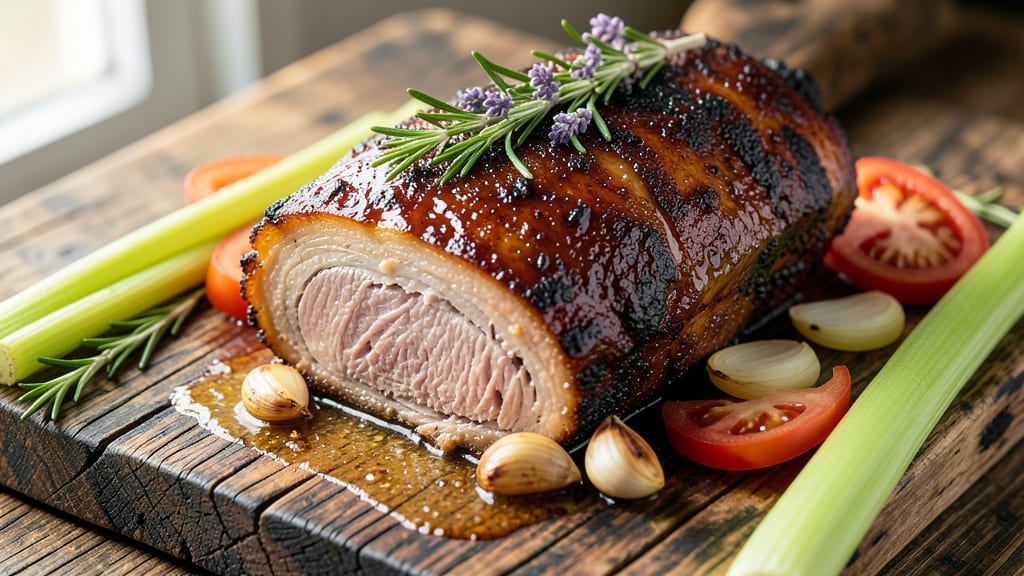
Mastering pork shoulder on a Bradley smoker transforms tough meat into melt-in-your-mouth perfection. 🔥 This recipe combines my years of pitmaster experience with the precision of the Bradley—where temperature control meets traditional BBQ wisdom.
The secret lies in the celery crown crunch and smoky herb gravy that elevate every bite, proving that modern smokers can deliver restaurant-quality results at home.
What sets this apart is the balance of bark formation and stall management—critical techniques I learned from Master Chef Chen. We start with a dry rub that builds flavor while the Bradley maintains steady 225°F, ensuring tender meat without drying it out.
The celery crown isn't just decorative; it adds texture and aroma that make this dish unforgettable, while the herb gravy ties everything together with deep, savory notes.
By the time you're done, you'll have perfectly smoked pork shoulder with a dark, crackling bark and tender, juicy meat that practically falls apart. The celery crown adds a satisfying crunch, and the smoky herb gravy transforms simple sides into a flavorful accompaniment.
This is the kind of dish that makes your smoker worth every penny—bold, smoky, and packed with Southern charm.
The best part? This method works whether you're feeding a crowd or treating yourself to a Sunday supper. The Bradley's consistency means you can focus on perfecting your rub and technique, not on temperature fluctuations. Let's get started on creating pork shoulder that'll have everyone asking for seconds.
Ingredients for bradley smoker pork shoulder
Pork shoulder, celery crown, and smoky gravy—here's the perfect Bradley smoker lineup for melt-in-your-mouth perfection.
| Ingredient | Amount | Notes |
|---|---|---|
| Boneless Pork Shoulder 🥩 | 8 lb | Bone-in preferred for flavor |
| Yellow Onion 🧅 | 1 whole | Quartered, skin on for rub |
| Celery Stalks 🥬 | 4 stalks | Trimmed for crown |
| Fresh Rosemary 🌿 | ½ cup | Chopped sprigs for rub |
| Fresh Thyme 🌿 | ¼ cup | Leaves only for rub |
| Garlic Cloves 🧄 | 8 cloves | Minced for rub |
| Brown Sugar 🍚 | ½ cup | Packed, for rub |
| Smoked Paprika 🌶️ | ¼ cup | For deep smoky flavor |
| Kosher Salt 🧂 | ½ cup | Diamond Crystal preferred |
| Ground Black Pepper 🌶️ | 2 tbsp | Freshly cracked |
| Apple Cider Vinegar 🍎 | ¼ cup | For spritzing during cook |
| Unsalted Butter 🧈 | ½ cup | Cold, cubed for gravy |
| Heavy Cream 🥛 | 1 cup | Full-fat for richness |
| Chicken Broth 💧 | 2 cups | Low-sodium preferred |
| Wood Chips 🌳 | 2 cups | Hickory or apple |
The pork shoulder is everything here—look for bone-in cuts at your butcher or grocery store's meat counter. Costco or Whole Foods often carry excellent quality, but any well-marbled shoulder will work. Fresh herbs matter too: grab rosemary and thyme with vibrant green leaves, not wilted stems. The celery should be crisp with no brown spots—Trader Joe's sells great pre-trimmed stalks if you're short on time. For the wood chips, hickory gives classic BBQ flavor, while apple adds subtle sweetness that pairs perfectly with pork.
No smoked paprika? Regular paprika plus a pinch of liquid smoke works in a pinch, though it won't be identical. Short on brown sugar? White sugar plus molasses mimics the depth. The apple cider vinegar can be swapped for red wine vinegar, but the fruity notes won't be as complementary. For gravy, if you're avoiding dairy, coconut cream replaces heavy cream—it's richer than regular coconut milk but still plant-based. The chicken broth should be low-sodium; Pacific Foods or Kitchen Basics** brands are excellent choices that won't overpower your smoky flavors.
Rub ingredients keep best in airtight containers away from heat—your spices will stay potent for 6-12 months, while fresh herbs last about 1 week wrapped in damp paper towels. The pork shoulder itself can be prepped a day ahead and refrigerated—just let it sit at room temperature for 1 hour before smoking. Leftover gravy freezes beautifully for up to 3 months; portion it into ice cube trays for easy single-use servings. The celery crown components (onion, celery, herbs) can be prepped together and stored in a sealed container for 3-4 days before assembly.
Why You'll Love This Recipe
- Smoky Herb Magic: The rosemary and thyme? They’re the stars here. That slow-smoked pork soaks up their aroma until every bite has this earthy, woodsy depth—like a hug from a campfire. (Yes, even on a Tuesday night.)
- Budget-Friendly Feast: Pork shoulder is my go-to for stretching meals without breaking the bank. A single cut feeds my family for three meals, and the onions/celery/herbs cost pennies. Between us? This is how I eat well without eating all my paycheck.
Step-by-step instructions for Bradley smoker's pork shoulder
Here's how to transform that 8 lb pork shoulder into fall-off-the-bone perfection with a celery crown that crackles like autumn leaves.
🔥 Step 1: Build the Celery Crown and Season the Pork
Start by trimming the celery stalks into 1-inch pieces—keep those leafy tops for garnish later. In a small bowl, mix together the 0.5 cup brown sugar, 0.25 cup smoked paprika, 0.5 cup kosher salt, 2 tbsp ground black pepper, 0.5 cup chopped rosemary, 0.25 cup thyme leaves, and 8 minced garlic cloves to create your dry rub.
Pat the pork shoulder completely dry with paper towels—this is non-negotiable for crispy bark. Press the celery pieces firmly into the meat, creating a crown around the edges. Then generously coat the entire surface with the rub, pressing it into every crevice. Let it sit at room temperature for 30 minutes while you prep the smoker.
🔥 Step 2: Smoke the Shoulder Low and Slow
Fill your smoker with the 2 cups wood chips (hickory or apple) and preheat to 225°F. Place the seasoned pork shoulder fat-side up on the grill grates. The fat will render and baste the meat as it cooks, creating that iconic bark.
Smoke for 6 hours, then spritz with 0.25 cup apple cider vinegar every 90 minutes—this keeps the exterior moist while allowing the smoke to penetrate. You'll know it's ready when the internal temperature reaches 165°F and the probe slides in like butter. This is where patience pays off—don't rush it.
🥘 Step 3: Wrap and Finish the Cook
Once the pork hits 165°F, it's time for the "Texas crutch." Wrap the shoulder tightly in butcher paper (not foil—it breathes better), then return it to the smoker. Continue cooking until the internal temperature reaches 203°F, which should take another 4-6 hours. The wrap helps push through the stall while preserving that crispy celery crown.
Remove the pork and let it rest for 1 hour before slicing. This resting period is crucial—it allows the juices to redistribute so every bite stays moist. While it rests, use the butcher paper to carry it to your cutting board for easy handling.
🍳 Step 4: Make the Smoky Herb Gravy
In a large skillet, melt the 0.5 cup cold unsalted butter over medium heat until it foams. Add the quartered yellow onion and cook for 5 minutes until softened. Pour in the 2 cups chicken broth and scrape up any browned bits from the bottom of the pan—this is where all the flavor hides.
Simmer for 10 minutes until slightly reduced, then stir in the 1 cup heavy cream. Season with additional salt and pepper if needed, then strain through a fine-mesh sieve for a silky texture. Keep warm until ready to serve.
🔪 Step 5: Slice and Serve with Gravy
Slice the pork shoulder against the grain into ½-inch thick slices. The celery crown should still be slightly crispy—if it's too soft, that means it needed more time on the smoker. Arrange the slices on a platter and ladle the warm gravy generously over the top.
Garnish with the reserved celery leaves for color and serve immediately. Each bite should deliver tender, smoky pork with a satisfying crunch from the celery crown and rich, velvety gravy that ties everything together. This is the kind of dish that tastes even better the next day—if there's any left!
Pro Tips For Making Bradley Smoker Pork Shoulder
- CRANK THE SMOKER TO 225°F: The Bradley method thrives on consistency, so don’t rush the initial temp. I learned this the hard way—starting at 200°F means your pork will spend too long in the "danger zone" and risk drying out before it hits 165°F internally. Once your shoulder reaches 165°F, drop the temp to 180°F and let it rest in the smoker—this keeps it juicy while the collagen melts.
- CHOP ONIONS AND CELERY SMALL: This isn’t just a mirepoix—it’s the flavor foundation. If you leave chunks bigger than a quarter, they’ll turn to mush instead of caramelizing into the pork’s bark. Pulse them in a food processor (or chop fine by hand) so they dissolve into the fat, not just sit there like soggy garnishes. Trust me, your pork will taste deeper.
- SKIP THE WATER PAN UNTIL NECESSARY: The Bradley recipe calls for a water pan, but I’ve found it’s only crucial if your smoker runs dry or the pork isn’t releasing enough moisture. If your pork is well-seasoned and the smoker’s humidity is stable, hold off until the last 30 minutes—adding water too early just steams the meat instead of letting it develop that crispy exterior. Save the water for when the bark starts to stall.
- USE A MEAT THERMOMETER—NOT GUESSWORK: I used to pull pork at "looks done" and ended up with either raw centers or dry, overcooked edges. The Bradley method relies on hitting 165°F internal in the thickest part—no exceptions. Insert the probe into the thickest section, avoid the bone (if any), and don’t trust the surface color. The pork will keep rising 5-10°F after you pull it, so aim for 160°F if you’re nervous.
Essential equipment for perfect results
Bradley Smoker Essentials
Your Bradley smoker is the heart of this recipe, and I can't stress enough how important it is to maintain a steady 225°F temperature throughout the cook. I use a ThermoWorks Smoke thermometer with dual probes—one for the smoker air and one for the meat—to ensure precision.
The Bradley's water pan helps stabilize temperature, but I still recommend checking it every 30 minutes during the initial phase. 🌡️
Butcher Paper Over Foil
For the Texas crutch wrap, I swear by pink butcher paper from Texas Butcher Supply. It breathes better than foil, allowing just enough moisture to escape while keeping the meat tender.
I've tried foil, but it often leads to soggy celery crowns. The paper also makes it easier to handle the hot pork when transferring it back to the smoker.
Wood Chip Selection
Hickory is my go-to for classic BBQ flavor, but I love using apple wood chips for a sweeter, fruitier note that pairs beautifully with pork.
I soak my chips in water for 30 minutes before adding them to the smoker's chip tray—this prevents flare-ups and ensures steady smoke production. Traeger brand chips work perfectly, but any quality hardwood chips will do.
Probe Thermometer Must-Have
Never cook pork shoulder without a meat probe thermometer. I use the Meater because it's wireless and gives me instant readings on my phone. The internal temp is what matters most—aim for 165°F before wrapping, then push to 203°F for that perfect pull-apart texture.
A cheap dial thermometer won't give you the accuracy you need.
Spritzing Supplies
For spritzing, I use a simple plastic spray bottle (like the kind from IKEA) filled with apple cider vinegar. The acidity helps break down the bark slightly, keeping the exterior moist while allowing smoke penetration.
I keep a second bottle of plain water nearby to rinse my hands and tools between spritzes—this prevents cross-contamination and keeps everything clean.
Resting Tools
After the cook, I let the pork rest on a wire cooling rack placed over a baking sheet. This allows air to circulate, preventing condensation that could make the meat soggy.
I wrap it in the same butcher paper I used for the wrap, then let it rest for 1 hour before slicing. A Lodge cast iron skillet works great for carrying the hot pork from smoker to cutting board—it's heavy enough to stay stable.
Nutrition facts
Frequently asked questions
Why do you recommend wrapping the pork shoulder in butcher paper instead of foil?
Butcher paper allows just enough moisture to escape while keeping the meat tender—unlike foil, which can turn the celery crown soggy. It also lets you handle the hot pork more easily when transferring it back to the smoker. Plus, it breathes better, helping maintain that perfect bark while pushing through the stall.
Can I use a different wood chip besides hickory or apple?
Cherry adds mild sweetness, pecan offers a nutty depth, or even a mix of hickory and fruitwoods works well. Just avoid softwoods like pine—they can make the meat taste bitter. Soak all chips for 30 minutes before using to prevent flare-ups.
What if my pork shoulder doesn't reach 203°F after wrapping?
Don't panic—it's still safe to eat at 195°F, but you might lose some tenderness. If it's stuck in the stall (165°F-175°F), try unwrapping it for 30 minutes to let moisture escape, then re-wrap. Patience is key; some cuts just need more time.
How do I store leftovers to keep them juicy?
Slice the pork and store it in an airtight container with some of the smoky gravy poured over the top. Reheat in a 350°F oven for 15-20 minutes until warmed through. Leftovers taste even better the next day—just avoid microwaving, which can dry out the meat.
Can I make this recipe without a Bradley smoker?
Yes! Any pellet grill or offset smoker can work—just maintain 225°F as closely as possible. For charcoal smokers, use a water pan to stabilize temps. The key is consistency; if your smoker fluctuates, expect longer cook times or uneven bark.