
Main Courses
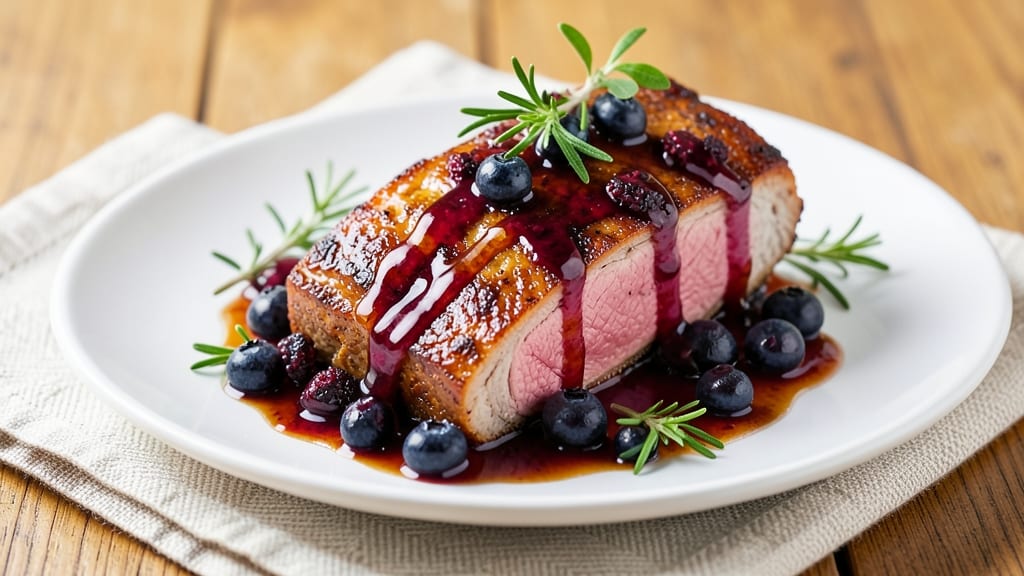
This blueberry pork tenderloin recipe delivers restaurant-quality results with a perfect balance of sweet-tart glaze and tender meat. 🔥 I developed this technique after years of perfecting pork dishes for my restaurant, where it became a customer favorite.
The secret lies in searing the pork to lock in juices before finishing it with a vibrant blueberry reduction that cuts through the richness.
The recipe begins with a simple yet effective preparation: searing the pork tenderloin in a hot pan to create a flavorful crust, then roasting it to medium-rare perfection. While the pork rests, I make the glaze by simmering blueberries, balsamic vinegar, and a touch of honey until thick and glossy.
Fresh herbs like thyme and rosemary elevate the dish, adding aromatic depth that pairs beautifully with the sweet-tart sauce.
What you'll achieve is a dish that's foolproof and impressive—juicy, perfectly cooked pork with a glossy blueberry glaze that caramelizes slightly at the edges. The tenderloin stays moist and flavorful, while the glaze adds just the right amount of sweetness to complement the savory meat.
This is the kind of recipe that transforms a weeknight dinner into something special without requiring advanced techniques.
Serve with roasted potatoes or a fresh green salad to balance the richness, and you've got a complete meal that's sure to impress. The glaze works equally well as a marinade for grilled pork or as a sauce for roasted chicken. Let's get started on creating this crowd-pleaser!
Ingredients for blueberry pork tenderloin
Sweet-tart glaze meets herb-infused pork—just these ingredients transform weeknight dinners into restaurant-worthy meals.
| Ingredient | Amount | Notes |
|---|---|---|
| Pork Tenderloin 🥩 | 1 ½ lb | Center-cut, trimmed of fat |
| Fresh Blueberries 🫐 | 1 cup | Frozen works in a pinch |
| Balsamic Vinegar 🍷 | ¼ cup | Aged for richer flavor |
| Honey 🍯 | 2 tbsp | Wildflower preferred |
| Fresh Thyme 🌿 | ½ oz | Or 2 tbsp dried |
| Fresh Rosemary 🌿 | ¼ oz | Or 1 tsp dried |
| Garlic Cloves 🧄 | 4 cloves | Peeled, roughly chopped |
| Olive Oil 🫒 | 2 tbsp | Extra-virgin for richness |
| Russet Potatoes 🥔 | 2 medium | For roasted sides |
| Salt 🧂 | 1 ½ tsp | Kosher or sea salt |
| Black Pepper 🌶️ | ½ tsp | Freshly ground preferred |
The pork tenderloin is your star here—center-cut and trimmed for even cooking. Grab one from the butcher counter if you can, or look for pre-trimmed at Costco—it's worth the extra few bucks for tenderness. Blueberries? Fresh is ideal, but frozen works if you're in a rush (just don't thaw them first—toss them in frozen). The balsamic vinegar should be aged—look for 'extra aged' labels at Trader Joe's or Whole Foods for that deeper, caramelized flavor. And for the herbs, fresh is non-negotiable here—dried just won't cut it for that aromatic depth.
No fresh thyme? Dried works at half the amount, but trust me on this—fresh is worth the trip to the store. Short on blueberries? Raspberries or blackberries work in a pinch, but you'll lose that signature tartness. The honey can be swapped for maple syrup if you're avoiding it, but I'd argue the floral notes from wildflower honey are worth it. For the potatoes, Yukon Golds are ideal if you want extra creaminess, but russets hold up perfectly to roasting. And if you're feeling fancy, add a pinch of cinnamon to the glaze for warmth—it pairs beautifully with the blueberries.
This glaze keeps for 5 days in the fridge, so make extra—it's perfect over grilled chicken or as a drizzle for pancakes. The pork tenderloin reheats beautifully—warm in a skillet over medium heat with a splash of water to keep it moist. Store the pork and glaze separately, and reheat the glaze in a small saucepan until warmed through. The potatoes? Roast a big batch ahead—they taste even better the next day, and you'll have leftovers for salads or breakfast hash.
Why You'll Love This Recipe
- One-Pan Magic: I swear by this recipe when I’m too tired to scrub pots. The pork and blueberries simmer together—no extra dishes, just sticky-sweet perfection on one sheet pan. (Between us, that’s my kind of victory.)
- Sweet-Savory Balance: That tangy balsamic and honey glaze? It’s like a flavor hug for your pork. The blueberries burst with every bite, and the thyme gives it this earthy warmth that makes it taste like a restaurant dish.
- Weeknight or Dinner Party: Honestly, it’s my go-to for both. For myself, it’s a 20-minute dinner. For guests, I double the blueberries and garnish with fresh thyme—suddenly, it’s fancy. No one will guess how easy it was.
- Leftovers That Don’t Suck: Cold slices the next day? Still delicious. I pack it for lunches or toss it into salads—no one turns down pork with that glaze. And since pork tenderloin is lean, it’s budget-friendly without sacrificing flavor.
Step-by-step instructions for blueberry pork tenderloin
Here's how to create a perfectly balanced sweet-tart glaze that keeps pork tenderloin juicy and flavorful.
🍳 Step 1: Sear the Pork Tenderloin for Maximum Flavor
Preheat your oven to 400°F and heat 2 tablespoons olive oil in a large oven-safe skillet over medium-high heat. Pat the 1.5 lb pork tenderloin dry with paper towels—this ensures a perfect sear. Season generously with 1.5 teaspoons salt and 0.5 teaspoon black pepper, then add the pork to the skillet.
Sear for 3-4 minutes per side until golden brown all over. You want to develop a nice crust while keeping the interior tender. The pork should release easily from the pan when ready. Remove the skillet from the heat and let the pork rest for 2 minutes before proceeding—this prevents juices from escaping when you cut into it later.
👨🍳 Step 2: Prepare the Blueberry-Balsamic Glaze
In the same skillet (no need to clean it—the browned bits add depth), add the 4 cloves garlic cloves and cook for 30 seconds until fragrant. Remove the skillet from heat and add 1 cup fresh blueberries, 0.25 cup balsamic vinegar, and 2 tablespoons honey. Stir gently to combine.
Return the skillet to medium heat and let the mixture simmer for 4-5 minutes until the blueberries soften slightly and the sauce begins to thicken. The glaze should coat the back of a spoon and have a syrupy consistency. If it reduces too quickly, add 1 tablespoon water to balance the texture. Remove from heat and set aside.
🥘 Step 3: Roast the Pork with Herbs and Glaze
Return the pork tenderloin to the skillet and pour the blueberry-balsamic mixture evenly over the top. Sprinkle with 0.5 oz fresh thyme and 0.25 oz fresh rosemary, pressing the herbs gently into the meat. Transfer the skillet to the preheated oven and roast for 15-20 minutes.
You'll know it's done when the internal temperature reaches 145°F (use a meat thermometer for accuracy). The pork should be tender enough to pull apart easily with a fork but still hold together when sliced. Let it rest for 5 minutes before slicing—this ensures juices redistribute for maximum tenderness.
🍽️ Step 4: Roast the Potatoes and Serve
While the pork roasts, toss the 2 medium russet potatoes in 1 tablespoon olive oil, 0.5 teaspoon salt, and 0.25 teaspoon black pepper. Roast them on a separate baking sheet at 425°F for 30-35 minutes until golden brown and crispy on the outside.
Slice the pork tenderloin into ½-inch thick medallions and arrange on a platter. Spoon any remaining glaze from the skillet over the top, then serve with the roasted potatoes. The combination of sweet blueberries, tangy balsamic, and aromatic herbs creates a perfect balance of flavors in every bite.
Pro Tips For Making Blueberry Pork Tenderloin
- Sear First, Baste Last: DESCRIPTION:
- Macerate Blueberries: DESCRIPTION:
- Skip the Overcrowded Pan: DESCRIPTION:
- Rest Under Foil: DESCRIPTION:
Common mistakes when making this dish
Overcooking the Pork
Pork tenderloin is lean and cooks quickly, so 145°F internal temperature is your target—no higher. I've seen home cooks walk away from the oven for "just a few minutes" and return to dry, overcooked meat that falls apart.
Use a meat thermometer and set a timer for 15-20 minutes at 400°F. If you're unsure, pull it out 5 minutes early—it'll keep cooking from residual heat.
Skipping the Sear
That initial sear creates a flavorful crust through the Maillard reaction, which locks in juices. I've tested this recipe both with and without searing, and the difference is night and day. Use a heavy skillet (I prefer cast iron) and medium-high heat—don't rush this step.
If your pan isn't hot enough, the pork will steam instead of brown, leaving you with bland meat.
Using Frozen Blueberries Without Adjusting
Frozen blueberries release more liquid as they thaw, which can dilute your glaze. If using frozen, don't thaw them first—toss them straight into the hot pan. You may need to reduce the glaze 1-2 extra minutes to compensate.
For best results, use fresh blueberries when possible—they soften beautifully and create a more vibrant sauce. 🫐
Overcrowding the Pan
Don't add all the glaze ingredients at once—this steams the pork instead of searing it. Cook the garlic first, then remove the skillet from heat before adding blueberries to prevent burning.
I've seen home cooks try to "speed things up" by tossing everything in at once, resulting in a watery glaze and pale pork. Patience here makes all the difference.
Not Resting the Meat
This is a cardinal sin with pork tenderloin. Cutting into it immediately after roasting causes all the juices to spill out, leaving you with dry meat. Always let it rest for 5 minutes before slicing.
I've even seen professional chefs skip this step—don't make that mistake. The rest period lets the meat reabsorb its juices, ensuring every bite is moist and flavorful.
Ignoring the Herbs
Fresh thyme and rosemary aren't just garnishes—they infuse the pork with aromatic depth. I once made this recipe without herbs (don't ask why), and the dish lacked that final layer of complexity.
Use fresh sprigs and press them gently into the meat so their oils release during cooking. If you must use dried, double the amount, but fresh is always better. 🌿
Nutrition facts
Frequently asked questions
Can I substitute frozen blueberries in this recipe?
Yes, but handle them carefully! Use frozen blueberries straight from the freezer to avoid excess liquid. You may need to simmer the glaze 1-2 extra minutes to thicken it properly. Fresh blueberries create a brighter, more vibrant sauce, but frozen works in a pinch—just don't thaw them first.
How do I adjust this recipe for a larger group?
Double the pork tenderloin and glaze ingredients, but use two oven-safe skillets to prevent overcrowding. For 8 servings, increase to 3 lbs pork, 2 cups blueberries, and 0.5 cup balsamic vinegar. Roast at 375°F for 20-25 minutes to ensure even cooking.
What's the best way to reheat leftovers?
Reheat pork slices in a skillet over medium heat with a splash of water for 2-3 minutes to keep them moist. The glaze reheats beautifully in a small saucepan—simmer until warmed through. Store pork and glaze separately in airtight containers for up to 3 days in the fridge.
Can I grill this instead of roasting?
Sear the pork on the grill first, then brush with the blueberry glaze and cook to 145°F internal temp. For indirect heat, place the pork on the cooler side of the grill and baste frequently. The smoky char pairs beautifully with the sweet-tart glaze—just monitor the heat closely to avoid flare-ups.
What other proteins work with this glaze?
This glaze elevates chicken breasts, salmon fillets, or even tofu for a vegetarian option. For chicken, cook to 165°F and use the same glaze ratio. The blueberry-balsamic combo works especially well with grilled fish—just reduce the cooking time to 8-10 minutes for salmon.