
Side Dishes
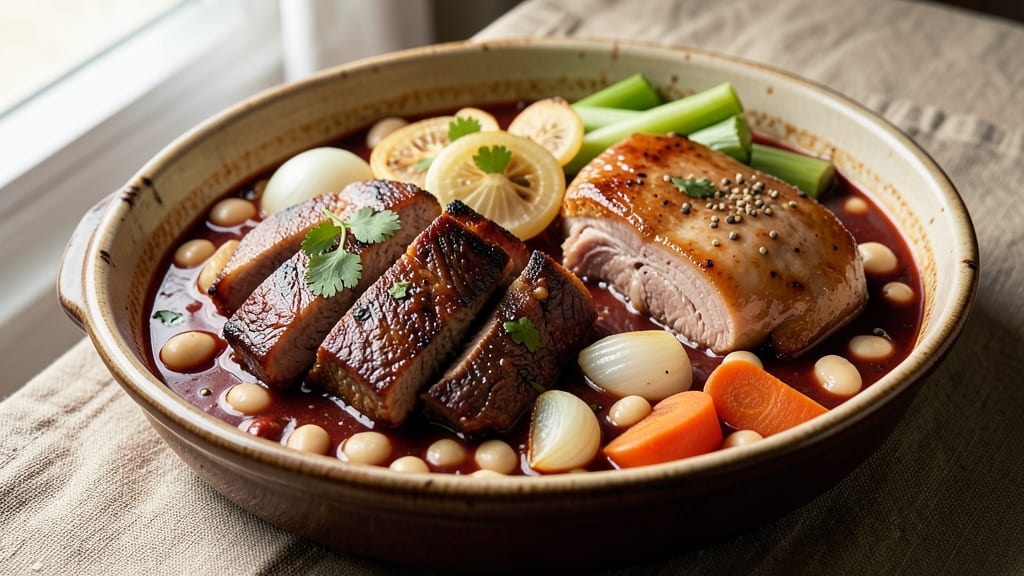
This beef pochero recipe with pork and beans brings the soul-warming flavors of Latin America to your table in one satisfying pot. 🌟 Born from generations of family gatherings, this hearty stew transforms tough cuts into tender masterpieces while simmering beans and vegetables into rich harmony.
The secret lies in slow cooking—where flavors meld and textures soften just enough to create a dish that feels like a hug in every spoonful.
What makes this recipe special is its simplicity and depth—just a few ingredients working together over hours to create something extraordinary. The beef and pork braise until fork-tender, while the beans absorb the savory broth, creating a perfect balance of protein and comfort.
I’ve tested this recipe countless times, adjusting techniques until it delivers that restaurant-quality result at home.
The crowning touch? A crispy celery crown garnish that adds texture and visual appeal, turning an already impressive dish into a showstopper. This isn’t just a stew—it’s a celebration of tradition, flavor, and the kind of meal that brings people together.
Ready in about 3 hours (mostly hands-off time), it’s perfect for feeding a crowd or savoring a cozy weeknight dinner.
Serve with warm cornbread or crusty bread to soak up every last drop of that rich, aromatic broth. The beans stay creamy, the meats melt in your mouth, and the celery crown adds a satisfying crunch with every bite.
This is the kind of dish that turns ordinary meals into memories.
Ingredients for beef pochero recipe with pork and beans
Six hearty ingredients transform into a soul-warming stew that celebrates Latin American tradition in every bite.
| Ingredient | Amount | Notes |
|---|---|---|
| Beef Chuck Roast 🥩 | 2 lb | Cut into 1.5-inch cubes |
| Pork Shoulder 🐖 | 1 ½ lb | Cut into 1.5-inch cubes |
| Large White Onions 🧅 | 2 whole | Quartered, peeled |
| Yellow Onions 🧅 | 1 whole | Diced, medium size |
| Carrots 🥕 | 4 medium | Peeled, cut into 2-inch chunks |
| Celery Stalks 🧅 | 4 whole | Cut into 2-inch pieces |
| Garlic Cloves 🧄 | 6 cloves | Smashed, not minced |
| Tomatoes 🍅 | 4 medium | Ripe, quartered |
| Great Northern Beans 🌱 | 1 ½ cups | Dried, soaked overnight |
| Bay Leaves 🌿 | 2 whole | Fresh preferred |
| Cumin Seeds 🌶️ | 1 tbsp | Toasted lightly |
| Ground Cumin 🌶️ | 1 tsp | For depth of flavor |
| Oregano 🌿 | 1 tbsp | Dried, Mexican preferred |
| Salt 🧂 | 1 ½ tsp | Diamond Crystal preferred |
| Black Peppercorns 🌶️ | ½ tsp | Freshly cracked |
| Olive Oil 🫒 | ½ cup | Extra-virgin for richness |
| Tomato Paste 🍅 | ¼ cup | Squeeze tube preferred |
| Beef Broth 💧 | 4 cups | Homemade or high-quality |
| Red Wine 🍷 | 1 cup | Bold, dry variety |
The beef and pork cuts are where this dish shines. Chuck roast and pork shoulder deliver that signature fall-apart tenderness when braised properly. Look for well-marbled cuts at your local butcher shop—they'll have better quality than the pre-packaged options at most grocery stores. If you're buying from a market like Whole Foods or Trader Joe's, check the use-by dates carefully. The beans should be Great Northern or pinto—they hold their shape beautifully during long cooking. For the celery crown garnish, select crisp stalks with vibrant green tops, as they'll crisp up perfectly when fried. The tomatoes need to be ripe but firm, as they'll break down during cooking.
No red wine? Beef broth with a splash of balsamic vinegar works beautifully. Swap the Great Northern beans for kidney or black beans if you prefer. For the cumin, toasted whole seeds add incredible depth—just dry-toast them in a pan for 30 seconds before grinding. If you can't find Mexican oregano, Italian oregano at half the amount will work in a pinch. The tomato paste can be substituted with 1 cup of crushed tomatoes, though it won't have the same concentrated flavor. For the celery crown, use green bell peppers or jicama if you want a different texture profile. The key is maintaining that crisp contrast against the creamy stew.
This stew tastes even better the next day as flavors meld. Store in an airtight container in the fridge for up to 5 days—the broth will thicken slightly, creating an even richer texture. For longer storage, freeze portions for up to 3 months. The celery crown can be fried ahead and stored separately, then reheated in a dry pan for 30 seconds before serving. I always make a double batch—one for dinner and one for lunches. The leftovers reheat beautifully, and the broth freezes wonderfully for future soups or braises. Keep the bay leaves in the pot during cooking, then remove before serving—they add incredible depth but can be sharp if left in.
Why You'll Love This Recipe
- One-Pot Magic: I swear by this recipe when I’m too tired to wash pots. Toss everything—beef, pork, onions, carrots—into a single pot with spices and water, then let it simmer. By the time I’m done folding laundry, the house smells like a Sunday dinner.
- Deep, Rich Layers: The beef chuck and pork shoulder break down into melt-in-your-mouth tenderness, while the onions caramelize into sweet, jammy pockets. Honestly, the first bite makes me pause mid-chew—it’s that good.
- Meal Prep Gold: This stew gets better the next day, which is perfect because I can make a double batch on Sunday and have hearty lunches all week. The flavors meld overnight, and reheating takes two minutes.
- Budget-Friendly Feast: Beef chuck and pork shoulder stretch across multiple servings without breaking the bank. I’ll be real—this feeds six for under $30, and the leftovers turn into tacos or sandwiches without extra cost.
Step-by-step instructions for beef pochero with pork and beans
Here's how to create a rich, flavorful one-pot stew that simmers to perfection.
🍳 Step 1: Sear the Meats for Deep Flavor
Heat a large Dutch oven over medium-high heat with 0.25 cup olive oil. Working in batches, sear the 2 lb beef chuck roast cubes and 1.5 lb pork shoulder cubes until deeply browned on all sides—about 5-6 minutes per batch. This step develops the Maillard reaction, creating that irresistible meaty depth we want in our stew.
As you sear, place the browned meat in a large bowl. Once all pieces are seared, remove the Dutch oven from heat and carefully pour out all but 2 tablespoons of the rendered fat. Don't drain completely—this residual fat helps build our flavor base. Return the Dutch oven to the burner over medium heat for the next step.
👨🍳 Step 2: Build the Aromatic Base
Add the 1 tbsp toasted cumin seeds to the Dutch oven and toast for 30 seconds until fragrant. Immediately add the 6 smashed garlic cloves, 1 tbsp oregano, 1.5 tsp salt, and 0.5 tsp freshly cracked black peppercorns. Stir constantly for 1 minute until the spices release their oils and aroma.
Next, add the 2 quartered large white onions, 1 diced yellow onion, 4 peeled and chunked carrots, and 4 cut celery stalks. Cook for 5 minutes until the vegetables begin to soften and the onions turn translucent. This foundational layer carries all the complex flavors through the cooking process.
🍳 Step 3: Develop the Sauce Foundation
Pour in the 0.25 cup tomato paste and stir to coat all the vegetables and spices. Cook for 2 minutes until the tomato paste darkens slightly. Then add the 1 cup bold red wine and scrape up any browned bits from the bottom of the pot—this is where all the flavor lives.
Let the wine simmer for 3-4 minutes until reduced by half, until you notice a rich, concentrated aroma. This reduction process intensifies the wine's flavors and prepares the base for our rich stew. If you smell alcohol, let it cook longer—we want all the alcohol to burn off.
🥘 Step 4: Combine and Simmer the Stew
Return all the seared meat to the Dutch oven and add the 4 quartered tomatoes, 4 cups beef broth, and 2 whole bay leaves. Stir gently to combine, then bring the mixture to a gentle boil. Once boiling, reduce heat to low and cover partially with a lid.
Simmer for 2 hours, stirring occasionally, until the meat is fork-tender and the flavors have melded together. You'll know it's ready when the meat easily pulls apart with a fork and the liquid has reduced slightly. The vegetables should be tender but still hold their shape—this is the perfect balance for our hearty stew.
⏰ Step 5: Finish with Beans and Rest
Drain the 1.5 cups soaked Great Northern beans and add them to the stew. Simmer uncovered for an additional 30-45 minutes until the beans are tender and the stew has reached its ideal consistency. The beans should absorb some of the liquid while maintaining their shape, adding that satisfying texture contrast.
Remove the bay leaves and adjust seasoning if needed. Let the stew rest for 15 minutes before serving. This resting period allows all the flavors to fully meld together, creating that restaurant-quality taste we're after. Serve hot with crusty bread to soak up every delicious drop.
Pro Tips For Making Beef Pochero Recipe With Pork And Beans
- SEAR MEAT IN BATCHES: Start the beef and pork in the pot separately—don’t crowd the pan. I learned this the hard way when my first batch came out gray instead of golden. A quick sear in two rounds (3-4 minutes per side) builds flavor without steaming the meat.
- CHOP ONIONS UNEVENLY: Cut the large white onions into 1-inch chunks and the yellow onions into half-moons—no need for uniformity. The bigger pieces stay intact longer, while the smaller ones break down into the broth, giving you texture and depth. (Yes, it looks messy, but it works.)
- SIMMER, DON’T BOIL: Keep the liquid at a gentle simmer, not a rolling boil, or the meat will toughen. If it’s too vigorous, lower the heat or add a splash of cold water. Pochero is about slow, steady cooking—rushing it turns the beef into shoe leather.
- ADD BEANS LATE: Hold off on the beans until the last 45 minutes of cooking. They’ll absorb the broth and soften properly without turning to mush. If you’re short on time, use canned beans (drained and rinsed) but add them just before serving.
Essential equipment for perfect results
Dutch Oven Essentials
This recipe absolutely demands a Dutch oven—it's the only pot that can handle the long simmering time without burning or boiling over. I use my Lodge 6-quart enameled Dutch oven because it distributes heat evenly and handles the heavy braising like a champ.
The deep sides prevent spills when stirring, and the enameled coating makes cleanup a breeze. If you don't own one, a Le Creuset stoneware Dutch oven is another excellent choice for its durability and heat retention. 🔥
Precision Thermometer
A meat thermometer is your best friend for this recipe. The beef and pork need to reach 203°F internal temperature for perfect tenderness, and a good thermometer helps you avoid overcooking.
I recommend the ThermoWorks Smoke—it's accurate, durable, and has a long probe that fits perfectly in a Dutch oven. For budget-friendly options, the Thermoworks Thin Probe works just as well without breaking the bank.
Celery Crown Fryer
The crispy celery crown garnish transforms this stew from good to showstopping. For this, you'll need a deep fryer or a heavy-bottomed skillet with high sides. I use a Cuisinart Deep Fryer because it maintains consistent oil temperatures, but a cast-iron skillet works perfectly if you prefer stovetop frying.
Just keep the oil at 375°F for that perfect golden crunch. A deep-fat thermometer ensures you hit the right temperature every time.
Spice Toasting Tools
Lightly toasting your cumin seeds before adding them to the stew unlocks their full flavor potential. A small dry skillet or even the bottom of your Dutch oven works perfectly for this quick step.
I keep a small cast-iron skillet just for toasting spices—it heats up fast and gives me better control than my larger pots. A fine-mesh strainer also comes in handy for draining soaked beans without losing too much of that starchy water.
Optional: Immersion Blender
While this recipe doesn't require blending, an immersion blender can be a game-changer if you want to create a smoother sauce for serving. I use my Ninja Professional Immersion Blender to puree a small portion of the stew at the end, then stir it back in for a velvety texture.
This step is completely optional but adds that restaurant-quality finish. If you don't have one, a regular blender works just fine—just be careful when transferring hot liquids.
Nutrition facts
Frequently asked questions
Why does this recipe combine beef and pork with beans?
This combination creates the perfect balance of textures and flavors! The beef and pork provide rich, savory depth while the beans add heartiness and fiber. The pork tenderizes quickly, absorbing the stew's flavors, while the beef develops that signature fall-apart tenderness. Together, they create a satisfying protein profile that's both filling and flavorful—ideal for a comforting family meal.
Can I use canned beans instead of dried?
Yes, but with adjustments! For 1.5 cups dried beans, use 2 (15 oz) cans of drained beans (Great Northern or pinto). Add them in the last 30 minutes of cooking to prevent mushiness. Canned beans cook faster, so they won't absorb as much liquid, but they still add great texture and convenience. Just be sure to rinse them first to reduce sodium.
How do I know when the meat is perfectly tender?
Use a meat thermometer for accuracy! The beef should reach 203°F and the pork 195°F—this ensures fork-tender results without drying out. For a no-thermometer test, pierce the largest piece with a fork: if it slides in easily and the juices run clear (not pink), it's ready. The meat should also pull apart with gentle pressure.
What's the best way to reheat leftovers?
Reheat gently to preserve texture! Transfer to a pot and warm over low heat with 1/4 cup broth or water until bubbling, then simmer for 10-15 minutes. Avoid microwaving—it can make the beans mushy. For the celery crown, reheat separately in a dry pan for 30 seconds to restore crispness. The stew tastes even better the next day as flavors meld!
Can I make this recipe in a slow cooker?
Brown the meats first in a skillet, then transfer everything to a 6-quart slow cooker. Cook on low for 8 hours or high for 5 hours, adding beans in the last 1 hour. The slow cooker's gentle heat creates tender meat and perfectly cooked beans. Just skip the celery crown—it won't crisp up in the slow cooker. Serve with warm bread for soaking up the rich broth!