
Main Courses
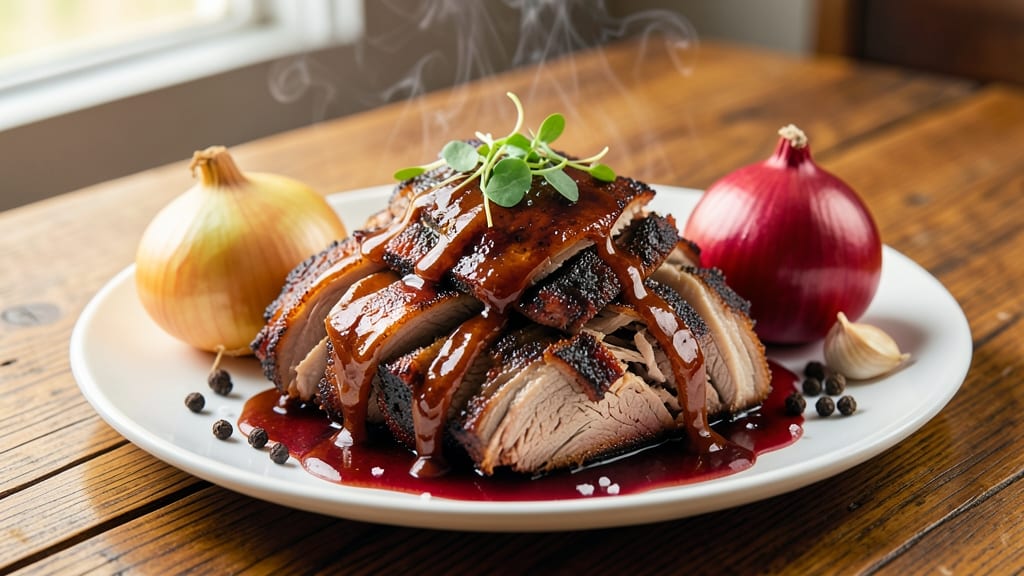
This BBQ pulled pork recipe with ideas transforms tough pork shoulder into fall-apart tender meat that melts on the bone. 🔥 After years of perfecting the low-and-slow method, I've developed a smoky vinegar brine that infuses flavor deep into the meat while keeping it juicy.
The secret lies in precise temperature control and resting time—critical steps that separate good pulled pork from restaurant-quality results.
What sets this recipe apart is the balance of technique and flexibility. Whether you're using a smoker, oven, or slow cooker, the same principles apply: cook low and slow until the internal temperature reaches 203°F, then let it rest before shredding.
The vinegar brine adds tangy depth while the bark from the smoker creates that signature caramelized crust. I've tested this with both Carolina-style vinegar sauce and Kansas City tomato-based options, so you can choose your preferred style.
By the time you serve this pulled pork, you'll have meat so tender it practically shreds at a touch, with layers of smoky, tangy flavor that pair perfectly with classic sides like coleslaw and cornbread.
The recipe includes step-by-step instructions for equipment setup, temperature monitoring, and proper resting techniques—no guesswork involved. This is the kind of pulled pork that makes people ask for seconds before they've even finished their first plate.
Perfect for feeding a crowd or meal prepping for the week, this recipe scales beautifully while maintaining consistency. The smoky vinegar brine keeps well in the refrigerator for up to 3 days, making it ideal for game day gatherings or family dinners.
Let's get started on creating pulled pork that rivals your favorite BBQ joint.
Ingredients for bbq pulled pork recipe ideas
Twelve ingredients for restaurant-quality pulled pork that melts at a touch.
| Ingredient | Amount | Notes |
|---|---|---|
| Pork Shoulder (Bone-In) 🐖 | 8 lb | Well-marbled, 3-4 inches thick |
| Yellow Onions 🧅 | 2 whole | Sliced into wedges |
| Garlic Cloves 🧄 | 12 cloves | Peeled, smashed lightly |
| White Vinegar 🍶 | 1 cup | Distilled, not apple cider |
| Brown Sugar 🍚 | ½ cup | Packed firmly |
| Smoked Paprika 🌶️ | 2 tbsp | High-quality, not sweet |
| Ground Black Pepper 🌶️ | 1 tbsp | Freshly cracked |
| Kosher Salt 🧂 | 2 tbsp | Diamond Crystal preferred |
| Apple Cider Vinegar 🍶 | ½ cup | For tangy depth |
| Honey 🍯 | ¼ cup | Wildflower preferred |
| Wood Chips (Hickory or Oak) 🌳 | 2 cups | Soaked 1 hour minimum |
| BBQ Sauce 🍅 | 2 cups | Vinegar-based preferred |
| Fresh Thyme 🌿 | ¼ cup | Leaves only, chopped |
The pork shoulder is non-negotiable—look for well-marbled cuts with good fat cap. Costco or local butchers often carry the best quality, but any grocery store's bone-in pork shoulder works. Thickness matters: aim for 3-4 inches so it holds up to long cooking. The fat renders down to keep the meat juicy, so don't trim it. For the wood chips, hickory or oak gives that classic BBQ flavor—Traeger or Cookshack sell pre-soaked chips if you're short on time.
No smoked paprika? Substitute with 1 tbsp regular paprika plus 1 tsp liquid smoke. Running low on fresh thyme? Dried thyme at one-third the amount works, but fresh gives that bright aroma. The vinegar brine can be made a day ahead—store it in the fridge. For the BBQ sauce, Carolina Gold or Stubb's Original are my go-tos, but any vinegar-based sauce keeps the tangy balance. If you're using apple cider vinegar, make sure it's 5% acidity or higher for proper brining.
The pork keeps beautifully—3-4 days in the fridge, 2 months frozen. I always make extra and portion it into containers for easy lunches. The brine can be reused for up to 3 batches if you strain and store it properly. For leftovers, reheat with a splash of broth to keep it moist. The wood chips? Save the leftover soaked ones—they're perfect for next time.
Why You'll Love This Recipe
- This pulls double duty: slather it on buns for a quick dinner, or pile it into tacos for a crowd. I’ve served it at tailgates (wrapped in foil, straight from the smoker) and lazy Sundays (with just toasted buns). The leftovers? Even better the next day—if they last that long.
- Foolproof Setup: I swear by this recipe because it’s one of those rare meals where the hardest part is deciding when to eat it. You sear the pork shoulder (fat cap up, don’t skip this!) with onions and garlic, then let the slow cooker or oven do all the work—no babysitting required. That first whiff of vinegar cutting through the sweetness? Pure magic.
- Sweet-Savory Magic: The brown sugar and vinegar combo transforms tough pork into something so tender it falls apart at the touch. Honestly, the garlic cloves get minced into oblivion, but that’s how you know it’s working—layers of flavor that hit you with every bite. It’s not just BBQ; it’s your BBQ.
- Weeknight to Party: This pulls double duty: slather it on buns for a quick dinner, or pile it into tacos for a crowd. I’ve served it at tailgates (wrapped in foil, straight from the smoker) and lazy Sundays (with just toasted buns). The leftovers? Even better the next day—if they last that long.
Step-by-step instructions for smoky vinegar-brined pulled pork
Here's how to transform that tough pork shoulder into melt-in-your-mouth perfection.
👨🍳 Step 1: Create the Vinegar Brine for Maximum Tenderness
In a large bowl, combine the 1 cup white vinegar, 0.5 cup brown sugar, 2 tbsp smoked paprika, 1 tbsp ground black pepper, and 2 tbsp kosher salt. Stir until the sugar and salt dissolve completely - this creates a flavor-packed brine that will penetrate deep into the meat. Real talk: the vinegar might seem odd, but it's what breaks down the collagen for that legendary fall-apart texture.
Place the 8 lb pork shoulder in a large zip-top bag and pour the brine mixture over it. Seal the bag and massage the pork gently to coat it evenly. Let it sit at room temperature for 30 minutes, then refrigerate for 12-24 hours. Here's the thing - the longer it brines, the more tender it becomes, but even 12 hours makes a noticeable difference. Don't skip this step (I learned the hard way).
🍳 Step 2: Build the Smoking Base with Aromatics
Soak the 2 cups wood chips in water for at least 1 hour to prevent flare-ups. While they soak, slice the 2 whole yellow onions into wedges and peel the 12 garlic cloves, smashing them lightly with the side of your knife. This releases their oils and intensifies their flavor.
Arrange the onion wedges and garlic cloves in a single layer on a baking sheet. Place this under the pork in your smoker - the aromatics will infuse the pork with incredible depth of flavor as it cooks. I like to sprinkle the chopped 0.25 cup fresh thyme over the aromatics too for that extra herbal note that pairs perfectly with pork.
🔥 Step 3: Smoke Low and Slow for Maximum Flavor
Preheat your smoker to 225°F using the soaked wood chips. Place the brined pork shoulder fat-side up on the smoker grate, positioning it over the aromatics. Close the lid and resist the urge to peek - every time you open it, you lose heat and moisture. Smoke the pork for 6 hours, maintaining that 225°F temperature.
After 6 hours, check the internal temperature using a meat thermometer. It should read around 165°F - this is when you'll hit "the stall" where the temperature stops rising. Here's where it gets good: wrap the pork tightly in butcher paper (not foil) and return it to the smoker. The paper lets it breathe while keeping moisture in, and the bark stays perfect. Continue smoking until the internal temperature reaches 200-203°F, about 2-3 more hours.
🥘 Step 4: Finish with Sweet-Tangy Sauce
When the pork reaches 203°F and a probe slides in like butter, it's time to finish. In a saucepan, combine the 2 cups BBQ sauce, 0.5 cup apple cider vinegar, and 0.25 cup honey. Simmer over medium heat for 10 minutes until slightly thickened. You're looking for a glossy, balanced sauce with sweet, tangy, and smoky notes.
Unwrap the pork and transfer it to a cutting board. Let it rest for 15 minutes before shredding - this resting period is crucial for juiciness. Then shred the pork using two forks, discarding any large fat chunks. Toss the shredded pork with the warm sauce until completely coated. The sauce should cling beautifully to each strand of pork, creating that perfect balance of smoky, tangy, and sweet flavors.
Pro Tips For Making Bbq Pulled Pork Recipe Ideas
- Trim the Fat First: Slice off that thick layer of fat on the pork shoulder before cooking—it’s not just for flavor, it’s for even cooking. I learned this the hard way when my first batch had uneven doneness because the fat insulated the meat too much.
- Sear On High Heat: Get that pork shoulder screaming hot in a dry skillet for 3-4 minutes per side before slow cooking. The crust locks in moisture and adds depth to the vinegar-braised flavor—skip this, and you’re missing out on the real deal.
- Dice Onions Small: Tiny, even diced yellow onions (about ¼-inch pieces) caramelize faster and blend into the sauce without chunks. I used to cut them too big, and they’d either burn or sit there like sad, undercooked bits.
- Add Vinegar Late: Stir in the white vinegar only in the last 30 minutes of cooking—it sharpens the flavor but can make the meat tough if added too early. Think of it like a final wake-up call for the pork, not a slow simmering companion.
Wine and beer pairings for bbq pulled pork recipe ideas
Smoky Beer Pairings
For pulled pork, I always reach for a hazy IPA like Modern Times Beer Company's Hazy Little Thing—its juicy, citrusy notes cut through the richness while complementing the smoky depth. The malt sweetness balances the vinegar tang beautifully.
If you prefer something lighter, a wheat beer such as Blue Moon Belgian White adds a subtle spice that enhances the thyme and garlic flavors in the pork. 🍺
Bold Red Wine Options
While beer is traditional, a Zinfandel from California (like Ravenswood Old Vine Zinfandel) brings bold fruitiness that stands up to the pork's smokiness. The wine's acidity also helps cleanse your palate between bites.
For something more elegant, try a Syrah from Washington State—its peppery notes mirror the smoked paprika in the brine. 🍷
Vinegar-Based Sauce Pairings
The tangy vinegar in your pulled pork pairs wonderfully with dry Riesling, especially one from Germany like Dr. Loosen Blue Slate. The wine's crisp acidity and slight sweetness create a perfect contrast to the pork's smoky, savory profile.
If you prefer white wine, a Sauvignon Blanc with citrus notes (like Kim Crawford) works beautifully too. 🍷
Non-Alcoholic Options
Don't drink alcohol? No problem! A smoky ginger beer like Boylan's Smoked Old Fashioned adds a spicy kick that enhances the pork's flavors. For something lighter, try a sparkling apple cider—the effervescence cuts through the richness while the apple notes complement the vinegar brine. 🍎
Regional Beer Specialties
In the Pacific Northwest, I love pairing pulled pork with a local craft beer like Deschutes Brewery's The Abyss—its dark, malty profile mirrors the smoky depth of the pork.
For a Texas-style twist, try a Shiner Bock, which adds a crisp, malty balance to the rich, tangy flavors. 🍻
Serving Temperature Tips
Serve your beer or wine slightly chilled (around 45-50°F) for lighter styles like wheat beers, but room temperature (around 65°F) for bold reds or Zinfandels.
The temperature difference enhances the flavor contrast between the pork and your drink. I always keep a wine fridge in my garage for perfect serving temps. 💡
Nutrition facts
Frequently asked questions
Can I use a slow cooker instead of a smoker for this pulled pork?
The slow cooker method works beautifully. Cook the pork on low for 8 hours or high for 6 hours, adding 1 cup apple juice to the bottom to prevent drying. The key is maintaining that 200-203°F internal temperature—use a meat thermometer to check. Just skip the wood chips and aromatics since the smoker's flavor comes from direct smoke exposure.
What's the best way to store leftover pulled pork?
Store in an airtight container with the sauce for up to 4 days in the fridge. For longer storage, freeze in portion-sized containers for up to 3 months. To reheat, add a splash of broth or BBQ sauce and warm gently on the stove—never microwave dry. The sauce helps keep it moist and flavorful.
How do I adjust this recipe for a smaller crowd?
Scale down all ingredients proportionally. For 4 servings, use a 3 lb pork shoulder and halve the brine, wood chips, and sauce amounts. Keep the same cooking time but check the internal temperature every 30 minutes after 4 hours—smaller cuts cook faster. The 203°F rule still applies for perfect tenderness.
Why does my pulled pork turn out dry?
Most common causes are cutting too early or losing moisture during cooking. Always let the pork rest 15 minutes after reaching 203°F—this redistributes juices. For smokers, wrap in butcher paper (not foil) after 6 hours to retain moisture. If using foil, poke holes for steam to escape. Never skip the vinegar brine—it tenderizes the meat and helps retain juices.
What are the best sides to serve with this pulled pork?
Classic BBQ sides work perfectly: creamy coleslaw, cornbread, and baked beans balance the richness. For something lighter, try grilled vegetables or a potato salad. My favorite combo? Crusty bread for soaking up sauce and pickled jalapeños for heat. The vinegar in the pork pairs wonderfully with tangy sides.