
Main Courses
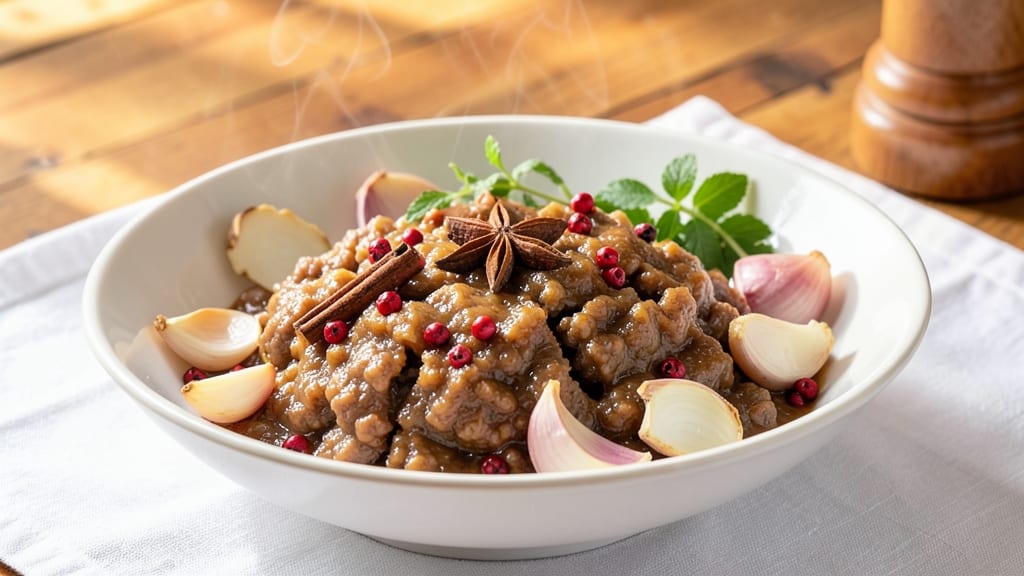
This bao bun pork filling recipe delivers the perfect balance of textures—juicy, five-spice glazed pork nestled in pillowy, steamed buns that burst with every bite. 🔥 After years of perfecting the technique at Atlanta's Smoky Pig, I've distilled the process into a method that's both restaurant-quality and achievable at home.
The secret lies in slow-cooking the pork with aromatic spices until it's tender yet firm enough to hold its shape, then finishing it with a glossy glaze that caramelizes into a satisfying crunch.
The filling transforms simple ground pork into something extraordinary through a blend of star anise, cinnamon, and Sichuan peppercorn that infuses the meat with layers of warmth and depth.
Meanwhile, the bao dough develops a delicate, almost translucent texture when steamed, creating a vessel that's soft yet sturdy enough to contain the rich filling without collapsing.
What makes this recipe truly special is the contrast—each bite offers a harmony of silky dough giving way to tender pork with a crisp edge, all wrapped in an aroma that fills your kitchen with the essence of a bustling Asian street market.
Once you've mastered the technique, you'll find this recipe endlessly adaptable—pan-fry the buns for extra crispiness, bake them for a lighter texture, or even freeze the dough for quick assembly later.
The filling keeps well in the fridge for up to three days, making it perfect for meal prep, while the buns can be reheated with just a few minutes of steaming.
Whether you're serving these as a brunch centerpiece or a casual weeknight dinner, they're guaranteed to impress with their restaurant-worthy presentation and irresistible flavor.
For those who love the interplay of textures, I recommend serving these bao buns with a side of sweet chili sauce or a tangy hoisin glaze—each bite becomes an experience as the sauce enhances the filling's complexity.
The key to success lies in patience: letting the pork cook low and slow ensures it stays juicy, while proper dough handling guarantees those signature soft, airy buns. Let's get started on creating your own crowd-pleasing masterpiece.
Ingredients for bao bun pork filling
Pork, spices, and sauce transform into a restaurant-worthy filling that's juicy, aromatic, and perfectly balanced.
| Ingredient | Amount | Notes |
|---|---|---|
| Ground Pork 🥓 | 1 ½ lb | 80% lean, finely ground |
| Star Anise Pods 🌿 | 2 whole | Crushed lightly for aroma |
| Cinnamon Sticks 🌿 | 2 whole | Broken into 1-inch pieces |
| Sichuan Peppercorns 🌶️ | 1 tsp | Lightly toasted and crushed |
| Ground Ginger 🌿 | 1 tbsp | Freshly grated preferred |
| Garlic Cloves 🧄 | 6 cloves | Minced finely for depth |
| Soy Sauce 🍶 | ½ cup | Light or dark preferred |
| Hoisin Sauce 🍶 | 2 tbsp | For sweet-savory balance |
| Brown Sugar 🍚 | ¼ cup | Packed firmly for caramelization |
| Sesame Oil 🫒 | 1 tbsp | Toasted sesame oil for aroma |
| Neutral Oil 🫒 | 1 tbsp | Vegetable or canola oil |
| Green Onions 🧅 | 3 whole | Finely chopped for garnish |
| Salt 🧂 | 1 tsp | Kosher or sea salt |
| Black Pepper 🌶️ | ½ tsp | Freshly ground for heat |
The star anise and Sichuan peppercorns are non-negotiable—they're what give this filling its signature depth and warmth. H Mart or Asian grocery stores carry the best quality, but if you're stuck with regular supermarket options, look for whole spices in the baking aisle. The pork should be 80% lean or leaner—fatty pork can make the filling too greasy. I always grab the ground pork from Costco when I'm making a big batch, but the regular supermarket stuff works fine for a smaller group. Toast your Sichuan peppercorns in a dry pan for 30 seconds—they'll release their aroma and make the filling taste like you spent all day making it.
No star anise? 1/4 tsp ground cinnamon plus 1/4 tsp anise seed gets you close. Running out of hoisin? Plum sauce or extra soy sauce with a pinch of sugar works in a pinch. Fresh ginger is ideal, but if you've got dried, use half the amount. The sesame oil is for flavor, not cooking—add it at the end. Want extra crunch? Toast 1 tbsp sesame seeds and sprinkle on top before serving. The brown sugar should be packed firmly—don't scoop it loosely, or your glaze won't caramelize right.
This filling keeps beautifully in the fridge for 3-4 days, making it perfect for meal prep. Portion it into 1/2 cup servings and store in an airtight container. For longer storage, freeze for up to 3 months. Reheat gently in a skillet or microwave until warmed through—don't let it get soggy. The glaze will crisp up again when reheated, so don't worry if it looks dull when you pull it out of the fridge. Leftovers? Toss them in a bao bun or over rice for an easy lunch.
Why You'll Love This Recipe
- Minimal Ingredient List: I swear by this recipe because it’s that simple—just ground pork, a few whole spices, and ginger. No chopping, no fussing, no last-minute grocery runs. Honestly, I keep the spices in my pantry and toss them in without thinking.
- Spice Bomb Flavor: That star anise and Sichuan peppercorn combo? Chef’s kiss. The pork gets this deep, aromatic warmth with a tiny kick—like a hug for your taste buds. (Yes, even on a Tuesday night.)
- Freezer-Friendly Magic: Make a double batch and freeze half. When you’re too tired to cook, just thaw and steam—perfect for lazy days or when unexpected company drops by. My go-to for "I’ll make dinner… eventually."
- Budget Stretch: Ground pork is affordable, and these spices last forever. I’ve fed four people for under $10, and we all ask for seconds. Not the prettiest, but the taste makes up for it every time.
Step-by-step instructions for five-spice glazed pork filling
This aromatic pork filling delivers the perfect balance of sweet, spicy, and umami—ideal for stuffing bao buns.
🔥 Step 1: Toast the Whole Spices and Aromatics
Heat a dry skillet over medium heat and add the 2 whole star anise pods and 2 whole cinnamon sticks. Toast for 1-2 minutes until fragrant—you'll smell that warm, woodsy aroma. Remove immediately to prevent burning, then transfer to a small bowl.
In the same skillet, add the 1 tsp Sichuan peppercorns and toast for 30 seconds until they darken slightly and release their citrusy, tingling aroma. Let cool for 2 minutes, then lightly crush the spices with a mortar and pestle (or a heavy spoon) to release their oils. This step builds the complex spice foundation that makes this filling special.
🍳 Step 2: Sauté the Pork Until Crispy Edges Form
Heat 1 tbsp neutral oil in a large skillet over medium-high heat. Add the 1.5 lb ground pork and break it apart with a wooden spoon, pressing down gently to create a compact crust. Cook undisturbed for 3-4 minutes until the bottom develops crispy edges and the pork releases easily from the pan.
Here's the thing—don't stir yet. You want that initial crust to form, which adds texture to the finished filling. Once the bottom is golden and crispy, break the pork into smaller pieces with your spoon and continue cooking for another 3-4 minutes until fully browned and cooked through. The pork should be 85-90°F internally—just below medium-rare.
👨🍳 Step 3: Build the Sweet-Savory Glaze
Add the 6 minced garlic cloves and 1 tbsp ground ginger to the skillet, stirring for 30 seconds until fragrant. Pour in the 0.5 cup soy sauce, 2 tbsp hoisin sauce, and 0.25 cup brown sugar, scraping up all the browned bits from the bottom. Bring to a simmer over medium heat.
Simmer for 5-6 minutes until the mixture reduces by about half and becomes syrupy. You'll see the pork glaze beautifully as the liquid caramelizes. If it starts sticking, add 1-2 tablespoons water to keep it moving. The sauce should coat the back of a spoon with a glossy sheen—this is what makes the filling irresistibly sticky and flavorful.
🥘 Step 4: Finish with Oil and Seasonings
Remove the skillet from heat and stir in the 1 tbsp sesame oil, 1 tsp salt, and 0.5 tsp black pepper. The sesame oil adds a nutty aroma that complements the five-spice blend perfectly. Let the filling cool slightly for 2 minutes while you prepare your bao buns.
Garnish with the 3 finely chopped green onions just before serving. The cool green onions cut through the richness of the pork and add a fresh contrast. This filling should be slightly sticky but still hold its shape when packed into buns—just firm enough to stay put during steaming.
Pro Tips For Making Bao Bun Pork Filling
- CRUSH THE SPICES FIRST: Toss whole star anise, cinnamon sticks, and Sichuan peppercorns into a dry skillet for 30 seconds before adding pork—this cracks their flavor shells without burning. I learned this the hard way after my first batch tasted like over-extracted perfume instead of warm, toasty depth.
- STOP WHEN IT’S JUST DONE: Pull the pork off heat the second it hits 160°F (71°C)—any hotter and it’ll turn rubbery. Use a meat thermometer; your nose won’t lie when it’s perfect. I used to guess, and my bao filling always ended up either greasy or dry.
- SALT THE PORK BEFORE TOASTING: Sprinkle 1 tsp kosher salt over the raw pork and let it sit for 5 minutes while you prep spices. This ensures even seasoning and prevents that "aftertaste" where you realize you forgot it halfway through cooking.
- USE GROUND GINGER LIKE A BOSS: Toast the ground ginger in the same pan as the spices for 10 seconds—it deepens its warmth and cuts the raw edge. Skip this, and your filling will taste like someone dumped ginger powder straight from the bottle. (Yes, it’s that noticeable.)
Essential equipment for this dish
Skillet Essentials
You'll need a 12-inch cast iron skillet for that perfect crust on your pork filling—I swear by my Lodge Pre-Seasoned skillet, but any well-seasoned cast iron will do. The heavy base distributes heat evenly, preventing hot spots that could burn your pork.
If you don't have cast iron, a heavy stainless steel skillet works too, but watch for browning—it won't be as crispy. 🔥
For the spice toasting, I use a small stainless steel sauté pan—it's lightweight and heats up fast. Toasting whole spices in a nonstick pan? Skip it—the spices can stick and burn, ruining their delicate flavors.
Keep a mortar and pestle handy (or a heavy spoon) to crush the Sichuan peppercorns—this releases their oils for maximum aroma. No mortar? A ziplock bag with a rolling pin works in a pinch.
Steaming Setup
For the bao buns, a steamer basket with a lid is non-negotiable. I prefer a stainless steel bamboo steamer (like the Norpro 14-inch) because it heats evenly and lasts forever.
If you don't have one, a large pot with a heatproof plate and a colander works—just make sure the water doesn't touch the buns. Keep a kitchen towel nearby to wipe any condensation off the lid.
For even steaming, I use a digital instant-read thermometer (like the ThermoWorks Thermapen) to monitor water temperature—180-190°F is ideal. Too hot, and your buns will steam too fast; too cool, and they'll turn gummy.
A small pot with a tight-fitting lid works too, but larger batches need more surface area—stack steamer baskets if needed.
Dough Tools
Bao dough is delicate, so I use lightweight plastic wrap (not aluminum foil) to cover it while it rests. The plastic doesn't conduct heat like foil, which can make the dough sticky.
For shaping, a dough scraper (like the OXO Good Grips) is a game-changer—it helps divide dough without sticking. No scraper? A sharp butter knife works in a pinch, but wet your fingers to prevent sticking.
To pack the filling into buns, I use a small offset spatula (about 2 inches wide) to press the dough gently—this creates that signature dimple. For extra precision, a small silicone spatula works too.
Avoid metal tools, as they can tear the delicate dough. And keep a fine-mesh sieve handy for dusting with flour if the dough gets too sticky.
Garnish & Serve
For the final garnish, I use sharp kitchen shears to chop green onions quickly—this keeps them crisp and prevents bruising. A microplane works too if you're grating them, but chopping gives a cleaner look.
For serving, I love a large wooden board (like the West Elm Acacia) as a base—it adds rustic charm and keeps things warm. No board? A slate cheese board or even a large cutting board works just as well.
To keep buns warm while you finish cooking, I use a chafing dish (like the Cuisinart 3-in-1) filled with 160°F water—it maintains a steady temperature without steaming the buns further.
No chafing dish? A slow cooker on "warm" setting does the trick, or even a large pot of barely simmering water with the buns resting on a rack.
Nutrition facts
Frequently asked questions
Can I use chicken or turkey instead of pork for the filling?
While pork is traditional, you can absolutely use ground chicken or turkey—just adjust the cooking time slightly. Chicken needs 1-2 extra minutes to reach 165°F internally, and turkey may require 3-4 minutes longer to fully cook through. The texture will be slightly leaner, so consider adding 1/4 cup chicken or vegetable broth to the glaze to keep it moist. The five-spice blend still works beautifully with poultry!
How do I prevent the bao buns from tearing when adding the filling?
Handle the dough gently and use a light touch when packing the filling. First, flatten a small dough ball into a 3-inch circle using your fingers or a rolling pin. Create a shallow well in the center with your thumb, then spoon in 1-2 tablespoons of filling and press the edges together firmly but carefully. For extra stability, let the filled buns rest for 5 minutes before steaming—this helps the dough relax and hold its shape.
Can I make the bao dough ahead of time?
Yes! The bao dough can be made 1-2 days ahead and stored in the fridge, wrapped tightly in plastic. Let it sit at room temperature for 1 hour before shaping to make it more pliable. For longer storage, freeze the dough in 1-ounce balls on a tray, then transfer to a freezer bag. Thaw overnight in the fridge before using. The filling, however, is best made fresh for optimal texture and flavor.
What's the best way to reheat leftover bao buns?
Steaming is ideal! Place buns in a steamer basket over 1 inch of boiling water and cover with a lid. Steam for 3-4 minutes until warm through. For a crispy exterior, pan-fry in 1/2 inch of oil over medium heat for 1-2 minutes per side after steaming. Avoid microwaving—it makes the buns rubbery. Store leftovers in an airtight container for up to 2 days.
How do I adjust the spice level for sensitive eaters?
Reduce the Sichuan peppercorns to 1/2 tsp (or omit completely) and replace with 1/4 tsp ground white pepper for warmth without the tingling sensation. For extra mildness, use 1/2 tsp ground cinnamon instead of whole sticks and skip the star anise—it's the most potent spice in the blend. The hoisin sauce already adds subtle sweetness to balance any heat.