
Main Courses
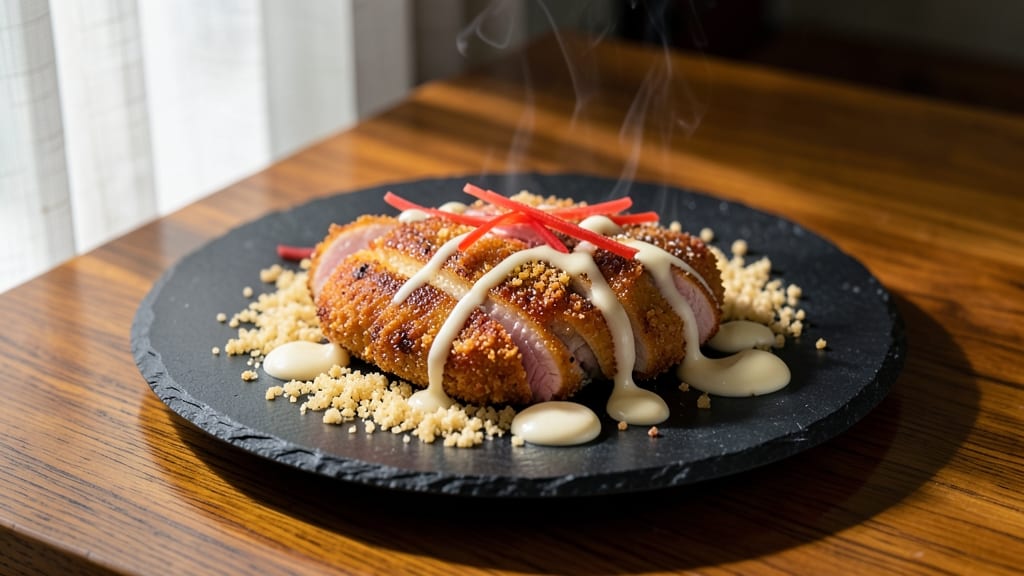
This baked pork tonkatsu recipe delivers the perfect balance of crispy gold crust and juicy pink inside—without deep-frying a single drop of oil. 🔥 After years of perfecting tonkatsu at The Smoky Pig, I adapted this oven-baked version for home cooks who crave that iconic Japanese restaurant texture without the mess.
The secret lies in a double-breading technique that creates that signature crunch while keeping the meat tender and flavorful.
What makes this recipe work is the combination of panko breadcrumbs and all-purpose flour, which creates a lighter, airier crust compared to traditional fried tonkatsu.
The pork cutlets are first pounded to an even thickness—this ensures they cook uniformly—and then marinated in a simple soy-ginger solution that infuses flavor without overpowering the natural taste of the meat. The baking process at 425°F delivers that restaurant-quality crispiness we all love.
By the time you serve this dish, you'll have perfectly golden pork cutlets with a crackling crust that gives way to tender, juicy meat inside. The crispy edges contrast beautifully with the soft interior, creating every bite into a satisfying experience.
This recipe serves four and pairs perfectly with shredded cabbage, tonkatsu sauce, and steamed rice for that complete Japanese comfort meal experience.
One of the best things about this method is how versatile it is—you can use it for pork chops, pork steaks, or even chicken cutlets. The technique translates beautifully to other proteins while maintaining that coveted crispy texture. Let's get started on creating your perfect baked tonkatsu!
Ingredients for baked pork tonkatsu
Crispy crust meets juicy pork—here's everything you need for restaurant-quality baked tonkatsu at home.
| Ingredient | Amount | Notes |
|---|---|---|
| Boneless Pork Loin Chops 🐖 | 1 ½ lb | Even thickness, pounded to 0.5-inch |
| All-Purpose Flour 🌾 | 1 cup | For first breading layer |
| Japanese Panko Breadcrumbs 🍞 | 2 cups | Light and crispy preferred |
| Large Eggs 🥚 | 2 whole | Room temperature for best coating |
| Soy Sauce 🍶 | ¼ cup | Kikkoman preferred for authenticity |
| Fresh Ginger 🌿 | 2 tbsp | Finely grated, aromatic |
| Vegetable Oil 🫒 | ½ cup | For brushing, high smoke point |
| Unsalted Butter 🧈 | 2 tbsp | Melted, for basting |
| Diamond Crystal Kosher Salt 🧂 | 1 tsp | Plus extra for seasoning |
| Ground Black Pepper 🌶️ | ½ tsp | Freshly cracked for heat |
| Green Cabbage 🥬 | 4 cups | Shredded, for serving |
| Tonkatsu Sauce 🍅 | ½ cup | Store-bought or homemade |
The pork loin chops are non-negotiable here—look for evenly sized cuts at Whole Foods or your local butcher. Pounding them to exactly 0.5-inch thickness ensures even cooking. For the panko, Japanese brands like Nissin are worth the splurge—they stay crispy longer than generic panko. Fresh ginger is a must; Trader Joe's sells pre-grated ginger that saves time. The soy sauce should be Kikkoman or similar—lower sodium versions won't give that authentic umami punch. If you can't find Japanese panko, regular panko mixed with 1 tbsp cornstarch** works in a pinch.
No tonkatsu sauce? Mix 3 tbsp Worcestershire (vegetarian version), 2 tbsp ketchup, 1 tbsp soy sauce, and 1 tsp sugar—it's a game-changer for serving. The cabbage can be any green variety, but savoy or napa holds up better to shredding. For the butter, use European-style if possible—it has more fat content for better basting. The eggs should be room temperature when dredging, or they'll cook the flour instead of coating the meat. If you're short on time, microwave the butter 40 seconds** to just melt it before basting.
Pork chops keep best in the fridge for 2 days before pounding—do this right before cooking. The panko stays crispy for 1 week in an airtight container, but it's best used within 3 days of opening. Leftover tonkatsu reheats beautifully—broil for 2-3 minutes to restore crispiness. I always make a double batch and freeze half; portion into single servings for easy reheating. The cabbage will last 5 days in the fridge, but it's best served fresh with the tonkatsu.
Why You'll Love This Recipe
- Crispy in Minutes: The oven does all the work—no deep-frying mess here. Just dredge those pork chops in flour, dip in beaten egg, coat with panko, and bake until golden. Magic.
- Soy-Salted Magic: That simple soy glaze? It’s the secret. The panko gets addictively crunchy while the inside stays juicy, and the soy gives it this perfect salty-sweet balance. I’ll fight anyone who says it’s not worth the effort.
- Leftover Goldmine: Baked tonkatsu keeps for days—perfect for lunches or quick dinners. Slice it thin, toss in a bowl with rice and steamed veggies, and suddenly you’ve got a stress-free meal. (Yes, even on a Tuesday night.)
- Budget-Friendly Feast: Pork loin chops stretch far, and panko costs next to nothing. You’re getting restaurant-quality crunch without the price tag. Honestly, it’s one of those recipes where you wonder why you ever ordered takeout.
Step-by-step instructions for baked pork tonkatsu
Here's how to achieve that perfect crispy gold crust while keeping the inside juicy pink—no deep fryer needed!
👨🍳 Step 1: Prep the Pork for Maximum Crispiness
Start by pounding the 1.5 lb boneless pork loin chops to an even ½-inch thickness between two sheets of plastic wrap. This ensures even cooking and prevents any thick spots from staying underdone. Season both sides generously with 1 tsp Diamond Crystal kosher salt and ½ tsp ground black pepper, pressing the seasoning into the meat so it adheres.
Let the seasoned chops sit at room temperature for 15-20 minutes while you prep the rest. This step is crucial—cold meat steams instead of searing, which means you'll lose that beautiful crispy crust. I like to place them on a wire rack over a plate to catch any drips, keeping the workspace clean.
🍳 Step 2: Create the Perfect Breading Station
Set up three shallow bowls: one with the 1 cup all-purpose flour, one with the 2 whole large eggs lightly beaten, and one with the 2 cups Japanese panko breadcrumbs. Here's the thing—don't skip the flour layer. It creates a barrier that helps the panko adhere better and gives that extra crunch.
Dip each chop first into the flour, shaking off any excess, then into the beaten egg, letting the excess drip off, and finally into the panko. Press the panko firmly onto the meat so it sticks—this ensures maximum crispiness. Work quickly so the egg doesn't get watery from humidity, which would make the coating fall off during baking.
🔥 Step 3: Bake to Golden Perfection
Preheat your oven to 425°F and line a baking sheet with parchment paper. Place the breaded chops on the sheet, leaving 1 inch of space between each. Brush the tops generously with ½ cup vegetable oil—this is what creates that signature crispy crust. For extra richness, I also brush the bottoms lightly with 2 tbsp melted unsalted butter before baking.
Bake for 20-25 minutes, flipping once at the 15-minute mark. You'll know it's ready when the crust is deep golden brown and the internal temperature reaches 145°F (use a meat thermometer). If the crust starts browning too quickly, tent with foil to prevent burning while the inside finishes cooking.
🥘 Step 4: Rest and Assemble the Sauce
Transfer the chops to a wire rack and let them rest for 5 minutes. This resting period is essential—it allows the juices to redistribute so your first bite is juicy, not dry. While they rest, heat ½ cup tonkatsu sauce in a small saucepan over medium heat until it's warmed through and slightly thickened.
Here's where it gets fun—slice the 4 cups shredded green cabbage into thin strips and quickly blanch them in boiling water for 30 seconds, then drain. Toss them with a pinch of salt and a drizzle of 2 tbsp soy sauce and 2 tbsp finely grated fresh ginger while still warm. The cabbage should be crisp-tender, not mushy.
🍽️ Step 5: Serve with Crispy Crust and Tangy Drizzle
Slice the tonkatsu chops into ½-inch thick cutlets and arrange them on a platter. Drizzle generously with the warmed tonkatsu sauce, letting it pool around the edges for that classic presentation. The sauce should coat the chops but not make them soggy—if it's too thin, simmer it longer to thicken.
Serve immediately with the ginger-soy cabbage on the side. Each bite should deliver that perfect contrast: a crispy, caramelized crust giving way to juicy, pink pork underneath, all balanced by the tangy-sweet tonkatsu sauce. Trust me, this is where the magic happens—crispy meets juicy in every forkful!
Pro Tips For Making Baked Pork Tonkatsu
- BRINE THE CHOPS: Toss your pork loin chops in a mix of 1/4 cup soy sauce, 1/4 cup water, and 1 teaspoon salt for 30 minutes before coating. I learned this the hard way—dry-brining keeps the meat juicy even after the long bake, and the soy flavor penetrates deeper than just slathering it on after.
- USE COLD FLOUR MIX: Chill your flour-egg-panko mix in the fridge for at least 15 minutes before dredging. Cold ingredients stick better to the pork, and the crust won’t slide off when you flip it later. (Yes, even if you’re impatient like me.)
- WATCH THE OVEN TEMP: Start at 425°F (220°C) for 10 minutes to get that initial golden crust, then drop to 375°F (190°C) for the rest of the bake. After burning three batches, I finally figured out that high heat sears the outside while the lower temp cooks through without drying out the pork.
- PRESS PANKO HARD: Don’t just sprinkle panko—press it firmly into the egg-washed pork with your fingers or the back of a spoon. This ensures the crumbs stick and creates that satisfying crunch. Sounds weird, but it works: the crust stays intact even when cutting.
Make-ahead tips for baked pork tonkatsu
Prep Ahead
Pound and season the pork chops up to 2 days ahead—store them in an airtight container in the fridge. The seasoning penetrates deeper overnight, giving you more flavor.
I like to do this the night before so the meat is ready to bread and bake first thing in the morning. Just let them sit at room temperature for 15-20 minutes before breading to ensure that perfect crust. 💪
Breading Station
Set up your breading station the night before if you're short on time. Mix the 1 cup all-purpose flour with ½ tsp salt and store in a sealed container. Whisk the 2 eggs with 1 tbsp soy sauce and keep them refrigerated.
The 2 cups panko stays fresh in a sealed bag for days—just press it firmly onto the chops when ready to bake. This pre-prep saves 15 minutes of morning chaos. ✨
Freezer-Friendly
Make fully breaded chops up to 1 day ahead and freeze them on a parchment-lined tray for 1 hour to set. Transfer to a freezer bag for up to 1 month.
When ready to bake, thaw in the fridge overnight, then bake as directed—just add 5-7 minutes to the baking time. I do this all the time for busy weeknights; the texture stays crispy when done right. ❄️
Sauce Prep
Make the tonkatsu sauce 3 days ahead and store it in the fridge. The flavors meld beautifully, and you can reheat it quickly on the stovetop.
For the cabbage, shred it and store in a sealed container with a paper towel to absorb moisture—this keeps it crisp for up to 3 days. Toss with ginger and soy sauce just before serving to maintain that fresh crunch. 🥬
Reheating Leftovers
Reheat tonkatsu in a 400°F oven for 5-7 minutes to restore crispiness. Place chops on a wire rack over a baking sheet to prevent sogginess. For the cabbage, warm it in a skillet with 1 tsp butter for 2 minutes—this revives its texture perfectly.
I always make double batches because reheated tonkatsu is just as good as fresh, especially with that crispy crust. 🔥
Make-Ahead Serving
Assemble the full meal 1 hour ahead but keep the tonkatsu sauce separate until serving. Store components in airtight containers: chops on a wire rack (to maintain crispiness), cabbage in a sealed bag, and sauce in a small jar.
When ready to serve, simply reheat the chops, warm the sauce, and toss the cabbage with fresh ginger. This is my go-to for dinner parties—everything stays fresh and hot. 💫
Nutrition facts
Frequently asked questions
Can I use pork chops thicker than ½-inch?
Thicker chops will take longer to cook and may stay underdone inside while the crust burns. For best results, stick to ½-inch thickness—this ensures that perfect crispy gold crust meets juicy pink pork in every bite. If you must use thicker cuts, bake at 375°F for 30-35 minutes, flipping once at 20 minutes.
Why does my tonkatsu crust turn soggy?
Soggy crusts usually happen from steam buildup or underbaked meat. Always bake on a wire rack over a tray to let air circulate, and avoid overcrowding the pan. Also, make sure your pork reaches 145°F internal temp—undercooked meat releases moisture that steams the crust. For extra insurance, broil for 1-2 minutes at the end to crisp up any soft spots.
What's the best substitute for Japanese panko?
Regular panko works in a pinch, but for that authentic texture, mix 1½ cups regular panko with ½ cup cornstarch to help it stay crispier. Avoid breadcrumbs—they absorb too much moisture and won't give that signature crunch. For a gluten-free option, use crushed potato chips (like potato chips) or gluten-free panko mixed with 1 tbsp arrowroot powder.
Can I make tonkatsu with chicken instead of pork?
Chicken breast works beautifully—just pound it to ¼-inch thickness (it cooks faster than pork) and reduce baking time to 15-18 minutes. Use the same breading method, but add ½ tsp smoked paprika to the flour for extra flavor. Chicken tonkatsu is a fantastic lighter alternative that still delivers that crispy magic.
How do I make tonkatsu sauce from scratch?
Simmer ½ cup ketchup, 2 tbsp Worcestershire sauce, 1 tbsp soy sauce, 1 tbsp honey, and ½ tsp garlic powder in a small saucepan for 5 minutes until slightly thickened. For extra depth, add 1 tsp grated ginger and a pinch of red pepper flakes. This homemade version tastes even better than store-bought and pairs perfectly with the crispy pork.