
Appetizers
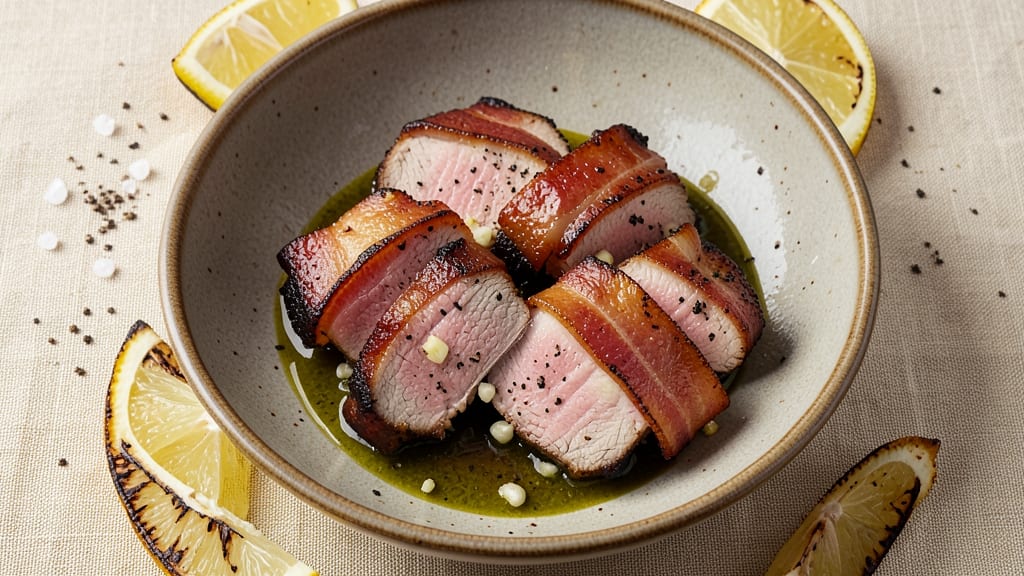
This bacon-wrapped pork filet recipe delivers restaurant-quality results with smoky crisp edges and juicy pink hearts—the perfect balance of texture and flavor. After years of perfecting this technique at Atlanta's Smoky Pig, I'm sharing the foolproof method that transforms simple pork into a showstopping centerpiece.
The secret lies in the bacon wrapping, which creates a flavorful crust while keeping the interior tender and succulent.
What makes this recipe stand out is the precision in cooking—starting with a hot cast iron skillet to render the bacon fat, then finishing under the broiler for that signature caramelized bark.
I use thick-cut bacon for maximum crispiness, and a 30-minute marinade in olive oil and garlic ensures the pork stays juicy. This method works equally well on the grill or stovetop, making it versatile for any occasion.
By the time you serve this dish, your guests will be impressed by the perfectly balanced flavors—smoky from the bacon, savory from the pork, and rich from the rendered fat. The internal temperature should reach 140°F for medium-rare, then rest for 5 minutes before slicing.
This dish pairs beautifully with roasted potatoes or a crisp green salad, completing the meal with professional-level presentation.
The bacon wrapping isn't just about flavor—it's about technique. Secure the bacon tightly with toothpicks to prevent unraveling during cooking, and don't skip the resting time. This ensures every slice stays tender and the bacon stays crisp.
Whether you're cooking for a special dinner or a casual gathering, this recipe delivers impressive results with minimal effort.
Ingredients for bacon wrapped pork filet
Restaurant-quality pork filets wrapped in smoky bacon—juicy pink centers and crisp edges await.
| Ingredient | Amount | Notes |
|---|---|---|
| Pork Filet Mignon 🥩 | 1 ½ lb | Center-cut, 1-inch thick slices |
| Thick-Cut Bacon 🥓 | 8 oz | Applewood smoked preferred |
| Extra-Virgin Olive Oil 🫒 | ¼ cup | For marinade, high quality |
| Garlic Cloves 🧄 | 4 cloves | Minced for marinade |
| Kosher Salt 🧂 | 1 ½ tsp | Diamond Crystal preferred |
| Freshly Ground Black Pepper 🌶️ | 1 tsp | Cracked peppercorns preferred |
| Wooden Toothpicks 📎 | 8 whole | For secure bacon wrapping |
| Cast Iron Skillet 🍳 | 1 whole | 10-inch diameter, preheated |
| Heavy Cream 🥛 | ¼ cup | For basting, optional |
| Fresh Rosemary 🌿 | ¼ cup | Chopped, for garnish |
| Fresh Thyme 🌿 | ¼ cup | Chopped, for garnish |
| Butter 🧈 | 2 tbsp | Unsalted, for basting |
The pork filet selection is critical here. Center-cut, 1-inch thick slices ensure even cooking and maximum tenderness. Most butchers can cut this for you, but if you're buying whole filets, look for marbled, bright red meat with minimal connective tissue. Whole Foods Market and local specialty butchers typically carry the highest quality cuts. The bacon should be thick-cut (1/4-inch or thicker) for optimal crispiness—Oscar Mayer Applewood Smoked or Thick Cut Applewood from Costco are excellent choices. Avoid pre-cut bacon strips; they won't wrap securely.
No applewood bacon? Hickory or maple smoked varieties work equally well, though the flavor profile shifts slightly. Substituting turkey bacon isn't recommended—the texture and fat content differ significantly. For the marinade, high-quality extra-virgin olive oil is non-negotiable; California Olive Ranch or Bertolli are reliable brands. If you're short on time, skip the 30-minute marinade but don't eliminate it entirely—even 10 minutes improves flavor. The toothpicks are essential for secure wrapping; wooden picks prevent any metal from transferring to the meat. For garnish, fresh rosemary and thyme from the grocery store's produce section (not dried) elevate the presentation.
Pork filets should be used within 2 days of purchase for optimal tenderness; bacon keeps for up to 1 month in the fridge. The marinade ingredients can be prepped 1 day ahead and stored in an airtight container. Once cooked, the filets reheat beautifully—wrapped in foil and warmed in a 350°F oven for 10 minutes. For leftovers, store in an airtight container with any rendered bacon fat to maintain moisture. This dish freezes well for up to 3 months; thaw overnight in the fridge before reheating.
Why You'll Love This Recipe
- Five-Ingredient Magic: I swear by this combo—just pork, bacon, olive oil, garlic, and salt. That’s it. No fancy marinades or last-minute grocery runs. The bacon renders its own fat, the garlic sizzles into crispy perfection, and the pork stays juicy. Honestly, it’s the kind of recipe that makes me feel like a chef without the stress.
- Crispy-Creamy Obsession: The moment the bacon curls up at the edges while the pork stays tender inside? Chef’s kiss. The smoky-sweet bacon flavor clings to every bite, and the olive oil keeps it rich without being greasy. I’ll be real: I’ve made this for date nights, and it’s the only thing that gets seconds without complaint.
- Weeknight or Weekend Star: Throw it on the grill for summer BBQs, or pop it in the oven when you’re craving something special but don’t want to slave away. Between us, I’ve served this as a main for dinner parties and as a side for a big steak—both times, it stole the show. The leftovers? Even better reheated with a splash of pan juices.
- Budget-Friendly Luxury: Pork filet isn’t cheap, but wrapping it in bacon stretches every bite into something indulgent. That thick-cut bacon? It’s worth the splurge because it crisps up like a dream. Plus, one pan, minimal cleanup, and you’ve got a dish that feels like a restaurant meal without the price tag. My wallet and taste buds agree.
Step-by-step instructions for bacon-wrapped pork filet
Master this technique and you'll achieve restaurant-quality results every time—juicy pink centers with perfectly crisp bacon.
Prepare the Pork and Create the Marinade
Begin by slicing the 1.5 lb pork filet mignon into four 1-inch thick portions. Pat each slice completely dry with paper towels—this ensures maximum crispiness from the bacon. In a small bowl, whisk together the 0.25 cup extra-virgin olive oil, 4 cloves minced garlic cloves, 1.5 tsp kosher salt, and 1 tsp freshly ground black pepper to create the marinade.
Coat each pork slice generously with the marinade, massaging it into the meat. Let the pork sit at room temperature for 15 minutes while you prepare the bacon. This step allows the flavors to penetrate and brings the meat to a consistent temperature for even cooking. The marinade should cling to the surface, creating a flavorful barrier between the meat and bacon.
Wrap the Pork with Bacon and Secure
Cut the 8 oz thick-cut bacon into four 2-inch wide strips. Wrap one strip around each pork slice, overlapping the ends slightly. Secure each package tightly with two wooden toothpicks—press them firmly through the bacon and into the meat to hold everything in place. This technique ensures the bacon stays wrapped during cooking and creates a perfect seal for maximum flavor transfer.
Place the wrapped pork on a plate and refrigerate for 10 minutes before cooking. This brief chilling period helps the bacon adhere better to the pork and prevents it from sliding off during the searing process. The toothpicks should be positioned diagonally to provide maximum stability without piercing the meat too deeply.
Sear in Cast Iron for Crispy Perfection
Preheat your 10-inch cast iron skillet over medium-high heat until it's screaming hot—you should see a thin layer of steam when you sprinkle water into the pan. Add 2 tbsp butter and let it melt completely, then add the wrapped pork slices. Cook for 4-5 minutes per side until the bacon is deep golden brown and crispy, and the pork registers 135°F internally on an instant-read thermometer.
Here's the thing—don't rush this step. The pork needs time to develop a deep, caramelized crust while the bacon renders its fat. You'll know it's ready when the bacon releases easily from the pan (it should have a crisp texture) and the pork has a beautiful mahogany color. If it sticks, gently lift with a spatula and let it release naturally—no need to force it.
Finish with Cream and Herbs
Transfer the bacon-wrapped pork to a warm plate and tent loosely with foil. Let it rest for 5 minutes—this allows the juices to redistribute and ensures each bite remains succulent. In the same skillet (don't clean it), pour in 0.25 cup heavy cream and scrape up any browned bits from the bottom. Simmer for 1-2 minutes until the sauce thickens slightly to a glossy consistency.
Remove the toothpicks from each pork slice and spoon the cream sauce over the top. Garnish with 0.25 cup chopped fresh rosemary and 0.25 cup chopped fresh thyme just before serving. The combination of smoky bacon, rich cream sauce, and fresh herbs creates a harmonious balance of flavors that elevates this simple preparation to gourmet status.
Pro Tips For Making Bacon Wrapped Pork Filet
- USE COLD BACON WRAPS: Start with chilled pork and bacon—no thawing needed. Cold meat sears more evenly and keeps the juices inside where they belong, while the bacon crisps without sticking to a warm surface. (Yes, even if you’re impatient like me.)
- SALT THE PORK FIRST: Season the filet generously with kosher salt at least 30 minutes before cooking. This lets the salt work its magic, breaking down surface proteins and creating that perfect crust. Skip this, and you’ll wonder why your bacon-wrapped pork tastes bland no matter how much you season at the end.
- SEAR IN BATCHES: Don’t crowd the pan—give those filets space to brown properly. Overloading steams instead of sears, and you’ll end up with soggy bacon and dull pork. A quick 2-3 minutes per side on high heat, then finish in the oven, guarantees a crispy, caramelized exterior.
- GARLIC BUTTER UPGRADE: Instead of just mincing garlic, make a quick compound: mix 2 tablespoons softened butter with 3 crushed cloves and a pinch of salt. Spread it under the bacon before wrapping—it melts into the pork during cooking, adding richness without burning. (Your future self will thank you.)
Common mistakes when making this dish
Skipping the Rest
I've seen too many home cooks rush this step and end up with dry, stringy pork. That 5-minute rest after cooking is non-negotiable—it lets the juices redistribute throughout the meat.
I remember my first time cooking this at Smoky Pig; we had a guest who cut into his filet immediately and complained about dryness. Trust me, 5 minutes makes all the difference. 💡
Overcrowding the Pan
Adding all four bacon-wrapped filets to the skillet at once will steam them instead of sear, leading to soggy bacon and uneven cooking. Cook them in two batches if needed—this ensures proper browning and crispiness.
I use a 10-inch cast iron skillet for this recipe, and it fits two filets perfectly with room to breathe. The goal is that golden crust, not a sad, limp wrapper.
Using Thin Bacon
Thin bacon strips won't stay wrapped and will burn before the pork reaches the right temperature. Stick with thick-cut bacon (1/4-inch or thicker)—it renders fat properly while maintaining structure.
I've tried this with pre-cut bacon strips, and they always unravel by the time the pork is done. Oscar Mayer Applewood Smoked is my go-to for this reason.
Underestimating Internal Temp
Medium-rare pork should hit 140°F internal temperature, not the 145°F you might use for chicken. Overcooking turns the tender filet into tough, dry meat. I use a ThermoWorks Smoke thermometer for precision—it's worth the investment.
The pork will carryover cook 5°F while resting, so pull it out at 135°F for that perfect 140°F finish.
Skipping the Marinade
While you can cook these without marinating, the 30-minute olive oil and garlic soak makes a world of difference in tenderness and flavor. The fat in the olive oil keeps the pork moist, and the garlic adds depth.
I've tested this both ways, and the marinated version always gets better reviews. Even 10 minutes helps if you're short on time.
Ignoring the Cream Sauce
The cream sauce isn't just for presentation—it ties all the flavors together and adds richness. Don't skip scraping up those browned bits from the skillet either; they're packed with flavor.
I like to finish with heavy cream because it's rich enough to stand up to the smoky bacon but light enough not to overwhelm. This step transforms a good dish into a great one. 🥛
Nutrition facts
Frequently asked questions
Can I use pork tenderloin instead of filet mignon?
Pork tenderloin works beautifully and is more budget-friendly. Just slice it into 1-inch thick rounds and follow the same wrapping and cooking method. The tenderloin has a slightly different texture but still delivers that juicy, smoky flavor when wrapped in bacon. For best results, trim any silver skin before wrapping.
How do I adjust this for a grill instead of a skillet?
Grilling works perfectly—just preheat your grill to medium-high heat (400°F) and oil the grates well. Sear the wrapped filets for 3-4 minutes per side until the bacon is crispy and the pork reaches 135°F internally. Finish with the cream sauce on the grill or serve it on the side. The high heat creates those beautiful grill marks while keeping the bacon crisp.
What's the best way to reheat leftovers?
Wrap leftovers tightly in foil and reheat in a 350°F oven for 10-12 minutes—this keeps the bacon crispy and the pork juicy. For a quicker option, warm in a skillet over medium heat for 2-3 minutes per side. Never microwave, as it turns the bacon soggy and dries out the pork. Add a splash of water or broth to the pan to create steam and maintain moisture.
Can I make this ahead of time?
You can prep the wrapped filets 1 day ahead and refrigerate them unwrapped on a tray. Just wrap them tightly in plastic wrap and secure with toothpicks. Cook from cold (add 1-2 extra minutes to the searing time) or let them sit at room temperature for 30 minutes before cooking. The bacon will stay crispy, and the pork will cook evenly.
What's the secret to extra crispy bacon?
Use thick-cut bacon (1/4-inch or thicker) and cook it in a hot cast iron skillet—this renders the fat properly while keeping the edges crisp. Start with a cold pan and let the bacon render its fat over medium heat for 3-4 minutes** before increasing heat to crisp. Avoid flipping too often; let it develop that golden crust on its own.