
Main Courses
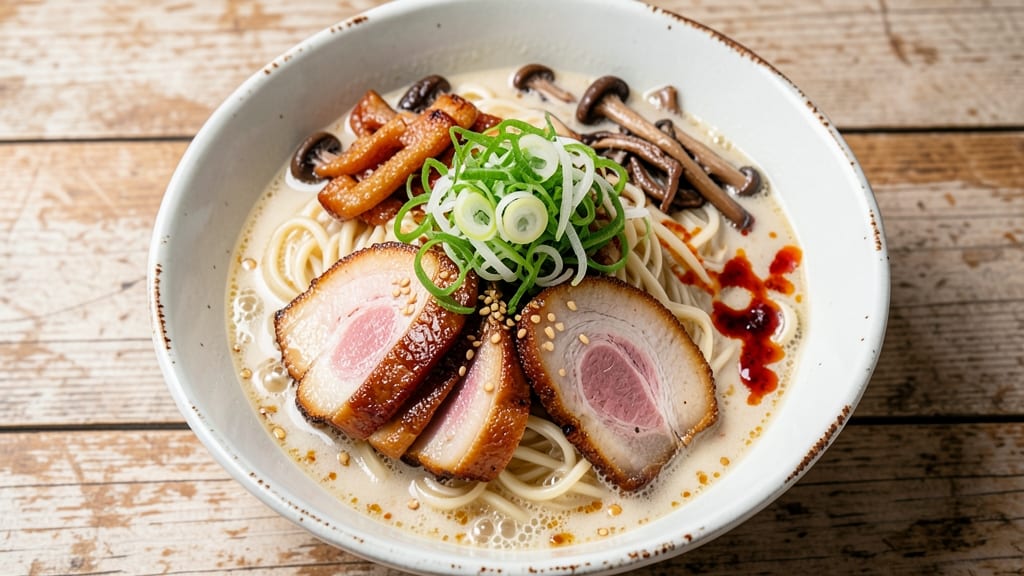
This authentic Japanese pork ramen recipe delivers the rich, umami depth that makes it a comfort food phenomenon. 🔥 After years of perfecting my own version—inspired by my time apprenticing under Master Chef Chen—I’ve cracked the code for a broth so flavorful it rivals Tokyo’s top ramen shops.
The secret lies in slow-simmered pork bones and a perfect balance of soy and miso, creating a silky, aromatic base that clings to every strand of noodle.
The recipe begins with a foolproof pork broth made from trotter and pork shoulder, simmered for hours to extract maximum collagen and gelatin.
While the broth works its magic, I’ll show you how to prepare tender chashu pork, silky ramen noodles, and all the classic toppings—from soft-boiled eggs to crispy nori. Every element comes together in a bowl that’s equal parts restaurant-quality and home-cooked warmth.
What sets this apart is the attention to texture and layering. The broth should be velvety yet robust, the noodles perfectly al dente, and the toppings arranged just so for that Instagram-worthy presentation.
Whether you’re serving this for a date night or a family dinner, it’s a dish that commands respect—and empty bowls.
For those craving a modern twist, I’ll share optional additions like spicy miso or truffle oil, but the core remains true to tradition. Let’s get started on a bowl that tastes like a trip to Japan—without leaving your kitchen.
Ingredients for authentic japanese pork ramen
Rich broth, silky noodles, and perfect toppings—this is your ramen game-changer.
| Ingredient | Amount | Notes |
|---|---|---|
| Pork Trotters 🍖 | 2 lb | Split for maximum surface area |
| Pork Shoulder 🥩 | 1 ½ lb | Bone-in for richer broth |
| Dried Shiitake Mushrooms 🍄 | 4 whole | Rehydrated for umami depth |
| Green Onions 🧅 | 1 whole | White and green parts separated |
| Garlic Cloves 🧄 | 8 cloves | Smashed for aromatic release |
| Fresh Ginger Root 🌿 | 1 ½ oz | Unpeeled, sliced into coins |
| Ramen Noodles 🍜 | 2 packages | Fresh or dried, 8 oz each |
| Soft-Boiled Eggs 🥚 | 4 whole | 6-minute cook time |
| Nori Sheets 🍣 | 4 sheets | Toasted for crispiness |
| Light Soy Sauce 🥄 | ½ cup | Kikkoman preferred |
| Dark Soy Sauce 🥄 | 1 tbsp | For rich color |
| Red Miso Paste 🧈 | 2 tbsp | Aged for depth |
| Sesame Oil 🫒 | 1 tbsp | Toasted for aroma |
| Sesame Seeds 🌰 | 1 tbsp | Toasted lightly |
| Chili Oil 🌶️ | 1 tbsp | Optional for heat |
The pork trotters and shoulder are the heart of this broth—look for well-marbled cuts at Whole Foods or your local Asian market. If you can't find trotters, extra pork neck bones work too. The shiitake mushrooms should be dried and woody, not soft—imported varieties from H Mart have the best flavor. Ginger and garlic are freshness non-negotiables here; bruised spots mean it's past its prime. For the noodles, fresh ramen from Trader Joe's or Asian grocery stores gives that signature chew, but dried works in a pinch.
No pork trotters? Double the pork shoulder and add 1 lb chicken feet for collagen. Short on shiitake? Dried porcini mushrooms at half the amount add earthy depth. The soy sauces can be swapped—Japanese brands like Kikkoman are ideal, but any light/dark soy works. For miso, red miso is essential—white or barley miso won't give that rich umami. The chili oil is optional but adds that perfect Sichuan street food kick. Toast your sesame seeds in a dry pan for 30 seconds—game-changer for aroma.
Broth keeps 3 days in the fridge or 3 months frozen—portion into ice cube trays for easy reheating. Cook noodles just before serving to prevent sogginess. Soft-boiled eggs should be 6 minutes in cold water for perfect runny yolks. Toast nori sheets for 10 seconds in a dry pan—crispy edges elevate every bowl. Leftovers? Store broth and toppings separately for freshness.
Why You'll Love This Recipe
- One-Pot Magic: I swear by this—simply simmer the pork trotters and shoulder with dried shiitakes, then shred the meat right in the broth. No extra pots, no fuss, just layers of flavor building as you go.
- Umami Bomb: That combo of pork trotters (collagen-rich perfection) and dried shiitakes? It’s the secret weapon. The broth turns rich and deep, with a savory punch that makes store-bought stock feel like a sad afterthought.
- Leftover Gold: Honestly, this gets better the next day. The flavors meld even more, and I’ve turned last night’s ramen into today’s lunch (or dinner, if I’m lazy) with zero effort—just reheat and add fresh green onions.
- Budget Flex: Pork shoulder and trotters stretch for miles, and dried shiitakes cost pennies compared to fresh. I’ve made this for $15 and fed four people—no compromises, just pure, hearty satisfaction.
Step-by-step instructions for authentic Japanese pork ramen
Here's how to build a rich, umami-packed broth that captures the soul of Japanese ramen.
🔥 Step 1: Build the Umami Base with Pork and Mushrooms
In a large stockpot, combine the 2 lb pork trotters (split for surface area) and 1.5 lb pork shoulder with 10 cups cold water. Bring to a boil over high heat, then immediately reduce to a gentle simmer. Skim off any foam that rises to the surface for the first 15 minutes—this ensures clarity in your broth.
While the pork simmers, prepare the 4 whole dried shiitake mushrooms by soaking them in 4 cups hot water for 30 minutes. Remove the mushrooms and finely chop them, reserving the soaking liquid. Add the chopped mushrooms to the simmering pot along with the 8 smashed garlic cloves and 1.5 oz sliced ginger root. Let everything cook uncovered for 2 hours, maintaining a gentle simmer—this slow cook time extracts maximum flavor from the bones and meat.
🍳 Step 2: Deepen Flavor with Aromatics and Soy Sauces
After 2 hours, strain the broth through a fine-mesh sieve into a clean pot, pressing gently on the solids to extract all the flavor. Return the broth to medium-high heat and add the 0.5 cup light soy sauce and 1 tbsp dark soy sauce. Stir well and let it simmer for another 30 minutes—this step develops the characteristic deep color and complex umami profile of authentic ramen broth.
Meanwhile, separate the 1 whole green onion into white and green parts. Finely chop the white parts and set aside. The green parts will be used later for garnish. Also, toast the 4 sheets nori in a dry skillet over medium heat for 10-15 seconds per side until fragrant and slightly crispy. Set aside for garnish.
🥘 Step 3: Finish the Broth with Miso and Prepare Noodles
Return the strained broth to a simmer and whisk in the 2 tbsp red miso paste until fully dissolved. Taste and adjust seasoning—you want a balance of saltiness and umami. The broth should be rich but not overwhelmingly salty. Keep it warm over low heat while you prepare the remaining components.
Bring a separate pot of salted water to a boil and cook the 2 packages ramen noodles according to package instructions until al dente. Drain immediately and rinse briefly under cold water to stop the cooking process. Toss the noodles with 1 tbsp sesame oil to prevent sticking and keep them silky.
🍳 Step 4: Prepare Soft-Boiled Eggs and Assemble
For the 4 whole soft-boiled eggs, bring a small pot of water to a gentle boil and carefully lower in the eggs. Cook for exactly 6 minutes, then transfer to an ice bath for 5 minutes to stop the cooking. Peel the eggs under cool running water, reserving the shells for later if desired.
Divide the cooked noodles among 4 deep bowls. Ladle hot broth over each serving, filling the bowls about ¾ full. Top each bowl with 1 soft-boiled egg, 1 toasted nori sheet, and 1 tablespoon chili oil (if using). Sprinkle with 1 tablespoon sesame seeds and the reserved chopped green onion whites. Drizzle with any remaining sesame oil for extra aroma.
🍽️ Step 5: Serve Immediately for Maximum Freshness
Serve the ramen immediately while the noodles are still hot and the broth is steaming. The contrast of temperatures—hot broth, silky noodles, and cool egg—creates the perfect mouthful. Each bowl should deliver layers of umami from the pork broth, earthy shiitake mushrooms, and rich miso, balanced by the freshness of the green onions and the subtle heat of chili oil.
Real talk: the key to authentic ramen is in the broth. Don't rush the simmering time—it's what transforms simple ingredients into something truly special. And remember, the best ramen is always served fresh from the pot.
Pro Tips For Making Authentic Japanese Pork Ramen
- CRACK THE TROTTERS FIRST: Start with the pork trotters in cold water—no rushing. After 30 minutes of simmering, skim the foam aggressively for the first 10 minutes, or your broth will taste like a gym sock. I learned this the hard way when my first batch had a film that wouldn’t budge.
- SOAK MUSHROOMS IN HOT WATER: Dried shiitake mushrooms? Soak them in hot (not boiling) water for 20 minutes—this keeps them from turning to mush when you add them later. Cold water makes them chewy, and nobody wants that in ramen.
- DON’T SKIP THE PORK SHOULDER REST: After braising the pork shoulder, let it rest under foil for 15 minutes. Cutting into it too soon dries it out, and you’ll end up with shreds instead of tender, pull-apart meat. Yes, even if you’re impatient like me.
- CHAR THE GARLIC LOW AND SLOW: Sauté those garlic cloves in the pork fat until they’re golden, not brown—about 8-10 minutes on low heat. Burning them turns the broth bitter, and nobody wants that overpowering bitterness in an otherwise perfect ramen.
Common mistakes when making your authentic japanese pork ramen
Overcooking the Broth
Rushing the simmering process is the fastest way to ruin your ramen broth. I’ve seen home cooks crank the heat high to speed things up, but this burns the delicate flavors instead of developing them.
Your broth needs at least 3-4 hours of gentle simmering—225-250°F is ideal—to break down collagen and extract maximum umami. I once watched a chef’s apprentice boil his broth aggressively for just 2 hours, and it tasted flat and one-dimensional. Trust the process: patience here is non-negotiable. 🔥
Skipping the Skimming
The first 15-20 minutes of broth-making are critical for clarity. Foam contains impurities that cloud the broth and make it bitter. I’ve made this mistake myself—once, in a rush, I skipped skimming and ended up with a broth that looked murky and tasted off.
Use a fine-mesh skimmer or ladle to remove foam regularly, especially during the initial boil. This step is what separates homemade ramen from store-bought in terms of texture and flavor.
Using Low-Quality Pork
Not all pork cuts are created equal, and cheap cuts will give you a weak broth. I recommend pork trotters and pork shoulder from heritage pigs—look for well-marbled, fatty cuts at your local butcher or Asian market.
Once, I used a lean pork shoulder from a budget brand, and the broth lacked depth. The fat is what renders down to create that luxurious mouthfeel. If you can’t find trotters, extra pork neck bones work, but don’t substitute with chicken or beef—it changes the flavor profile entirely.
Overcrowding the Pot
Stuffing too much pork into your stockpot might seem efficient, but it actually steams the meat instead of allowing it to render properly. I’ve seen home cooks pack their pots so tightly that the broth barely simmers, leading to a weak, watery result.
Use a pot that’s at least 8 quarts for this recipe, and leave room for the broth to circulate. If you’re short on space, cook the pork in batches—trust me, it’s worth the extra time. The goal is to maximize surface area for flavor extraction.
Ignoring the Miso
Miso isn’t just an afterthought—it’s the secret weapon in ramen broth. Some cooks skip it or use the wrong type, and the broth suffers as a result. Red miso is essential for that deep, fermented umami, while white or barley miso won’t give the same richness.
I’ve tasted ramen where the miso was added too late or not whisked in properly, leaving a grainy texture. Always whisk miso into the broth while it’s simmering, and let it meld for at least 10 minutes before serving. It’s what ties all the flavors together.
Rinsing Noodles Too Long
After cooking, it’s tempting to rinse ramen noodles under cold water to cool them down, but this strips away their natural starch and makes them gummy. I’ve seen people drown their noodles in ice water, and the result is a sad, mushy mess.
Instead, drain the noodles and rinse them briefly under lukewarm water—just enough to stop the cooking. Then, toss them with a little sesame oil to keep them silky. The starch on the noodles is what helps them cling to the broth, so don’t wash it away! 🍜
Nutrition facts
Frequently asked questions
Can I make this pork ramen recipe without pork trotters?
If you can't find trotters, use extra pork neck bones or pork shoulder with added chicken feet for collagen. The key is maximizing fatty, marrow-rich cuts—heritage pork from local butchers works best. Just increase simmering time to 4 hours to compensate for less connective tissue.
How do I know when my broth is perfectly seasoned?
Your broth should taste like a balance of umami, saltiness, and richness—not overwhelmingly salty. Taste before adding miso, then adjust with 1 tsp more soy sauce if needed. The miso will deepen flavor without adding more salt. Pro tip: Let it cool slightly before tasting—hot broth can mask flavors.
Can I prepare the broth ahead of time?
Yes! Broth keeps 3 days refrigerated or 3 months frozen. For freezing, portion into ice cube trays first—this makes reheating easier. Reheat gently over low heat and avoid boiling to preserve texture. Noodles should always be cooked fresh before serving for best results.
What's the best way to store leftover ramen toppings?
Store components separately: broth in airtight containers, noodles in a sealed bag (they dry out), and toppings (eggs, nori, chashu) in the fridge for 2 days max. Toast nori sheets again before using—microwaving kills their crispiness. For chashu, reheat in a dry pan to restore texture. Eggs should be served fresh for perfect runny yolks.
How can I make this recipe spicier or milder?
For heat, add 1 tbsp chili oil per bowl or a pinch of cayenne. For milder flavor, reduce soy sauce to 0.3 cup and add 1 extra cup water to dilute. For a smoky twist, try a dash of toasted sesame paste—it adds depth without heat. Adjust to taste after miso is incorporated.