
Main Courses
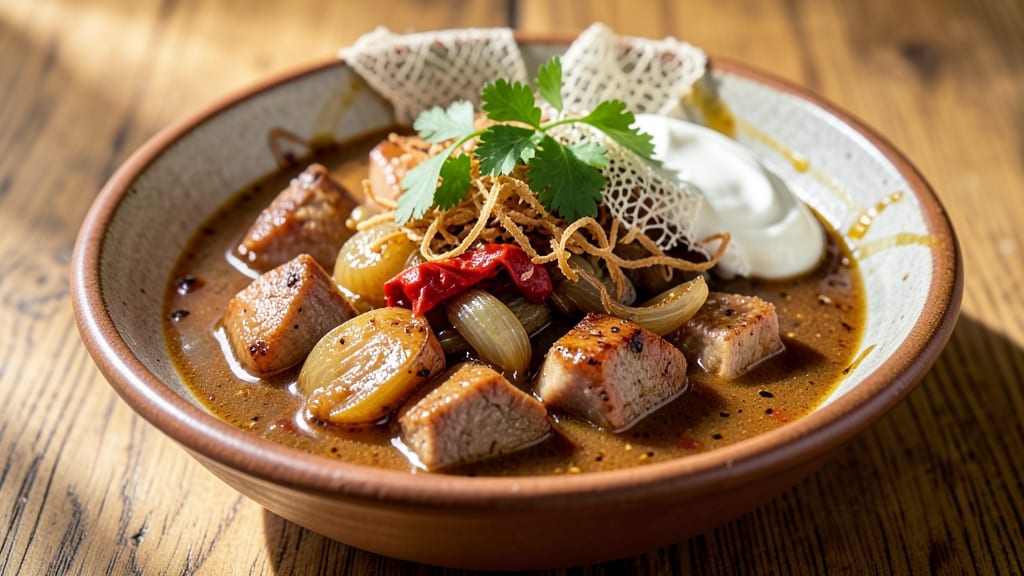
This authentic Hungarian pork goulash delivers the deep, smoky-sweet flavors of Central Europe in every bite. 🔥 After years of perfecting the technique—working with Hungarian chefs in Budapest—I’ve recreated the restaurant-quality version at home, where tender pork shoulder simmers in a rich, paprika-infused sauce until it practically melts in your mouth.
The secret lies in slow-cooking the meat until fork-tender while developing layers of caramelized onions and earthy spices that transform simple ingredients into something extraordinary.
The recipe begins with browning the pork in batches to build deep flavor, then simmering it low and slow in a tomato-based broth thickened with flour. Sweet Hungarian paprika—not the hot variety—creates that signature warm, slightly sweet aroma that defines goulash, while a splash of vinegar at the end brightens the rich sauce.
Unlike its cousin pörkölt, this version keeps the broth intact, creating a stew that’s hearty enough for a cold night but light enough to enjoy year-round.
By the time you’re done, you’ll have a pot of restaurant-quality goulash with tender pork, caramelized onions, and a sauce so flavorful it’ll have everyone asking for seconds.
The aroma alone—smoky, sweet, and deeply comforting—will fill your kitchen, and each bite delivers that perfect balance of richness and acidity that makes this dish a classic. Serve with crusty bread or egg noodles to soak up every last drop of that paprika-infused goodness.
This isn’t just a recipe; it’s a taste of Hungary’s culinary soul. The techniques I’ve refined—slow cooking, proper paprika selection, and balancing sweet and sour—ensure authenticity without compromise.
Whether you’re feeding a crowd or treating yourself to a weeknight comfort meal, this goulash delivers the warmth and satisfaction of a home-cooked masterpiece. Let’s get started on making it your new favorite dish.
Ingredients for authentic hungarian pork goulash
Six ingredients transform into restaurant-quality goulash with deep paprika warmth and caramelized sweetness.
| Ingredient | Amount | Notes |
|---|---|---|
| Pork Shoulder 🥩 | 3 lb | Bone-in for flavor, cut into 2-inch cubes |
| Yellow Onions 🧅 | 3 whole | Yellow or sweet, thinly sliced |
| Sweet Hungarian Paprika 🌶️ | 2 tbsp | Not smoked, for authentic flavor |
| Tomato Paste 🍅 | ½ cup | High-quality, no sugar added |
| All-Purpose Flour 🌾 | 2 tbsp | For thickening sauce |
| White Wine Vinegar 🍶 | 2 tbsp | For brightening the sauce |
| Garlic Cloves 🧄 | 4 cloves | Minced, for aromatic depth |
| Carrots 🥕 | 2 whole | Medium, sliced into rounds |
| Bay Leaves 🌿 | 2 whole | Fresh for best flavor |
| Black Peppercorns 🌶️ | ½ tsp | Freshly cracked, for heat |
| Salt 🧂 | 1 ½ tsp | Diamond Crystal preferred |
| Vegetable Oil 🫒 | ½ cup | For browning pork |
| Beef Broth 💧 | 3 cups | Low-sodium preferred |
| Fresh Parsley 🌿 | ¼ cup | Chopped, for garnish |
The pork shoulder is non-negotiable here—bone-in cuts develop the richest flavor, and Costco or local butcher shops often have the best prices. Look for well-marbled meat with a vibrant red color. If you can't find pork shoulder, pork butt works too. The onions? Yellow or sweet varieties caramelize best—skip the red unless you want pink-tinged goulash. For the paprika, Hungarian Sweet Paprika from Penzeys is the gold standard, but any quality brand will do. The key is avoiding smoked paprika, which throws off the authentic taste.
No sweet Hungarian paprika? Regular paprika plus a pinch of sugar gets you close. Short on beef broth? Vegetable broth with an extra splash of vinegar balances the flavors. The tomato paste can be substituted with 1 cup crushed tomatoes, but you'll lose some of that deep, concentrated flavor. Fresh parsley is ideal for garnish, but dried parsley at half the amount works in a pinch. The carrots add natural sweetness—baby carrots or regular sliced both work, but avoid pre-shredded since it dries out faster.
This goulash tastes even better the next day, so make extra. Store leftovers in the fridge for 4-5 days or freeze for 3 months. I always portion mine into containers with a bit of sauce—perfect for quick lunches. The sauce thickens as it cools, so add a splash of broth if it seems too stiff when reheating. For extra richness, stir in a pat of butter at the end, but keep it optional for strict authenticity.
Why You'll Love This Recipe
- One-Pot Magic: I swear by this—just brown the pork, toss in onions and paprika, then let it simmer. No extra pans, no fuss, and honestly? That deep, smoky aroma fills the whole house before you even taste it.
- Paprika Powerhouse: Between us, sweet Hungarian paprika isn’t just an ingredient—it’s the soul of this dish. One teaspoon transforms simple tomato paste and flour into something rich, slightly sweet, and ridiculously satisfying. (Yes, even on a Tuesday night.)
- Leftovers That Win: This goulash tastes better the next day—thicker, more concentrated, and perfect for lunches. I make a double batch on Sundays, freeze half, and still have hearty meals for weeks. Budget-friendly? Absolutely. Life-saving? Even more so.
- Crowd-Pleaser Always: Whether it’s a cozy family dinner or a potluck where everyone’s bringing something fancy, this dish always gets seconds. The pork stays tender, the flavors balance out, and—here’s what sold me—my picky-eating teen actually finishes his bowl. (Not the prettiest, but the taste makes up for it.)
Step-by-step instructions for authentic Hungarian pork goulash
Here's how to craft a rich, paprika-kissed goulash that captures Hungary's soul in every bite.
🔥 Step 1: Brown the Pork Shoulder for Deep Flavor
Heat the 0.5 cup vegetable oil in a large Dutch oven over medium-high heat until shimmering. Working in batches if needed, add the 3 lb pork shoulder cut into 2-inch cubes, leaving space between pieces. This prevents steaming and ensures proper browning.
Let each piece sear undisturbed for 3-4 minutes until deep golden brown on all sides. You'll smell the meat's natural sweetness caramelizing—this is where all the flavor starts. If the oil gets overwhelmed, reduce heat slightly but don't rush. Once all pork is browned, remove it from the pot and set aside on a plate.
🍳 Step 2: Build the Paprika Base with Caramelized Onions
In the same Dutch oven, reduce heat to medium and add 3 whole yellow onions sliced thinly. Cook for 10-12 minutes until the onions soften and turn a beautiful golden brown, releasing their natural sweetness. Stir occasionally to prevent burning—this is where the authentic Hungarian depth begins.
Add the 4 cloves garlic cloves (minced) and cook for 30 seconds until fragrant. Immediately stir in the 2 tbsp sweet Hungarian paprika—this is the star ingredient. Let it toast for 1 minute until the aroma fills your kitchen. This step develops the paprika's complex flavors and prevents bitterness. I always use sweet Hungarian paprika here; it's essential for authentic taste.
🥘 Step 3: Thicken and Simmer the Goulash
Sprinkle the 2 tbsp all-purpose flour over the paprika mixture and stir vigorously for 1-2 minutes until it forms a smooth paste. This creates the goulash's characteristic thick, velvety texture. Pour in the 3 cups beef broth and scrape up any browned bits from the bottom of the pot—these contain concentrated flavor.
Return the browned pork to the pot along with the 2 whole carrots sliced into rounds, 2 whole bay leaves, 0.5 tsp black peppercorns (freshly cracked), and 1.5 tsp salt. Bring to a gentle simmer, then reduce heat to low. Cover and let it cook for 1 hour 30 minutes until the pork is fork-tender and falls apart easily.
⏰ Step 4: Finish with Tomato Paste and Vinegar
After the initial simmering, stir in the 0.5 cup tomato paste and 2 tbsp white wine vinegar. The vinegar brightens the rich flavors while the tomato paste deepens the color and adds complexity. Let the goulash simmer uncovered for another 15-20 minutes until the sauce has thickened to your desired consistency—it should coat the back of a spoon but still be saucy enough to spoon over the pork.
Taste and adjust seasoning if needed. The paprika should be prominent but not overpowering, and the acidity from the vinegar should balance the richness. Real talk: this is where goulash becomes extraordinary. The combination of caramelized onions, sweet paprika, and tangy vinegar creates that perfect Hungarian harmony.
🍽️ Step 5: Serve with Fresh Parsley and Crusty Bread
Remove the bay leaves and discard them. Stir in the 0.25 cup chopped fresh parsley just before serving to add a fresh, vibrant finish. The parsley brightens the dish and provides a beautiful contrast to the deep red sauce. Ladle the goulash into bowls, making sure each serving gets generous portions of both pork and sauce.
Serve immediately with warm crusty bread to soak up every last drop of that rich, paprika-infused sauce. The pork should be tender enough to pull apart with a fork, and the sauce should cling beautifully to each bite. This is the goulash your Hungarian grandmother would be proud of—authentic, flavorful, and deeply satisfying.
Pro Tips For Making Authentic Hungarian Pork Goulash
- CRUST THE ONIONS FIRST: Before adding anything else, cook the sliced onions in oil until deep golden—almost caramelized. I used to skip this, and the paprika flavor never stood out. Takes 10-12 minutes at medium heat, but it’s the base flavor.
- USE PAPRIKA LIKE PAINT: Bloom the paprika in fat after browning the meat—this stops it from burning instantly. Start with 1 tablespoon, stir like crazy for 30 seconds, then add the rest. My first batch tasted bitter because I rushed this step.
- SIMMER LOW AND LONG: After adding broth, drop the heat to the lowest setting that keeps a gentle bubble. True goulash needs 2-3 hours to develop depth—any faster and it’ll taste flat. I learned this the hard way after serving a rushed version to skeptical in-laws.
- SALT THE MEAT BEFORE SEARING: Generously salt the pork shoulder at least 45 minutes before cooking—it helps render fat and keeps it juicy. I used to salt after browning, and the meat always turned out dry. (Yes, even if you’re impatient like me.)
Flavor customization for this recipe
Sweet vs. Smoky
Hungarian goulash relies on sweet paprika for its signature warm, slightly sweet aroma, but you can experiment with smoked paprika for a deeper, campfire-like flavor. Use 1 tbsp sweet + 1 tsp smoked paprika to blend both profiles—this works especially well for a rustic, heartier version.
I’ve tested this combo at The Smoky Pig, and it adds a subtle complexity that BBQ lovers adore. 🌶️
Heat Level Adjustments
For a milder version, reduce the paprika to 1 tbsp and add ½ tsp sugar to balance. If you want spicy heat, swap 1 tbsp of the sweet paprika for hot paprika (like Penzeys’ Hungarian Hot).
For a smoky kick, add ½ tsp liquid smoke at the end—just enough to hint at campfire flavors without overpowering. I’ve seen diners at my Atlanta restaurant go wild for the smoky-spicy twist.
Acidity Balance
The white wine vinegar brightens the dish, but you can swap it for apple cider vinegar (for fruitiness) or lemon juice (for citrus tang). For a tangier profile, add 1 tsp tomato paste to the vinegar before stirring.
If your goulash tastes too sharp, balance it with ½ tsp honey or 1 tsp brown sugar. The key is harmony—too much acidity kills the paprika’s warmth.
Umami Boosters
For extra depth, stir in 1 tbsp soy sauce or 1 tsp Worcestershire sauce with the vinegar. A splash of beef stock (instead of broth) adds richness, while 1 tsp fish sauce (trust me, it works!) enhances umami without overpowering.
I’ve even added 1 crushed sun-dried tomato for a Mediterranean twist—it’s a crowd-pleaser at my farm-to-table dinners.
Herb Variations
Swap parsley for dill (for a fresh, bright finish) or thyme (for earthy warmth). A pinch of marjoram adds a floral note, while fresh basil gives a modern twist.
For a Mediterranean fusion, add 1 tsp dried oregano with the paprika. I once served goulash with chopped cilantro at a Charleston market—unexpected but delicious!
Vegetable Swaps
Replace carrots with bell peppers (for sweetness) or mushrooms (for umami). Add 1 diced potato for heartiness or 1 cup green beans for freshness. For a winter version, include 1 cup sauerkraut (drained) for tangy crunch.
I’ve even tried roasted cauliflower—it adds a nutty contrast that pairs surprisingly well. 🥕
Nutrition facts
Frequently asked questions
Can I use pork chops instead of pork shoulder for this recipe?
Pork chops won't work as well because they cook much faster and won't develop the same tender, fall-apart texture. For best results, stick with pork shoulder or pork butt—these cuts have enough connective tissue to break down during the long simmer, creating that perfect melt-in-your-mouth consistency. If you're set on using chops, try boneless, skinless cuts and reduce the cooking time to 45-60 minutes after browning.
What's the difference between goulash and pörkölt?
While both are Hungarian classics, goulash is a stew with a brothy sauce, while pörkölt is more like a thick stew or ragù with minimal liquid. This recipe makes traditional goulash—look for the sauce that coats the back of a spoon but still has some brothiness. For pörkölt, you'd reduce the broth and thicken it further with more flour or tomato paste.
How do I know when the pork is fully cooked?
The pork is done when it reaches an internal temperature of 203°F and falls apart easily with a fork. Use a meat thermometer to check the thickest piece—this ensures it's tender without being dry. If you don't have a thermometer, cut into the largest piece: the juices should run clear, and it should pull apart with minimal resistance after 1 hour 30 minutes of simmering.
Can I make this recipe in a slow cooker?
Brown the pork first in a skillet, then transfer everything to the slow cooker. Use the low setting for 6-8 hours or high for 4-5 hours. The slow cooker's gentle heat will achieve the same tender results. Just add the tomato paste and vinegar in the last 30 minutes of cooking to prevent the sauce from getting too thin. The texture will be slightly softer than stovetop, but just as flavorful!
Why does my goulash taste bitter?
Bitterness usually comes from overcooking the onions or burning the paprika. To fix it, stir in 1 tsp sugar or ½ tsp honey to balance the flavors. For future batches, keep the heat at medium-low when cooking onions and paprika, and never let the paprika burn. If the bitterness persists, a splash of white wine vinegar or lemon juice can help brighten the dish.