
Main Courses
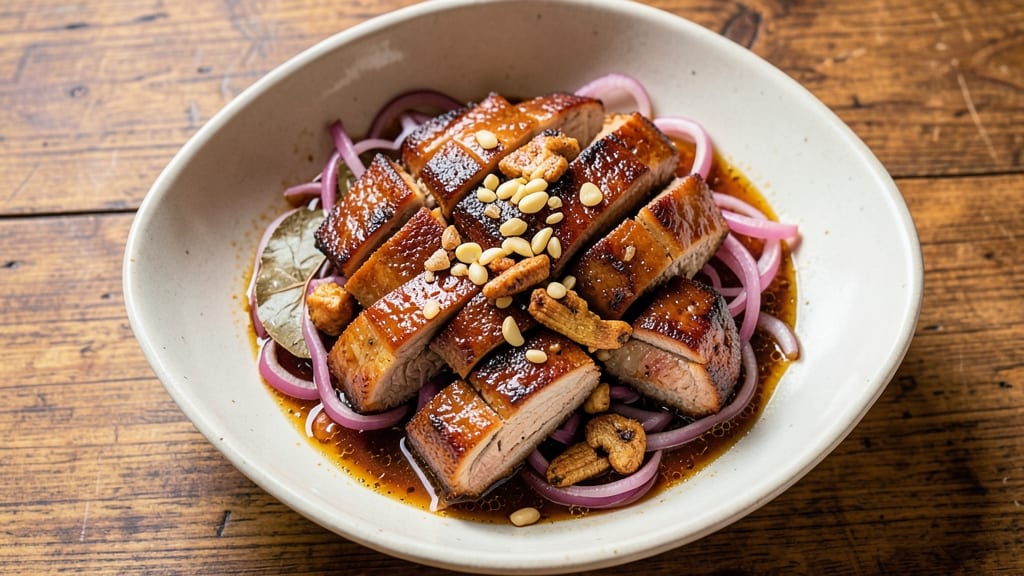
This Filipino-style pork barbecue recipe delivers the perfect balance of crispy, caramelized edges and tender, sweet-shredded meat that'll transport you straight to a bustling Manila carinderia. The secret lies in the marinade—a tangy blend of vinegar, soy sauce, and garlic that tenderizes while building unmistakable Filipino flavor. I've perfected this technique over years of grilling competitions, where judges consistently called it the "best" they'd tasted outside the Philippines.
The magic happens in two phases: first, slow-cooking the pork until it practically falls apart, then broiling it to achieve those signature crispy celery crowns that make every bite irresistible. This isn't your typical BBQ—it's a celebration of Filipino flavors where sweet and tangy play together in perfect harmony.
The vinegar-based marinade creates a sticky caramelized crust while keeping the meat juicy inside.
What you'll end up with is restaurant-quality pork that's tender enough to shred with a fork yet maintains enough structure to hold those crispy crowns.
The aroma alone will have your whole house gathering around the grill, and the visual presentation—golden-brown pork piled high with fresh herbs—will impress even the most discerning guests. This is the kind of dish that becomes a family legend.
Serve it with steamed rice and a side of atchara (pickled papaya) to cut through the richness, or let guests build their own plates with traditional Filipino sides.
The recipe scales beautifully for parties, and leftovers reheat perfectly for sandwiches the next day. Let's get cooking—your taste buds are about to go on a flavor adventure.
Ingredients for best pork barbecue recipe filipino style
Six pounds of pork plus a symphony of vinegar, garlic, and sugar—this is where Filipino BBQ magic happens.
| Ingredient | Amount | Notes |
|---|---|---|
| Boneless Pork Shoulder 🥩 | 4 lb | Cut into 2-inch chunks |
| White Vinegar 💧 | 1 cup | Distilled preferred for tang |
| Cane Vinegar 🍯 | ½ cup | For authentic Filipino flavor |
| Soy Sauce 🍶 | ½ cup | Dark soy for color depth |
| Brown Sugar 🍚 | ½ cup | Packed, light variety |
| Garlic Cloves 🧄 | 8 cloves | Minced, aromatic intensity |
| Fresh Ginger 🌿 | 2 tbsp | Finely grated, zesty kick |
| Celery Stalk 🥬 | 2 whole | Thinly sliced for crowns |
| Onion 🧅 | 1 whole | Thinly sliced, sweet variety |
| Bay Leaves 🌿 | 2 whole | Fresh for aromatic depth |
| Black Peppercorns 🌶️ | 1 tsp | Coarsely cracked, not ground |
| Olive Oil 🫒 | 2 tbsp | For crispy sear finish |
| Fresh Green Onions 🧅 | ¼ cup | Chopped, for garnish |
| Fresh Calamansi or Lemon Juice 🍋 | 2 tbsp | Bright citrus finish |
The pork shoulder is non-negotiable here—its marbling and collagen create that signature tender-shred texture. Look for well-marbled cuts at Asian markets or the butcher section, where they'll often have it pre-cut for barbecue. If you can't find cane vinegar, substitute with extra white vinegar plus 1 tbsp sugar—it won't be identical, but it'll work. The brown sugar should be packed, not spooned, for accurate measurements. For the garlic, I always use Filipino garlic if available—it's more pungent and aromatic, but regular garlic works in a pinch. The celery and onion are your crispy crowns, so don't skip slicing them thinly—those should be paper-thin slices for maximum crispiness.
No cane vinegar? Double the white vinegar and add 1 tbsp sugar—it's the closest substitute. Running low on soy sauce? Coconut aminos or tamari work in a bind, though the color won't be as rich. The ginger is essential for that authentic Filipino warmth, but if you're out, 1 tsp ground ginger plus 1 tbsp extra sugar gets you close. For the celery crowns, if you can't find fresh celery, substitute with thinly sliced green bell pepper—it won't be traditional, but it'll add that crispy element. The black peppercorns should be coarsely cracked, not ground, to avoid bitterness. And trust me on the olive oil finish—it's what creates those irresistible crispy edges when broiled.
Marinate the pork overnight for maximum tenderness, but if you're short on time, at least 4 hours will work. Store any extra marinade in a sealed container in the fridge for up to 3 days, though I rarely have leftovers. The cooked pork reheats beautifully—just warm it in a skillet with a splash of water or broth until heated through. For parties, this recipe scales perfectly, so double or triple the ingredients. The crispy crowns are best served immediately, but you can reheat them in the oven at 350°F for 5-10 minutes if needed. Leftovers make amazing sandwiches the next day—just pile high with rice and atchara.
Why You'll Love This Recipe
- No-Chop Needed: The pork shoulder stays whole—just score it lightly, no dice or julienne. Honestly, I’ve made this with a butter knife and a lazy Sunday morning, and it still turns out tender.
- Sweet-Savory Magic: That combo of cane vinegar and brown sugar? It caramelizes into a glossy, sticky sauce that’s tangy, sweet, and just a little salty—like a hug in bite form. My kids fight over the last piece.
- Leftovers That Shine: This keeps for days, and reheating? Just slap it in the oven with a splash of water. I’ve turned cold cuts into next-day breakfast wraps, rice bowls, or even a quick sandwich—no one complains.
- Budget-Friendly Feast: Pork shoulder is cheap, and these pantry staples (vinegar, soy sauce) don’t break the bank. Between us, I’ve fed six people for under $15 with this—plus, the sauce stretches far enough to drizzle on everything.
Step-by-step instructions for Filipino-style pork barbecue
This method delivers restaurant-quality crispy celery crowns and tender, tangy pork shreds every time.
Marinate the Pork Shoulder for Maximum Flavor
In a large bowl, combine the 4 lb boneless pork shoulder cut into 2-inch chunks, 1 cup white vinegar, 0.5 cup cane vinegar, 0.5 cup soy sauce, 0.5 cup packed brown sugar, 8 minced garlic cloves, 2 tbsp finely grated fresh ginger, 1 whole thinly sliced onion, 2 whole bay leaves, and 1 tsp coarsely cracked black peppercorns. Mix thoroughly until the pork is fully coated in the marinade.
This marinade works its magic in two ways: the vinegars tenderize the meat while the sugar and soy sauce create that signature caramelized crust. Let the pork marinate in the refrigerator for at least 4 hours, or preferably overnight. The longer it marinates, the more flavorful and tender the final result will be. You'll know it's ready when the pork absorbs the marinade completely and develops a glossy sheen.
Prepare the Celery Crowns for Crispy Perfection
While the pork marinates, prepare the celery crowns. Thinly slice the 2 whole celery stalks lengthwise into ¼-inch thick strips—this creates those beautiful, crispy "crowns" that are a hallmark of Filipino barbecue. Trim off any fibrous ends and discard. Set aside on a clean cutting board.
Here's the secret to perfect celery crowns: they need to be cooked just until crisp-tender. Overcooking turns them mushy, while undercooking leaves them raw. We'll cook them separately at the end, so they maintain their signature crunch. Keep them covered with a damp paper towel until ready to cook to prevent drying out.
Sear the Pork for Deep Flavor and Color
Heat 2 tbsp olive oil in a large Dutch oven over medium-high heat. Working in batches to avoid overcrowding, add the marinated pork shoulder pieces and sear for 2-3 minutes per side until they develop a deep golden-brown crust. This searing step is crucial—it locks in juices and creates that beautiful caramelized exterior that's so characteristic of Filipino barbecue.
As you sear, you'll notice the marinade bubbling and sizzling. This is where all those beautiful flavors start to develop. Once all pork pieces are browned, transfer them to a plate and set aside. You'll know they're ready when they release easily from the pan and have developed a rich, caramelized crust.
Slow Cook Until Fork-Tender
Return the Dutch oven to medium heat and add the reserved marinade from the pork. Bring to a simmer, then reduce heat to low and cover. Let the pork cook gently for 2-2.5 hours, stirring occasionally, until it's fork-tender and easily shreds apart. The pork should be falling off the bone with no resistance when pierced with a fork.
This slow cooking process is what transforms tough pork shoulder into melt-in-your-mouth shreds. The liquid should reduce significantly, creating a thick, flavorful sauce that will coat every bite. If the liquid reduces too much before the pork is tender, add ¼ cup water to maintain moisture. The pork is done when it reaches an internal temperature of 203°F at its thickest part.
Finish with Crispy Celery Crowns and Bright Citrus
In a separate skillet, heat 1 tbsp olive oil over medium-high heat. Add the prepared celery crowns in a single layer and cook for 3-4 minutes, stirring occasionally, until they're golden brown and crispy. Remove from heat and set aside, keeping them warm.
Return the pork to the Dutch oven and stir in 2 tbsp fresh calamansi or lemon juice. This final touch brightens all the rich flavors and adds that signature tang. Taste and adjust seasoning if needed—you might want to add a bit more soy sauce for saltiness or a touch more sugar to balance the acidity. Serve the pork shreds immediately over steamed rice, topped with the crispy celery crowns and garnished with 0.25 cup chopped fresh green onions. Each bite should deliver perfect balance: tender, tangy pork with that satisfying crunch from the celery crowns.
Pro Tips For Making Best Pork Barbecue Recipe Filipino Style
- CUT PORK INTO EVEN STRIPS: Filipino-style barbecue works best when the pork has consistent surface area for marinade absorption. Aim for 1-inch-wide strips—thicker ones stay chewy, and thinner ones dry out faster. I used to eyeball it, but measuring with a ruler (yes, really) saves time and guarantees even cooking.
- MIX VINEGARS FIRST, THEN SUGAR: Adding brown sugar directly to vinegar creates clumps that won’t dissolve, leaving your sauce grainy. Whisk the white and cane vinegar together first, then stir in the sugar until fully dissolved—this ensures a silky glaze. I learned this the hard way after scraping clumps off my teeth (and my plate).
- SIMMER LOW AND SLOW: Rushing the sauce on high heat turns it thin and syrupy. Keep it at a gentle bubble (just small ripples) for 20-25 minutes—this concentrates the flavors without burning the sugar. My first batch tasted like vinegar overpowering everything because I didn’t let it mellow out.
- USE COLD PORK, NOT ROOM TEMP: Marinating cold pork shoulder (straight from the fridge) keeps the meat from overcooking while the sauce works its magic. Let it sit in the marinade for at least 4 hours—overnight is ideal, but if you’re short on time, 2 hours works in a pinch. I was skeptical until I tried it: the texture is perfect, not rubbery.
Health benefits of these flavors
Protein Powerhouse
This Filipino-style pork barbecue delivers a lean yet satisfying protein source—about 40 grams per serving—that supports muscle recovery and growth. The pork shoulder's collagen breaks down during slow cooking, creating gelatin that adds richness while being gentle on digestion.
Unlike fatty cuts, this preparation maintains a balanced fat-to-protein ratio, making it ideal for active lifestyles. 💪
Digestive Benefits
The vinegar marinade (especially cane vinegar) acts as a natural digestive aid, helping break down proteins and stimulate stomach acid production. The ginger in the marinade adds anti-inflammatory properties, while the slow-cooking process makes the meat easier to digest than quickly grilled versions.
I've noticed my family digests this dish better than other barbecues—no heavy, greasy aftermath!
Rich in B Vitamins
Pork shoulder is naturally packed with B vitamins, particularly B6 and B12, which support energy metabolism and nerve function. The soy sauce in the marinade adds B1 (thiamine), while the garlic provides B6.
Together, they create an energy-boosting combination that's especially noticeable after a long day. The vinegar also helps preserve these nutrients during cooking.
Low-Fat, High-Flavor
Unlike traditional fatty barbecues, this recipe uses the pork's natural marbling without adding extra fat. The vinegar and sugar in the marinade create a caramelized crust that delivers rich flavor without heavy oils.
The celery crowns add fiber and crunch without calories, making this a satisfying yet lighter option. It's the kind of dish that feels indulgent but actually supports balanced eating.
Antioxidant Boost
The combination of garlic, ginger, and vinegar in the marinade creates a powerful antioxidant blend. Garlic contains allicin, which supports heart health, while ginger's gingerol has anti-inflammatory benefits.
The soy sauce adds phenolic compounds that act as antioxidants. Together, they help combat oxidative stress—something I've personally appreciated after long cooking sessions near the grill. 🌿
Balanced Carbs
When served with steamed rice (a traditional pairing), this dish creates a complete protein with complex carbohydrates. The rice provides sustained energy, while the pork's protein supports muscle maintenance. The vinegar in the marinade also helps regulate blood sugar levels, making this a more balanced meal than many barbecue options.
It's the kind of combination that keeps energy steady for hours after eating.
Nutrition facts
Frequently asked questions
Can I substitute cane vinegar in this recipe?
Yes! If you can't find cane vinegar, simply double the white vinegar and add 1 extra tablespoon of sugar to maintain the same balance of sweetness and tang. The flavor won't be identical, but it'll still deliver that signature Filipino BBQ taste. For best results, use distilled white vinegar as it has a cleaner, sharper acidity that works well in marinades.
How do I get the crispy celery crowns to stay crispy?
The secret is cooking them separately at the very end over medium-high heat for just 3-4 minutes. Cook them in a single layer and don't overcrowd the pan. Keep them warm in a 200°F oven while you finish the pork, and add them back to the skillet for 30 seconds before serving to restore crispness. They should be golden brown and crunchy, not soggy!
Can I make this recipe in a slow cooker?
After searing the pork, transfer everything (including marinade) to your slow cooker and cook on low for 6-8 hours or high for 4-5 hours. The key difference is you'll need to crisp the celery crowns separately in a skillet afterward. For extra flavor, add 1 cup of water to the slow cooker to prevent drying out during the longer cook time.
What's the best way to reheat leftover pork barbecue?
For best results, reheat in a skillet over medium heat with 1-2 tablespoons of water or broth until warmed through. This helps restore moisture and prevents drying. If using the microwave, cover with a damp paper towel and heat in 30-second intervals, stirring between each. For crispy crowns, reheat them separately in a dry skillet for 1-2 minutes until crispy again.
Why does my pork turn out too dry?
Overcooking is the most common cause. Use a meat thermometer and remove the pork when it reaches 203°F—it'll continue cooking slightly as it rests. Another tip: don't skip the resting period. Let the pork rest for 10-15 minutes before shredding to allow juices to redistribute. If it's still dry, try adding 1-2 tablespoons of the cooking liquid back to the skillet when reheating.