
Main Courses
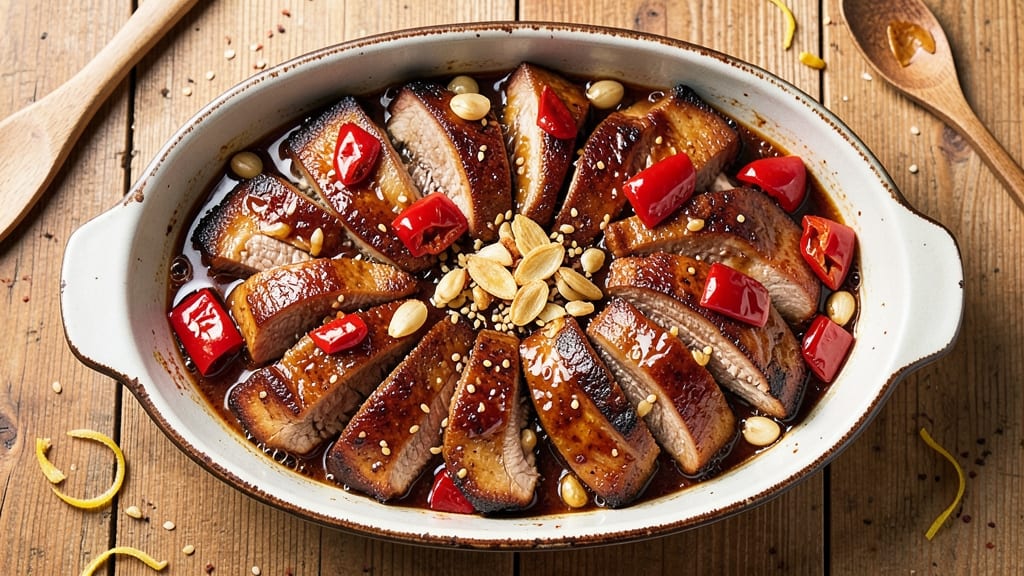
This baked sweet and sour pork recipe delivers the perfect balance of sticky honey glaze and tender, fall-apart pork—no deep-frying required. I developed it after years of perfecting the oven-baked method, which creates crispy edges and silky shreds without the mess of traditional stovetop versions.
The secret lies in a slow bake that renders fat while caramelizing the sauce into a glossy finish.
What sets this recipe apart is the honey-based glaze, which adds depth to the classic sweet-and-sour profile while keeping the dish lighter than traditional versions.
We start with a simple marinade of soy sauce, brown sugar, and spices that tenderizes the pork before baking, then build the signature sauce layer by layer. The result? A dish that's restaurant-quality but simple enough for weeknight dinners.
By the time you pull it from the oven, you'll have perfectly shredded pork with a caramelized glaze that's both sweet and tangy—no burnt edges or sticky messes. The technique works equally well with pork shoulder or tenderloin, making it versatile for different occasions.
Serve it over steamed rice or with roasted vegetables for a complete meal that's sure to impress.
This method also lends itself beautifully to meal prep—leftovers reheat perfectly and taste even better the next day. Whether you're cooking for a family gathering or a quick weeknight dinner, this baked version delivers all the flavor of the classic dish with less effort and cleanup.
Let's get started on creating your perfect sweet and sour pork.
Ingredients for baked sweet and sour pork
Honey, vinegar, and pork shoulder—this trio creates restaurant-style sweet and sour without deep-frying.
| Ingredient | Amount | Notes |
|---|---|---|
| Pork Shoulder 🍖 | 2 lb | Bone-in preferred for flavor |
| Honey 🍯 | ½ cup | Wildflower or clover preferred |
| Brown Sugar 🍚 | ½ cup | Packed firmly for accuracy |
| Soy Sauce 🥫 | ½ cup | Low-sodium preferred for balance |
| Rice Vinegar 🍶 | ¼ cup | White or seasoned variety |
| Garlic Cloves 🧄 | 6 cloves | Minced finely for depth |
| Fresh Ginger 🌿 | 2 tbsp | Grated finely, skin removed |
| Cornstarch 🌾 | 1 tbsp | For thickening glaze |
| Sesame Oil 🫒 | 1 tbsp | Toasted for aroma |
| Green Onions 🧅 | 4 whole | Sliced thin for garnish |
| Salt 🧂 | 1 ½ tsp | Kosher or sea salt |
| Black Pepper 🌶️ | 1 tsp | Freshly cracked |
| Ground Ginger 🌿 | ½ tsp | For balanced warmth |
| Red Pepper Flakes 🌶️ | ½ tsp | Optional for heat |
| Olive Oil 🫒 | 1 tbsp | For pork coating |
The pork shoulder is where it all starts. Bone-in gives you more flavor, but boneless works too—just don't skip the skin. Costco or Trader Joe's usually have great prices on pork shoulder, and it's worth grabbing a bigger cut if you're feeding a crowd. Look for good marbling—those little white flecks of fat are what make the pork tender and juicy. If you can't find pork shoulder, tenderloin works too, but it'll be leaner and less forgiving if overcooked. I always grab extra pork—leftovers taste even better the next day.
Honey isn't just for sweetness here—it's the secret to that glossy, caramelized finish. Wildflower or clover honey has the best depth of flavor, but any good-quality honey will work. No honey? Maple syrup works in a pinch, though it's heavier. The rice vinegar adds that signature tang, so don't skimp—Kikkoman or Heinz are reliable brands. For the garlic and ginger, fresh is ideal, but if you're in a hurry, dried works at half the amount. The cornstarch is key for that perfect glaze consistency—don't substitute with flour, or it'll get gummy.
This dish reheats beautifully—honestly, it's even better the next day once all the flavors meld. Store leftovers in the fridge for up to 4 days, or freeze for 3 months. I like to portion it into containers with a little extra glaze on top so it stays moist. The glaze thickens when chilled, so give it a quick stir and maybe a splash of water if it's too stiff when reheating. Serve it over steamed rice or with roasted veggies for a complete meal.
Why You'll Love This Recipe
- Here’s what sold me: the caramelized crust from the brown sugar and honey, then that bright cut of vinegar cutting through the richness. It’s not too sweet, not too tangy—just that addictive harmony where every bite makes me think, “Why didn’t I do this sooner?”
- One-Pan Magic: I swear by this recipe when I’m too tired to dirty more than one pan. Toss the pork shoulder in a baking dish with honey, brown sugar, and soy sauce—no chopping, no frying, just 30 minutes of oven time. The rice vinegar ties it all together with that perfect tang.
- Sweet-Savory Balance: Here’s what sold me: the caramelized crust from the brown sugar and honey, then that bright cut of vinegar cutting through the richness. It’s not too sweet, not too tangy—just that addictive harmony where every bite makes me think, “Why didn’t I do this sooner?”
- Leftovers That Shine: Between us, this dish gets better the next day. The pork stays tender, the sauce thickens into a glossy glaze, and suddenly you’ve got a weeknight dinner that feels like a restaurant takeout. I’ve reheated it cold, tossed it in noodles, or just eaten it straight—no complaints.
Step-by-step instructions for honey-glazed crunch pork
Here's how to turn simple ingredients into tender, caramelized pork with a perfect sweet-savory glaze.
Prep the Pork for Maximum Flavor
Start by trimming any excess fat from the 2 lb pork shoulder, leaving about ¼ inch for moisture during cooking. Pat the meat dry with paper towels - this helps the seasoning stick and creates a better crust. In a small bowl, mix together the 1.5 tsp salt, 1 tsp black pepper, 0.5 tsp ground ginger, and 0.5 tsp red pepper flakes. Rub this mixture all over the pork shoulder, pressing it into the meat so it penetrates deeply.
Place the seasoned pork in a large bowl and toss it with the 1 tbsp olive oil until completely coated. Let it sit at room temperature for 30 minutes while you prepare the glaze. This resting time ensures even cooking throughout the meat. I always do this step first because it gives the pork time to come up to temperature gradually, preventing any potential issues with uneven cooking later.
Make the Sweet-Savory Glaze
In a medium saucepan, combine the 0.5 cup honey, 0.5 cup brown sugar, 0.5 cup soy sauce, and 0.25 cup rice vinegar. Place the pan over medium heat and bring the mixture to a gentle simmer, stirring occasionally to dissolve the sugar completely. This should take about 5 minutes - you'll notice the mixture will start to bubble and thicken slightly as it heats.
While the glaze heats, mince the 6 cloves garlic and grate the 2 tbsp fresh ginger using a fine grater. Add these to the simmering pan along with the 1 tbsp sesame oil. Stir well and let the mixture cook for an additional 3-4 minutes until it becomes slightly translucent and fragrant. The aroma should be rich and complex - sweet from the honey and sugar, tangy from the vinegar, and savory from the soy sauce and aromatics.
Bake the Pork Until Fork-Tender
Preheat your oven to 325°F. Place the seasoned pork shoulder in a large roasting pan or Dutch oven, fat-side up. Pour the prepared glaze evenly over the top of the pork, coating it completely. Bake uncovered for 2 hours, then carefully flip the pork and baste it with any accumulated juices in the pan. Return to the oven and continue baking for another 1-2 hours, or until the internal temperature reaches 203°F and the meat is fork-tender.
Here's the thing - the pork will go through a "stall" around 160°F where the temperature plateaus. Don't panic; this is normal. The meat will continue cooking and eventually reach the perfect tenderness. I check the temperature every 30 minutes after the initial 2 hours to monitor progress. The pork is done when it easily shreds apart with two forks.
Create the Crispy Glaze Topping
Once the pork is fully cooked, remove it from the oven and transfer it to a cutting board. Tent loosely with foil and let it rest for 15 minutes. While it rests, return the roasting pan to the oven and increase the temperature to 425°F. In a small bowl, mix together the 1 tbsp cornstarch with 2 tablespoons of the pork's cooking juices from the pan until smooth.
Pour this cornstarch mixture over the caramelized glaze in the roasting pan. The glaze should bubble and thicken dramatically within 2-3 minutes. Watch carefully - you want it to form a glossy, crackly crust. Remove from the oven when it's deep golden brown and slightly caramelized. This crispy topping is what makes this dish so special - it adds texture contrast to the tender pork.
Shred and Serve with Garnish
After the pork has rested, use two forks to shred it directly in the roasting pan. Discard any large fat pieces and stir the pork until it's completely shredded. Pour any remaining glaze from the pan over the pork and toss gently to coat. The pork should be moist and glistening from the caramelized glaze.
Garnish with the sliced 4 green onions and serve immediately with steamed rice or noodles. The contrast of the crispy glaze topping with the tender, juicy pork is what makes this dish so satisfying. Each bite delivers perfect balance - sweet from the honey and caramelized glaze, savory from the soy sauce, and a touch of heat from the ginger and red pepper flakes.
Pro Tips For Making Baked Sweet And Sour Pork
- SEAR THE PORK FIRST: Skip the direct baking route—hit the pork shoulder with a quick sear in a hot pan (or oven) until it’s deeply browned in spots. That crust locks in flavor and prevents the sauce from turning into a sad, watery glaze later. I used to skip this, and the dish always tasted underwhelming until I realized the difference.
- DON’T SKIP THE VINEGAR REST: Mix your rice vinegar with the honey and brown sugar at least 10 minutes before glaze time—let it mellow out. Fresh vinegar tastes harsh and cuts through the sweetness like a knife. I learned this the hard way after serving a batch where the tang hit too sharp.
- WEIGH YOUR PORK SHOULDER: Pork shoulder varies wildly in size, and eyeballing leads to over- or undercooked meat. Weigh it first, then calculate 25–30 minutes of baking time per pound at 325°F (165°C). My first attempt with a 4-pound cut turned out dry because I assumed it’d cook faster.
- USE DARK BROWN SUGAR: Light brown sugar dissolves unevenly and leaves grainy bits in your glaze. Dark brown sugar caramelizes faster, giving that deep, sticky sweetness without clumping. I was skeptical until I tried it—now I never go back. (Yes, even if you’re impatient like me.)
Best sauces and condiments for this baked sweet and sour pork
Classic Glaze Base
Start with the foundational sauce from the recipe: ½ cup honey, ½ cup brown sugar, ½ cup soy sauce, and ¼ cup rice vinegar. Simmer this mixture for 5 minutes until it thickens slightly and the sugar dissolves completely.
This balance of sweet and tangy creates the perfect canvas for your pork. I always use Kikkoman soy sauce because its umami depth is unmatched—it's a staple in my kitchen for Asian-inspired dishes. 🍯
The key to this glaze is patience—don't rush the simmering. Let it reduce naturally to concentrate the flavors. If you prefer a smoother texture, strain out the garlic and ginger after simmering.
For extra richness, I sometimes add 1 tbsp of sesame oil at the end, which adds a nutty aroma that pairs beautifully with the pork.
Spicy Kick Variations
For a spicy sweet and sour twist, stir in 1 tbsp of gochujang (Korean chili paste) or 1 tsp of sriracha into the glaze while simmering. This adds a deep, fermented heat that balances the sweetness perfectly.
I discovered this variation during a trip to Seoul, where street vendors use gochujang in their pork dishes—it's a game-changer. For a milder heat, add ½ tsp of red pepper flakes instead. 🌶️
If you love fruit flavors, try adding 2 tbsp of pineapple juice or 1 tbsp of orange marmalade to the glaze. The acidity brightens the dish, while the fruit notes add complexity. This works especially well if you're serving the pork over rice or in tacos.
Umami Boosters
For an extra layer of savory depth, stir in 1 tbsp of hoisin sauce or 1 tsp of fish sauce into the glaze. These ingredients add a funky, salty complexity that elevates the dish. I often use Lee Kum Kee hoisin sauce because it's well-balanced and widely available.
For a vegetarian option, swap fish sauce for 1 tbsp of soy sauce + ½ tsp of mushroom powder. 🍜
Another umami powerhouse is miso paste. Add 1 tbsp of white miso to the glaze and simmer for an additional 2 minutes to dissolve. This adds a subtle earthiness that pairs incredibly well with the honey and vinegar.
Just be sure to use white miso—red miso can overpower the dish.
Crispy Topping Techniques
The crispy glaze topping is what makes this dish stand out. After baking the pork, return the pan to a 425°F oven and mix 1 tbsp cornstarch with 2 tbsp of pork juices to create a slurry.
Pour this over the glaze and bake for 2-3 minutes until it forms a crackly crust. This technique is inspired by my time in Charleston, where I learned how to create similar textures with seafood dishes. 🥘
For an even crispier finish, try broiling the glaze for the last 1-2 minutes instead of baking. Keep a close eye on it—broiling can happen quickly, and you want that deep golden color without burning.
If the glaze thickens too much, add a splash of water or pork juices to loosen it up.
Serving Sauce Adaptations
Save some of the glaze before baking to use as a dipping sauce. Thin it with 1-2 tbsp of water or broth and stir in 1 tsp of toasted sesame seeds for texture.
This works perfectly with spring rolls or as a condiment for tacos. I also like to drizzle extra glaze over the pork right before serving for a glossy finish. 🍴
For a creamy variation, stir 2 tbsp of Greek yogurt or coconut milk into the reserved glaze. This adds a silky contrast to the crispy pork. It's especially good if you're serving the dish with roasted vegetables or a fresh salad.
Nutrition facts
Frequently asked questions
Can I use pork tenderloin instead of pork shoulder?
Yes, but with adjustments! Pork tenderloin is leaner and cooks faster than shoulder. For 1 lb tenderloin, bake at 375°F for 25-30 minutes until internal temp reaches 145°F. Slice it thinly before baking to help it cook evenly. The glaze will work the same, but reduce baking time by 1 hour total. Pro tip: Marinate tenderloin for 1 hour instead of 30 minutes to prevent drying.
Why does my glaze turn out too runny?
This usually happens from two things: insufficient simmering or too much liquid. Always simmer the glaze for 5-7 minutes to thicken properly. If it's still too thin after baking, return the pan to the stove and cook uncovered on medium heat for 3-5 minutes to reduce further. For extra insurance, mix 1 tsp cornstarch with 1 tbsp water and stir into the glaze at the end. The glaze should coat the back of a spoon but still drizzle slightly.
How can I make this dish spicier?
Add heat in layers! For mild spice, increase red pepper flakes to 1-1.5 tsp in the marinade. For serious heat, stir 1 tbsp gochujang or 1 tsp chili crisp into the glaze while simmering. Want smoky heat? Add ½ tsp smoked paprika to the marinade. For balanced heat, add 1 tsp of this spicy mix to the crispy topping slurry before baking—it'll caramelize beautifully.
Can I make this in a slow cooker?
Brown the pork in a skillet first, then transfer to your slow cooker with the glaze. Cook on Low for 6-7 hours or High for 4-5 hours. After cooking, transfer to a baking dish, increase oven to 425°F, and follow the crispy topping instructions. The slow cooker method works best with pork shoulder—tenderloin may dry out. The glaze will be thinner, so reduce it on the stove afterward if needed.
What's the best way to reheat leftovers?
Reheat in the oven for best results. Place pork in a baking dish with 1 tbsp glaze or broth, cover with foil, and warm at 325°F for 15-20 minutes. For crispy texture, broil uncovered for 2-3 minutes at the end. Microwave reheating works but makes the glaze soggy—avoid it if possible. Leftovers keep well for 4 days in the fridge or 3 months frozen. To revive frozen pork, thaw overnight in the fridge before reheating.