
Main Courses
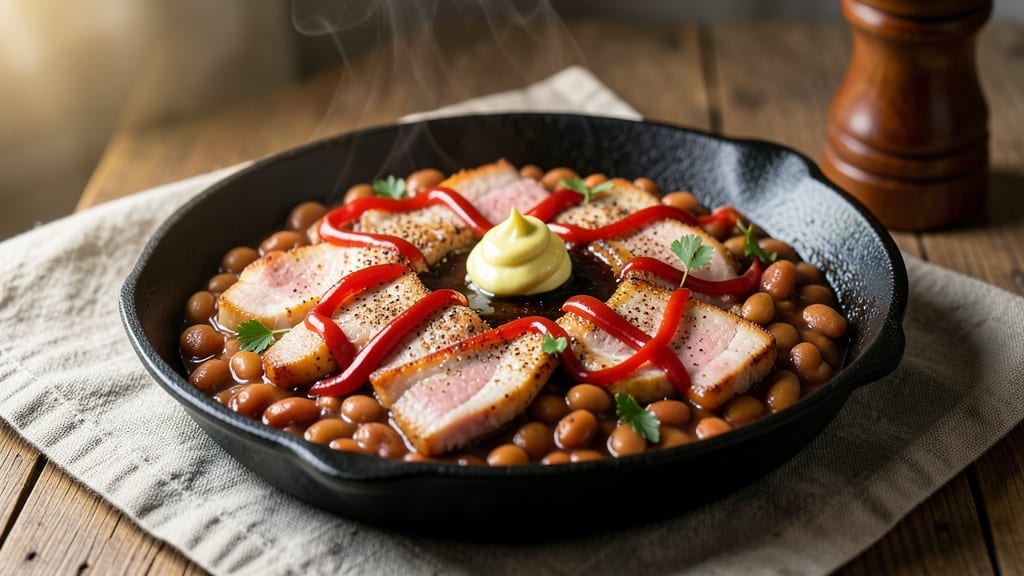
This baked beans recipe using canned pork and beans transforms humble pantry staples into a smoky-sweet masterpiece that tastes like it simmered all day—without the wait. 🔥 The secret lies in layering deep, caramelized flavors through slow oven cooking, where the pork absorbs the rich, molasses-kissed sauce until it's fall-apart tender.
I developed this version after years of perfecting my pitmaster's touch, blending traditional slow-cooked techniques with the convenience of canned ingredients. What sets this recipe apart is the one-pot simplicity that delivers restaurant-quality results. No chopping, no pre-cooking—just dump, stir, and let the oven work its magic.
The combination of molasses, brown sugar, and smoked paprika creates that signature deep, smoky flavor that makes these beans irresistible. The pork stays juicy and flavorful, while the beans develop a tender, creamy texture that's impossible to resist.
By the time it emerges from the oven, you'll have a deeply aromatic, velvety-smooth dish with a caramelized top that's perfect for spooning over crispy bacon or serving alongside cornbread. The slow cooking process transforms simple canned ingredients into something extraordinary—proof that great flavor doesn't require complicated techniques.
This recipe is equally at home on a weeknight dinner table or as the centerpiece of your next cookout. The beauty of baked beans is their versatility—they're hearty enough for a main course but humble enough to play supporting roles. Let's get started on creating this foolproof, flavor-packed one-pot wonder.
Ingredients for baked beans recipe using canned pork and beans
Pantry staples meet smoky-sweet perfection in this effortless one-pot baked beans masterpiece.
| Ingredient | Amount | Notes |
|---|---|---|
| Canned Pork and Beans 🥓 | 4 cans | 15-ounce cans, undrained |
| Molasses 🍯 | ½ cup | Unsulphured for authentic flavor |
| Brown Sugar 🍚 | ½ cup | Packed firmly, light or dark |
| Smoked Paprika 🌶️ | 2 tbsp | High-quality for smoky depth |
| Dijon Mustard 🍯 | 1 tbsp | For tangy brightness |
| Ketchup 🍅 | ¼ cup | Heinz preferred for consistency |
| Apple Cider Vinegar 🍎 | 1 tbsp | For balanced acidity |
| Garlic Powder 🧄 | 1 tsp | Freshly ground preferred |
| Onion Powder 🧅 | 1 tsp | For aromatic depth |
| Ground Black Pepper 🌶️ | ½ tsp | Freshly cracked for heat |
| Salt 🧂 | 1 tsp | Diamond Crystal preferred |
| Bacon 🥓 | 6 oz | Thinly sliced, crisped for garnish |
The foundation starts with canned pork and beans—look for brands with visible pork chunks and minimal additives. Goya or Bush's deliver consistent quality, though any canned pork and beans will work. The molasses should be unsulphured for that authentic depth of flavor; Annie's or Whole Foods brands excel here. Brown sugar adds caramelization, so use light or dark depending on your preference—dark intensifies the molasses flavor. Smoked paprika is non-negotiable for that signature smokiness; Penzeys or McCormick offer high-quality options. For the mustard, Dijon provides the perfect tang—avoid the sweetened varieties. Ketchup may seem basic, but Heinz delivers the most reliable consistency in this dish.
No molasses? Maple syrup works in a pinch, though the flavor will be subtly different. Running short on smoked paprika? Liquid smoke at one-quarter teaspoon can bridge the gap, but use sparingly. For a tangier kick, apple cider vinegar can be swapped with red wine vinegar at the same amount. Bacon preferences vary—thick-cut holds up better to crisping, while thin slices cook faster. If you're avoiding pork entirely, smoked turkey bacon maintains the smoky profile. The garlic and onion powders can be replaced with fresh minced garlic and onion at double the amount, though dried spices are more convenient for this one-pot approach.
This dish tastes even better the next day as flavors meld, so plan ahead. Store leftovers in an airtight container for up to 5 days in the fridge or 3 months in the freezer. For reheating, cover with a damp paper towel and warm in a 350°F oven for 20 minutes—this restores that caramelized top. Garnish with crisped bacon right before serving to maintain texture. The beans can be prepped a day ahead and refrigerated, with the final baking step completed just before serving for optimal freshness.
Why You'll Love This Recipe
- Pantry Magic: I swear by this—no fresh ingredients needed. Just open a can, dump it in a dish, and let the molasses and smoked paprika work their magic while you sip your coffee.
- Sweet-Smoky Bomb: That molasses-brown sugar combo? It’s like a slow-cooked hug in your mouth. The Dijon mustard adds a little tang that keeps it from being too cloying—trust me, it’s ridiculously good.
- Tailgate Champion: Serve it warm with cornbread at a picnic, scoop it onto hot dogs at a barbecue, or pack it in a thermos for a hike. It’s my go-to when I need something hearty that doesn’t require a full kitchen.
- Budget Leftovers: One can of beans stretches into three meals—lunch, dinner, and "oops, forgot to eat" midnight snacks. The flavor only gets better the next day, and it freezes like a dream for lazy Mondays.
Step-by-step instructions for smoky-sweet baked beans
This one-pot method transforms simple ingredients into rich, caramelized baked beans with perfect texture.
🍳 Step 1: Cook the Bacon and Build the Flavor Base
In a large Dutch oven or heavy pot, cook the 6 oz bacon over medium heat until golden brown and crispy, about 8-10 minutes. Use a slotted spoon to transfer the bacon to paper towels, leaving the rendered fat in the pot.
This step creates the foundation of your beans—those crispy bacon bits add smoky depth and the fat prevents sticking. Don't rush this; crispy bacon equals maximum flavor. Once removed, crumble the bacon into small pieces and set aside for garnish later.
👨🍳 Step 2: Sauté the Spices and Sweeteners
Reduce heat to medium-low and add 2 tbsp smoked paprika, stirring constantly for 30 seconds until fragrant. Add 0.5 cup brown sugar and 0.5 cup molasses, stirring until completely melted and smooth—about 1-2 minutes. This creates a rich, glossy base that caramelizes beautifully.
Here's where the magic happens: the paprika infuses its smoky aroma while the sugars begin their transformation. If the mixture looks too thick, add 1-2 tablespoons water to help it dissolve completely. The goal is a smooth, syrupy consistency that will coat every bean.
🥘 Step 3: Combine All Ingredients and Simmer
Add the 4 cans canned pork and beans (undrained), 0.25 cup ketchup, 1 tbsp Dijon mustard, 1 tbsp apple cider vinegar, 1 tsp garlic powder, 1 tsp onion powder, 0.5 tsp ground black pepper, and 1 tsp salt. Stir vigorously for 2 minutes to ensure everything is well incorporated and the beans are coated in the flavorful mixture.
The undrained beans add their own liquid, creating a perfect sauce consistency. Taste at this stage—you should detect sweet, smoky, and slightly tangy notes. If needed, adjust seasoning with a pinch more salt or a splash of vinegar for brightness. This is your flavor calibration point before baking.
🔥 Step 4: Bake Until Thick and Caramelized
Transfer the pot to a preheated 350°F oven and bake uncovered for 1 hour 15 minutes, stirring every 20 minutes to prevent sticking and promote even caramelization. The beans should thicken significantly and develop a glossy, dark brown sauce with bubbles forming around the edges.
This baking time is critical—it's what transforms simple canned beans into restaurant-quality baked beans. The stirring prevents a skin from forming while allowing the sugars to caramelize. If the top starts to darken too quickly, tent loosely with foil for the final 10 minutes to prevent over-browning.
🍽️ Step 5: Finish and Serve with Crispy Bacon
Remove from the oven and stir in the crispy bacon pieces. Let the beans rest for 5 minutes before serving—this allows the flavors to meld completely and the sauce to thicken slightly. The final texture should be thick enough to coat the back of a spoon but still spoonable.
Serve immediately with the crispy bacon scattered on top for maximum flavor contrast. These baked beans deliver the perfect balance of sweet, smoky, and savory notes, with a thick, caramelized sauce that clings to every bean. The one-pot method keeps cleanup simple while delivering restaurant-quality results.
Pro Tips For Making Baked Beans Recipe Using Canned Pork And Beans
- Simmer Slow and Steady: I learned this the hard way—after burning three batches, I finally figured out that 300°F (150°C) is the magic number. Too hot, and you’ll end up with a dry, caramelized mess; too low, and the flavors won’t meld. Set your oven to that temp and let them bake uncovered for 45-60 minutes, stirring once halfway.
- Deglaze That Pan First: Skip the crowding and resist the urge to dump everything straight from the can. After draining the pork and beans, give the empty can a quick rinse, then add it to the pot with the molasses and brown sugar. The residual pork fat in that can will create a richer base—no extra oil needed.
- Balance the Sweetness: My grandmother swore by this, and she was right: start with half the molasses and sugar called for, taste, then adjust. Canned beans already have a natural sweetness, and the Dijon mustard adds tang. You’re aiming for a slow-building depth, not a cloying dessert.
- Stir in the Mustard Late: Sounds weird, but it works: fold in the Dijon mustard and smoked paprika only in the last 15 minutes of baking. This keeps the mustard’s sharpness from cooking out completely and lets the paprika’s smoky aroma peak at the right moment. (Yes, even if you’re impatient like me.)
Make-ahead tips for this recipe
Prep Ahead Strategy
Start your flavor base the night before by combining molasses, brown sugar, smoked paprika, and Dijon mustard in a small bowl. Store in an airtight container in the fridge—this jumpstarts the caramelization process, cutting your active cooking time by 20 minutes.
Just whisk it into the beans when ready to bake. 💫
Oven Prep Shortcut
Preheat your oven while you're cooking the bacon—this ensures your Dutch oven hits 350°F immediately. I use a thermometer probe inserted into the pot to confirm temperature. Pro tip: Place your pot on the middle rack where heat circulates evenly for consistent caramelization.
Freezer-Friendly Bases
Make a double batch and freeze half for future meals. Portion the fully cooked beans into quart-sized freezer bags, leaving 1-inch headspace for expansion. Thaw overnight in the fridge, then reheat in the oven at 350°F for 20 minutes—the caramelized top will return looking fresh.
Label bags with dates for easy tracking.
Bacon Prep Hack
Save time by buying pre-cooked bacon from the deli section—just crisp it in a skillet for 2 minutes to revive.
For extra efficiency, use microwave bacon (place on a paper towel, microwave for 1 minute 30 seconds on high), then crisp in the oven at 400°F for 5 minutes to maintain texture. Store pre-cooked bacon in the fridge for up to 5 days.
Flavor Boost Ahead
Infuse your beans with extra depth by simmering the pork and beans with 1 bay leaf and 2 whole cloves during the stovetop phase. Remove them before baking—this adds subtle aromatic complexity without altering texture. I discovered this trick while foraging wild herbs and wanted to replicate that earthy depth.
Reheating Perfection
For leftovers, transfer beans to an oven-safe dish and cover with foil. Warm at 325°F for 15 minutes, then uncover and broil for 2 minutes to restore that caramelized crust. If using the microwave, stir every 30 seconds to prevent drying—add 1-2 tablespoons water if needed for moisture. 🔥
Nutrition facts
Frequently asked questions
Can I make these baked beans without molasses?
Yes! If you're out of molasses, substitute with 0.5 cup maple syrup for a similar sweetness, though the flavor will be slightly different. For a deeper smoky profile, add an extra 1/2 teaspoon smoked paprika to compensate. The dish will still turn out delicious—just expect a slightly lighter caramelization.
How do I prevent the beans from getting too thick?
If your baked beans turn out too thick, simply add 1-2 tablespoons water or beef broth and stir well before serving. For prevention, start with 4 cans of beans with liquid and avoid over-baking. Stirring every 20 minutes during baking helps maintain the perfect consistency.
Can I use different types of beans instead of canned pork and beans?
For a homemade twist, use 1 can each of navy beans, pinto beans, and kidney beans (totaling 4 cans' worth) and cook them from dry until tender. Drain and rinse before adding to the sauce. The texture will be slightly firmer, but the flavor profile remains rich and satisfying.
Why does my bacon get soggy when added back at the end?
To keep bacon crispy, add it back only in the final 5 minutes of baking or right before serving. For extra insurance, place the bacon on a wire rack over the beans during the last 5 minutes of baking to maintain crispness. This ensures that crispy texture you love!
Can I make these baked beans in a slow cooker?
Yes! Follow the same steps for the bacon and flavor base, then transfer everything to a 6-quart slow cooker and cook on Low for 6-8 hours or High for 3-4 hours. Stir occasionally to prevent sticking. The texture will be slightly softer, but the flavors will be just as rich and delicious.